

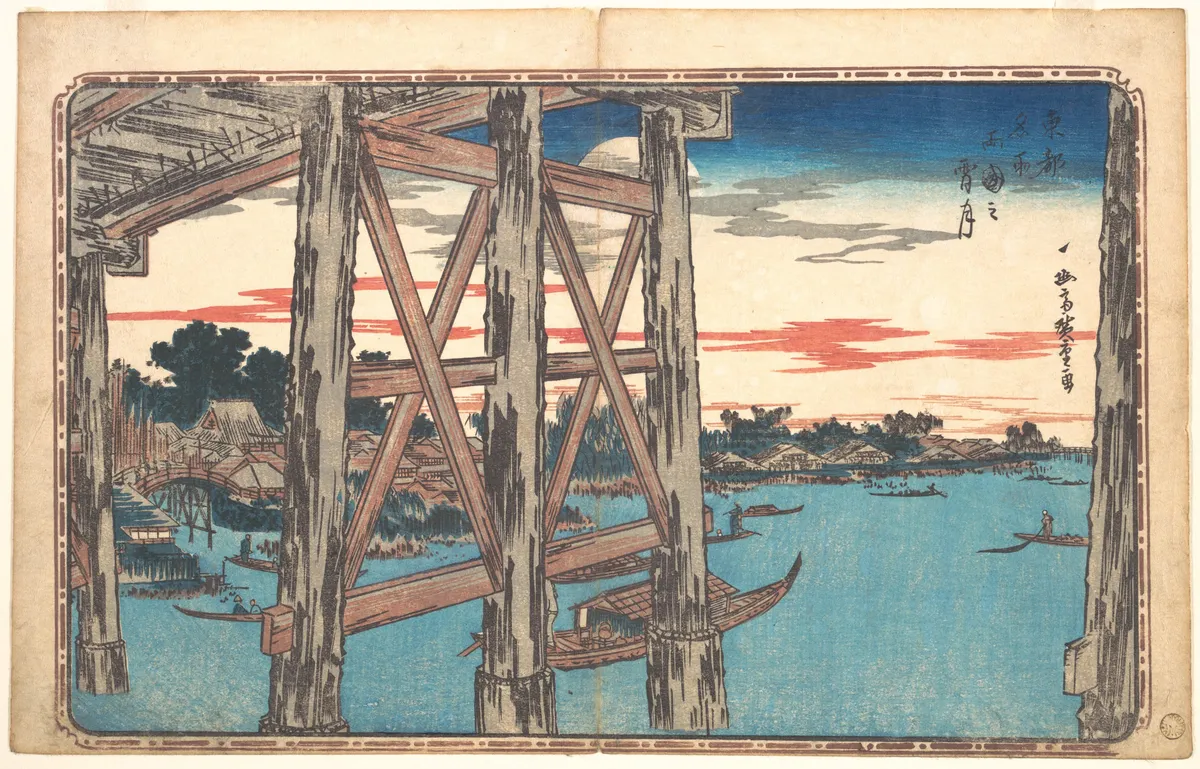
Twilight Moon at Ryōgoku Bridge
The evening air clung thick over Ryōgoku Bridge. Lanterns swayed gently, casting flickering shadows. The moon hung low, a pale disc nestled in the twilight sky. Footsteps tapped softly on the wooden planks, blending with the distant murmur of the Sumida River. An old man paused, leaning on the railing. His breath mingled with the cool breeze.
Nearby, a vendor packed his wares. The scent of roasted chestnuts lingered. A woman, her kimono rustling like whispers, glanced at the moon. Her face, half-lit by its glow, seemed caught between worlds. She hesitated, then moved on, her silhouette fading into the gathering night.
The bridge sighed under another carriage. Wheels creaked, disturbing the stillness. Yet, above all, the moon watched silently. It bathed the scene in silver, softening edges, holding stories untold.
Historical Echo
Ryōgoku Bridge was a vital artery in Edo, connecting bustling districts. By moonlight, it transformed. Hiroshige captured this moment, where everyday life met the ethereal. His prints often depicted such intersections—of time, light, and life. In Edo, the bridge was not just a crossing, but a stage where countless lives intersected briefly, then vanished like shadows at dawn.