

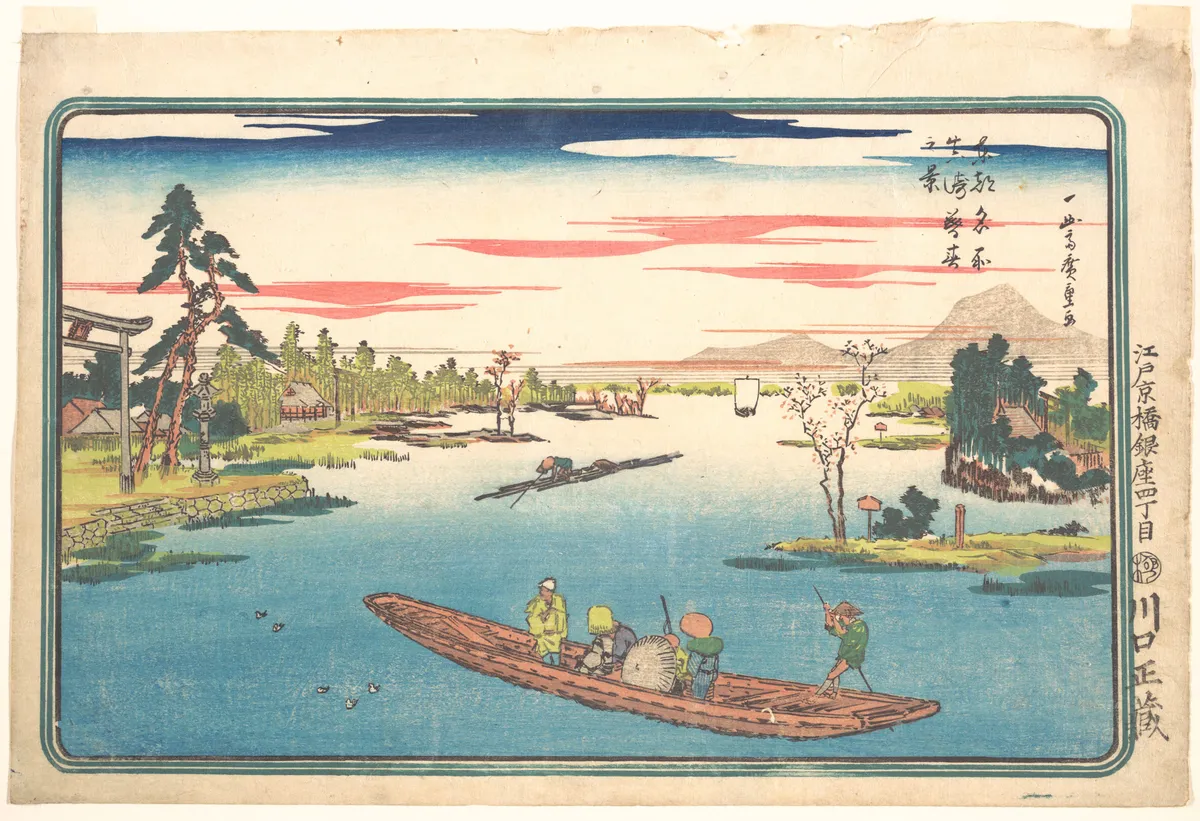
A View of Late Spring at Masaki
A gentle breeze rustles the leaves of the blossoming trees. The Sumida River flows quietly, its surface glistening under the pale spring sun. Masaki stands still and serene, as if holding its breath. The scent of fresh earth and new blossoms lingers in the air. A lone boat drifts slowly along the river, its oars slicing through the water with a soft, rhythmic splash. The distant sound of a cuckoo echoes through the landscape, a reminder of the season's fleeting beauty. Shadows stretch across the ground, cool and long. In the distance, a solitary figure walks along the riverbank, absorbed in the tranquility. The world feels suspended, captured in a moment between breaths, between seasons. Nature whispers softly to those who listen, in the quiet language of spring.
Historical Echo
In 1831, Edo was a city in transformation. The Tokugawa shogunate held sway, and the culture of ukiyo-e flourished, capturing the ephemeral beauty of everyday life. Hiroshige, a master of this art, painted landscapes that spoke of time and season. Masaki, a place known for its scenic beauty, offered a refuge from the city's bustling pace. Here, Hiroshige found inspiration in the gentle flow of the river and the delicate blossoms of spring. His work whispers the serenity of nature, a moment frozen in wood and ink.