

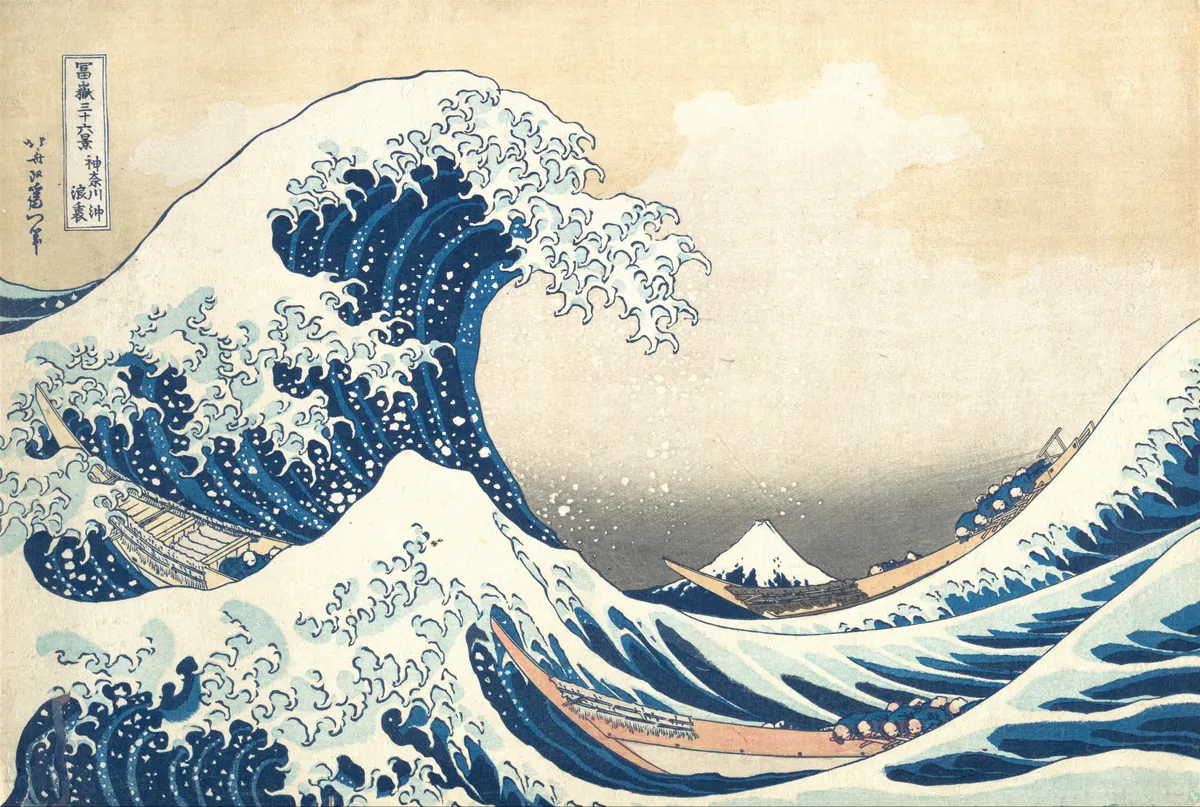
The Great Wave
The horizon trembles beneath the towering wave. Its crest curls, poised to devour everything beneath. Fishermen, mere specks on their boats, brace against nature's fury. Their wooden vessels groan, straining against the sea's pull. Salt spray stings their eyes. The air is thick with the roar of the ocean.
Beyond the chaos, Mount Fuji watches. Its peak is serene, untouched by the turmoil below. The mountain stands as a silent witness, eternal and unyielding. Clouds shroud its base, whispering of distant storms.
The wave looms, a moment frozen in time. It is both a threat and a testament to nature's power. In this suspended instant, the fishermen's fate hangs in the balance. Will they emerge from the depths, or be consumed by the tempest?
The sea is indifferent, its rhythm unchanged by human struggle. Yet, there is beauty in its brutality. The wave's crest is a delicate lace of foam, intricate and transient. It is a fleeting masterpiece, crafted by the hand of the storm.
Historical Echo
Katsushika Hokusai captured this moment in the late Edo period. His prints revealed the sublime force of nature and the vulnerability of man. "The Great Wave" became an icon, transcending its origins. It spoke of fear and awe, of survival against the odds. The image resonated far beyond Japan, influencing artists across the world. Hokusai's vision remains timeless, a reminder of nature's duality—its beauty and its threat.