

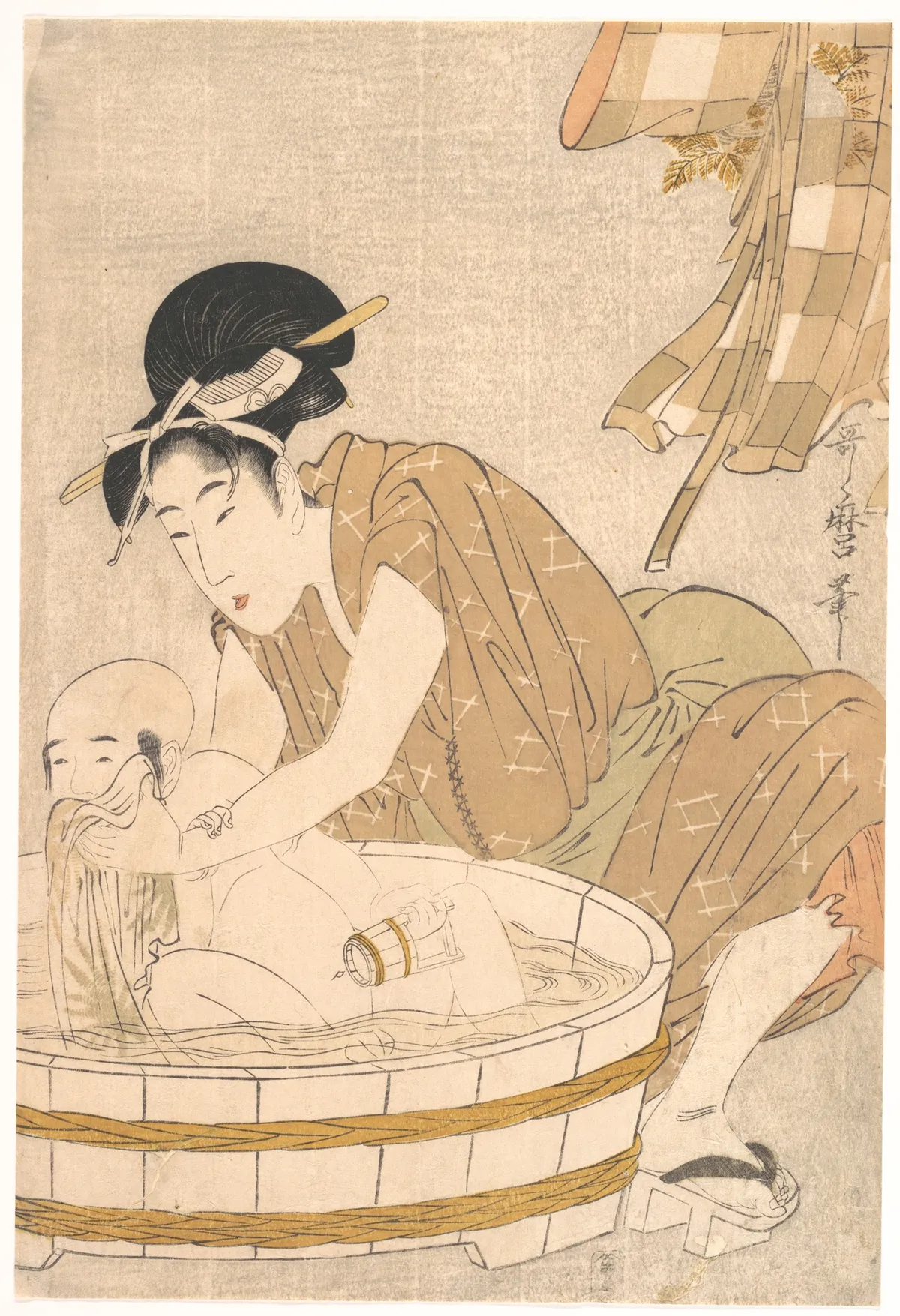
Bathtime (Gyōzui)
The room is warm with steam. A woman kneels beside a wooden tub. Her skin glistens, damp and luminous. She dips a cloth into the water, wrings it out slowly. The fabric drips, the droplets creating ripples on the water's surface. She is alone, but not lonely. The room is quiet except for the gentle splashes. Outside, the world is distant, muffled by the walls and the weight of the air. The scent of cedarwood rises, earthy and grounding. Her movements are deliberate, a moment of calm in a world that rushes by. The glow of the lantern casts soft shadows, painting her figure with a gentle light. This is her time, a brief escape. The water embraces her, the warmth soothing.
Historical Echo
In Edo, bathing was more than a necessity. It was a ritual, a moment of reflection and solitude. Kitagawa Utamaro captured this intimacy. His woodblock prints, renowned for their beauty, often depicted women in quiet moments. "Bathtime (Gyōzui)" is one such scene, created around 1801. It invites the viewer into a private world, where time seems to slow. The artistry lies in the details—the texture of the water, the softness of the light. Utamaro's work remains a testament to the beauty of everyday life, a glimpse into a past that still echoes in the present.