

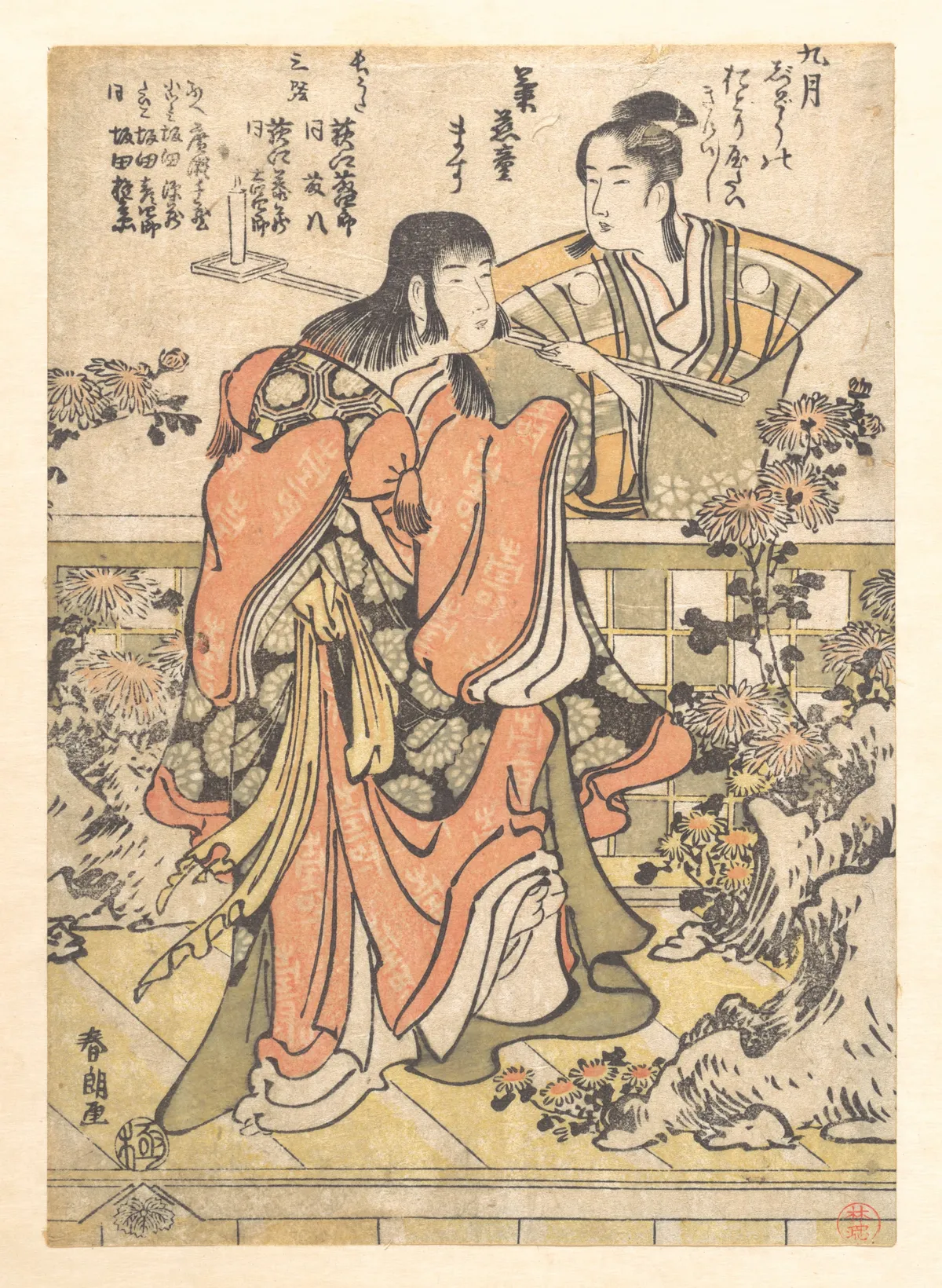
The Ninth-Month Dance
A rustle of silk echoes through the theatre. The air is thick with incense and anticipation. Under the dim light of lanterns, a figure emerges. His robe, heavy with the weight of chrysanthemums, whispers with each deliberate step. He is Kikujido, the spirit of the chrysanthemum. His movements are slow, deliberate. Each turn and gesture reflects the elegant agony of his eternal youth.
The audience holds its breath. The actor's painted face, a mask of porcelain perfection, reveals nothing. Yet his eyes, dark and deep, betray a flicker of the spirit world. The music swells, a haunting melody of shamisen and flute. It wraps around him like an unseen mist.
A low murmur runs through the crowd as Kikujido’s dance reaches its peak. The chrysanthemum petals, woven into his costume, tremble as if alive. He pauses, a moment suspended in time. The theatre is silent, save for the soft rustle of fabric and the distant echo of his footsteps.
Then, as suddenly as it began, the dance ends. Kikujido bows, the weight of centuries in his gesture. The audience erupts in applause, the spell broken. Yet, the air still hums with the lingering echo of the chrysanthemum spirit’s tale.
Historical Echo
The Kabuki dance of Kikujido is a reflection of Edo's fascination with the supernatural. The chrysanthemum, a symbol of longevity, is central to this performance. Edo audiences were captivated by such tales, where spirits and flowers entwined in dance. Hokusai, with his keen eye, captured not just the actor, but the essence of the story itself.