

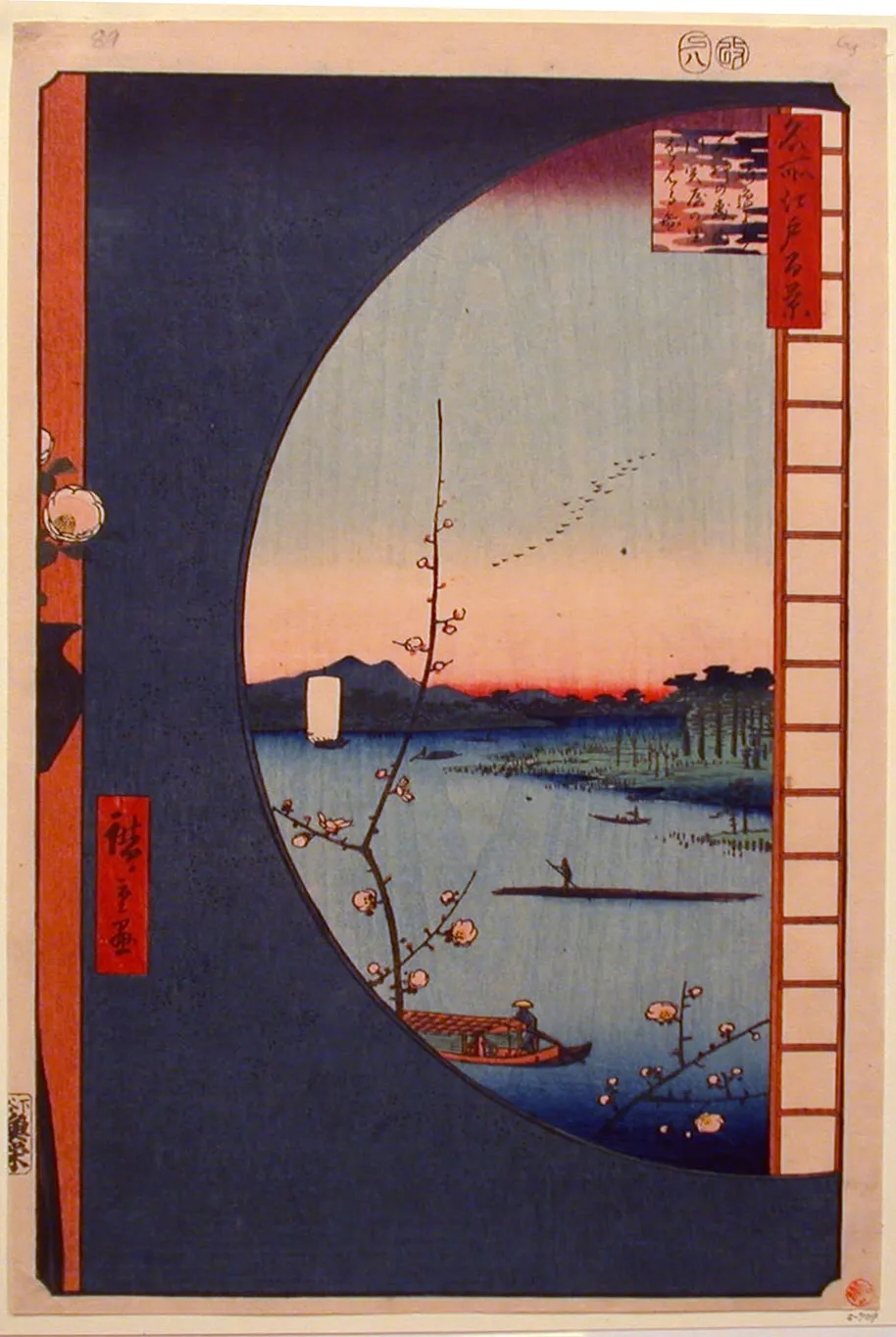
A Quiet Glance at Yedo
The air is hushed, yet vibrant with the unspoken pulse of Yedo. Thin veils of mist cling to the riverbanks, softening the edges of the city. Boats drift lazily across the water, their oars slicing the surface with a rhythmic splash. The scent of damp earth mingles with the faint aroma of roasted chestnuts from street vendors.
A lone fisherman casts his net with practised grace. His silhouette, dark against the pale dawn, is a fleeting spectre in the morning light. The city awakens slowly, buildings emerging like ancient sentinels from the fog. Lanterns flicker out one by one, surrendering to the sun's creeping warmth.
Footsteps echo along the cobblestones. A merchant hurries past, his robes brushing against the wooden stalls. The distant murmur of voices rises and falls, a living heartbeat of the bustling market. Women, with baskets in hand, barter softly, their laughter a gentle melody in the cool air.
Above, the sky stretches vast and serene, a perfect canvas for Hiroshige's eye. Each line, each colour, captures a moment — the essence of a city caught between tradition and change.
Historical Echo
In the mid-19th century, Yedo, now Tokyo, was a city of contrasts. Utagawa Hiroshige, a master of the ukiyo-e genre, captured its soul through his keen observations. His prints offered a window into daily life, freezing the ephemeral beauty of a world on the brink of transformation. Through this small view of Yedo, we glimpse a city where the past lingers in every shadow and the future whispers in every breeze.