

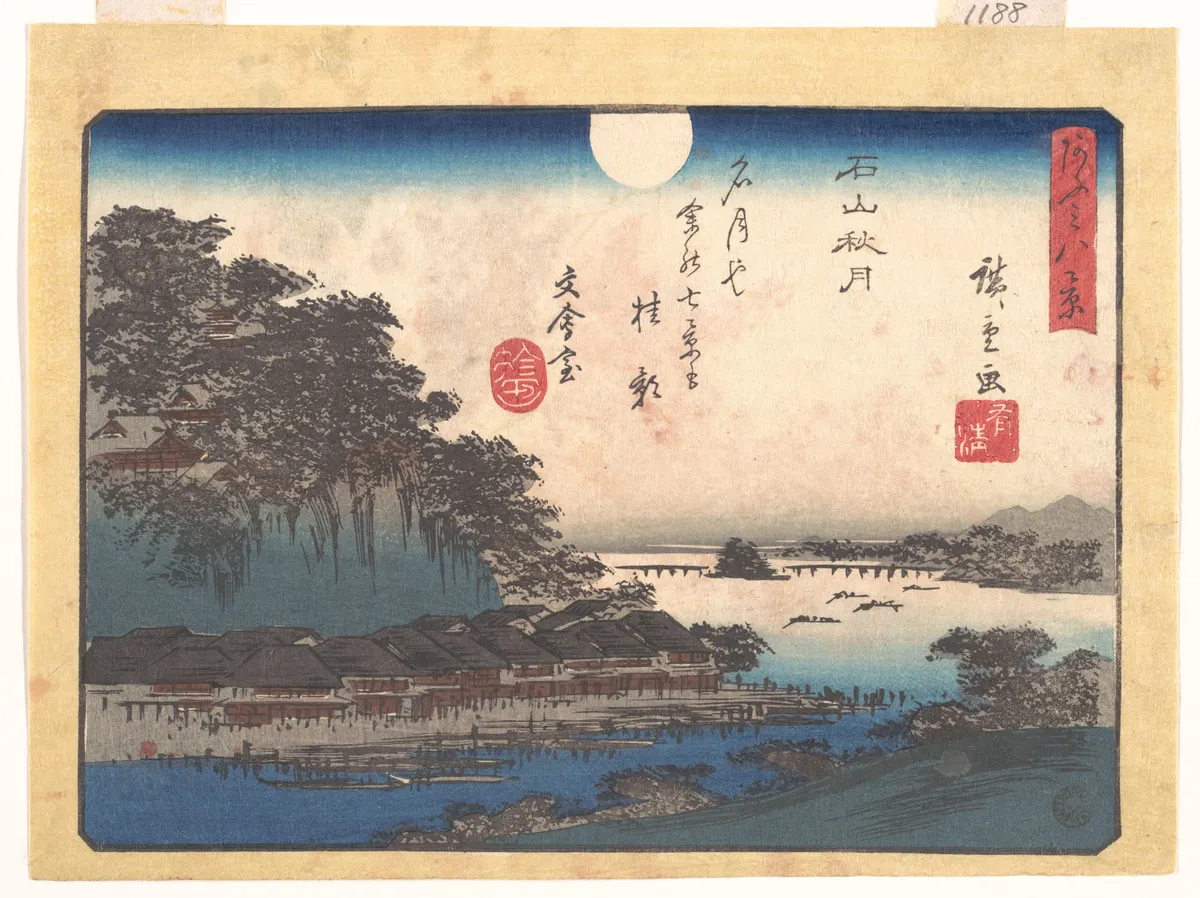
Autumn Moon at Ishiyama
Moonlight drapes the temple at Ishiyama. The air is crisp, carrying the scent of damp earth and fallen leaves. Shadows stretch across the ground, interlacing with the pale glow of the moon. A gentle wind brushes through the trees, rustling the branches softly.
The temple stands silent, a sentinel overlooking Lake Biwa. Its wooden beams creak quietly in the cool night air. Lanterns flicker dimly, their light casting long, wavering shadows. The world is hushed, as if holding its breath in the presence of the autumn moon.
Monks move with quiet purpose, their robes whispering against the tatami mats. Each step is deliberate, echoing softly in the stillness. They gather to watch the moon, a ritual as ancient as the temple itself.
A lone figure stands by the water's edge, gazing at the moon's reflection. The light shimmers on the lake, a mirror of the heavens above. The figure's silhouette is sharp against the luminous backdrop, a solitary witness to the night's serene beauty.
Historical Echo
Ishiyama-dera, the temple depicted, is perched on the eastern shore of Lake Biwa. Renowned for its views, it has inspired poets and artists for centuries. The temple's name, meaning "Stone Mountain Temple," comes from a massive rock formation at its core. In Hiroshige's time, the temple was a revered site, known for its tranquil beauty and spiritual significance.
The "Eight Views of Ōmi" series captures the region's most picturesque landscapes. Each scene reflects a different time of day and season, a homage to nature's ephemeral beauty. Hiroshige's prints, like this one, evoke a sense of quiet contemplation, inviting viewers to pause and reflect on the transient beauty of the world.