

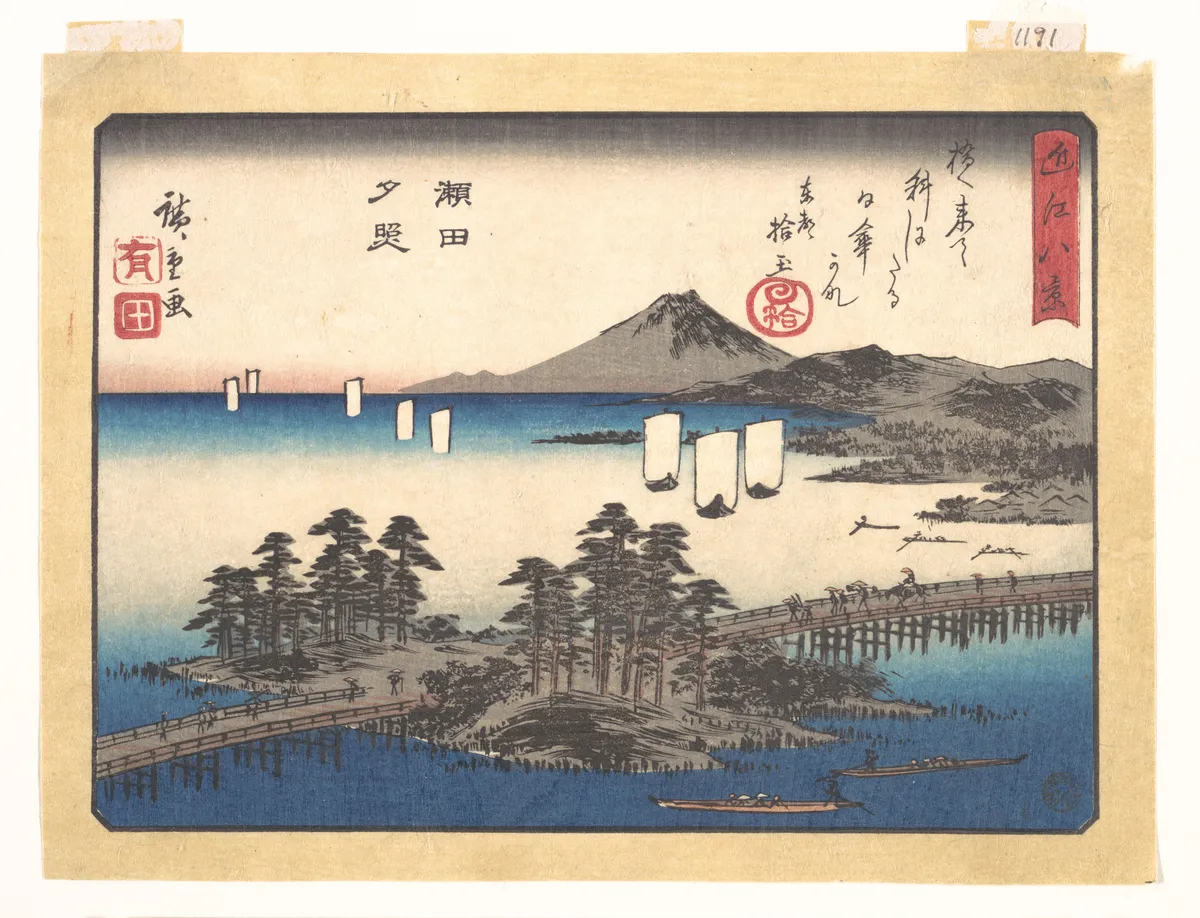
Sunset Glow at Seta
The bridge stretched across the Seta River, its wooden planks glowing under the waning sun. A soft orange enveloped the sky, casting long shadows that danced on the water’s surface. Boats drifted quietly, their sails catching the gentle evening breeze. The air was thick with the scent of damp earth and river mist.
Fishermen gathered their nets, their murmurs blending with distant bird calls. A lone traveller paused mid-crossing, gazing at the horizon where light met water. His footsteps were slow, deliberate, as if each step was a part of a silent dialogue with the fading day.
The hills stood in quiet repose, guardians of the moment. Time seemed to ripple, much like the gentle waves below. As the sun dipped lower, the colours deepened, wrapping the scene in a melancholy warmth. Here, at Seta, the world held its breath, suspended between day and night.
Historical Echo
Seta Bridge, a vital link in the landscape, has long been a subject of artistic admiration. During the Edo period, it was celebrated in poetry and prints. Utagawa Hiroshige captured its essence with an uncanny ability to evoke the ephemeral beauty of twilight. His work remains a testament to the tranquil yet transient moments that define Japan’s natural scenery. As the sun set over Seta, it was not just the day that ended, but a moment in history forever etched in ink and paper.