

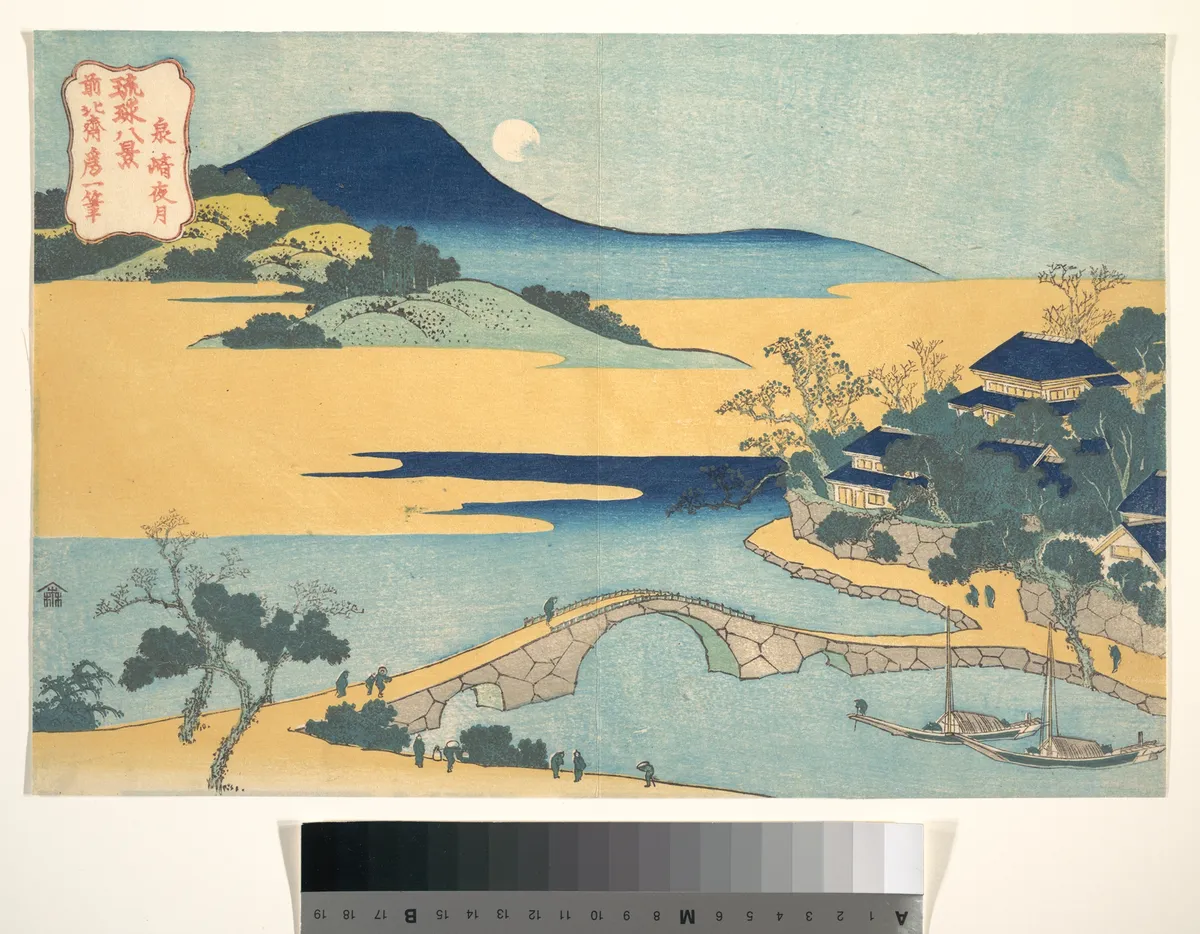
Evening Moon at Izumizaki
The moon hung low, casting a silver path across the placid waters of Izumizaki. Shadows stretched long and thin, merging with the cool embrace of the night. A solitary boat, its oars resting silent, drifted gently, cradled by the rhythmic lapping of the sea. The air was thick with the scent of salt and distant pine, a quiet hymn to the island's serene beauty.
A figure stood on the shore, silhouetted against the moon's glow. His robes whispered in the breeze, a soft murmur against the night. He raised his head, eyes tracing the arc of the celestial orb, lost in thought or perhaps in memory. The world felt suspended, a delicate balance between light and dark, silence and sound.
From the hills, a faint rustle of leaves echoed, a reminder of the unseen life that thrived in the shadows. The evening was alive, a living tapestry woven from nature's quiet moments. In this stillness, time seemed to pause, allowing the moon to etch its silver glow into the heart of the night.
Historical Echo
In the early 19th century, the Ryūkyū Islands were a realm of mystery and exotic allure to the people of Edo. Katsushika Hokusai, already a master of ukiyo-e, captured their essence with delicate precision. His series, "Eight Views of the Ryūkyū Islands," offered a glimpse into this distant land, each print a window into the serene yet vibrant life of the islands.
"Evening Moon at Izumizaki" holds a special place within the series. It embodies the tranquil beauty of the Ryūkyū evening, where the moonlight dances on water and silence speaks volumes. Hokusai's skill lies in his ability to convey the intimate relationship between the land, the sea, and the sky, evoking a sense of wonder and peace that transcends time.