

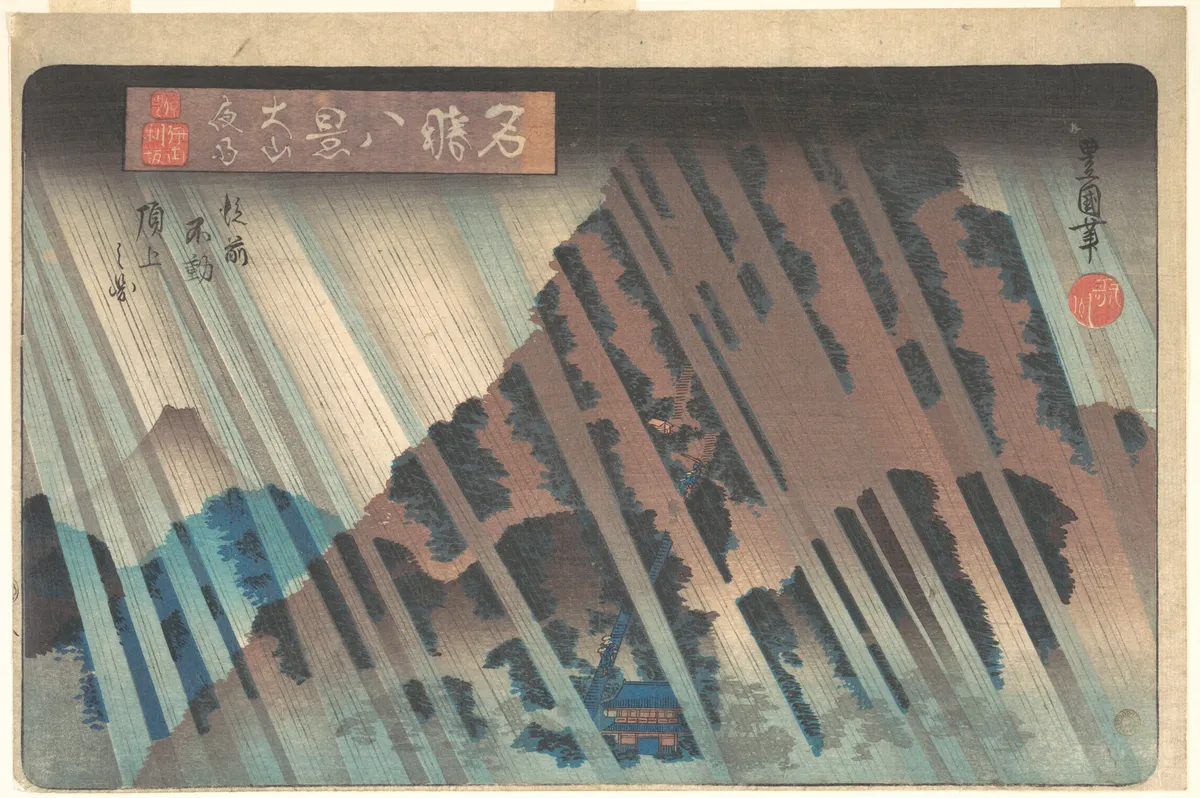
Night Rain at Ōyama
The rain fell relentlessly on Ōyama. Each drop a quiet percussion against the earth. A lone traveller trudged up the slick path, his straw hat tilted low, a flimsy shield against the downpour. The air was thick with the scent of wet pine and damp soil. Shadows clung to the trees, their branches swaying gently under the weight of the rain. The path twisted ahead, disappearing into the mist that clung to the mountain.
His sandals squelched with each step, the rhythm a solitary song in the night's embrace. A distant temple bell echoed, its sound absorbed by the rain. Lanterns flickered like winking eyes, casting brief pools of light before succumbing to the darkness. The traveller paused, listening to the whispered secrets of the forest, the language of leaves and water.
Somewhere in the distance, a fox cried out—a sharp punctuation to the night's symphony. He lingered a moment longer, the rain soaking through his clothes, the weight of the journey heavy upon his shoulders. Yet, there was peace in the solitude, a quiet acceptance of the night's offering. With a final glance at the invisible moon, he continued his ascent, a solitary figure swallowed by the rain.
Historical Echo
In the early 19th century, Ōyama was a revered pilgrimage site. The mountain, with its sacred temple, drew countless visitors seeking blessings. Despite the rain, they came, wrapped in layers against the chill, their footsteps a testament to faith. Utagawa Toyokuni II captured this moment—a fleeting intersection of nature and humanity—as if the rain itself was a guardian of secrets, veiling the travellers in its embrace.