

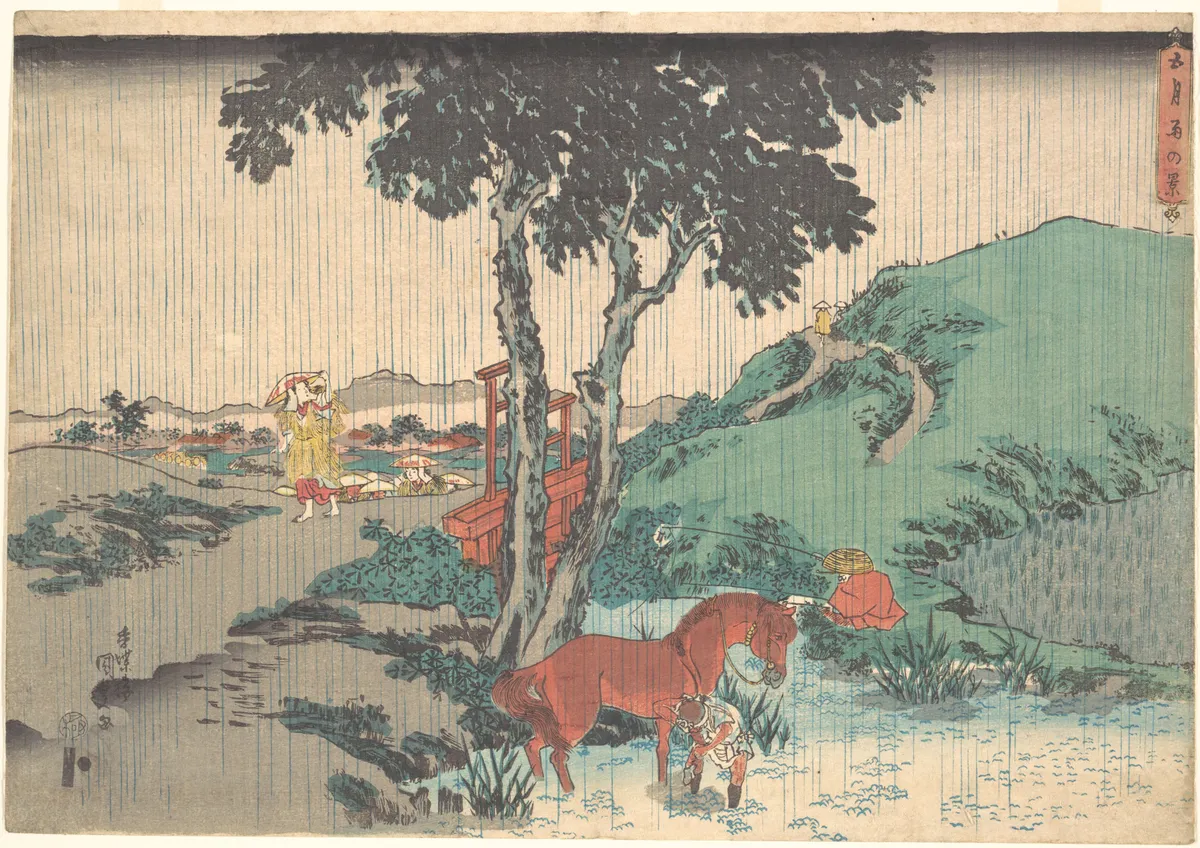
Rain of the Fifth Month
The rain fell in soft whispers. Each droplet a muted note in the symphony of the night. Edo's streets lay under a sheen of silver, their cobbles shining like the scales of a great, sleeping dragon. The air was heavy with the scent of wet earth and pine, a fragrance that clung to the wooden beams and paper walls.
A solitary figure moved through this rain-washed world. She held an umbrella of deep indigo, its surface dotted with the rhythmic patter of rain. Her footsteps were soundless, absorbed by the night and the ceaseless rain. Her kimono, a river of silk, flowed around her, the fabric a canvas of midnight hues.
The lanterns flickered, their light a gentle dance against the dark. Shadows played along the narrow alleys, lending them a depth that invited secrets and whispers. The woman paused, her gaze drawn to the soft glow of a distant lantern, its light a beacon in the rain.
Time seemed to slow, the world reduced to the simple interplay of rain and light. The rain's melody was eternal, a timeless lullaby that connected the past with the present. In this moment, under the rain of the fifth month, the streets of Edo breathed, alive with memory and anticipation.
Historical Echo
In the Edo period, rain held a profound significance. It was a harbinger of growth, a cleanser of past sins, and a curtain that veiled the city in mystery. Kunisada, with his deft hand, captured this essence. The rain was not merely water; it was a living entity, shaping the lives and stories of those who dwelled beneath it. Each print he crafted was a window into a world where nature and humanity danced in quiet harmony.