

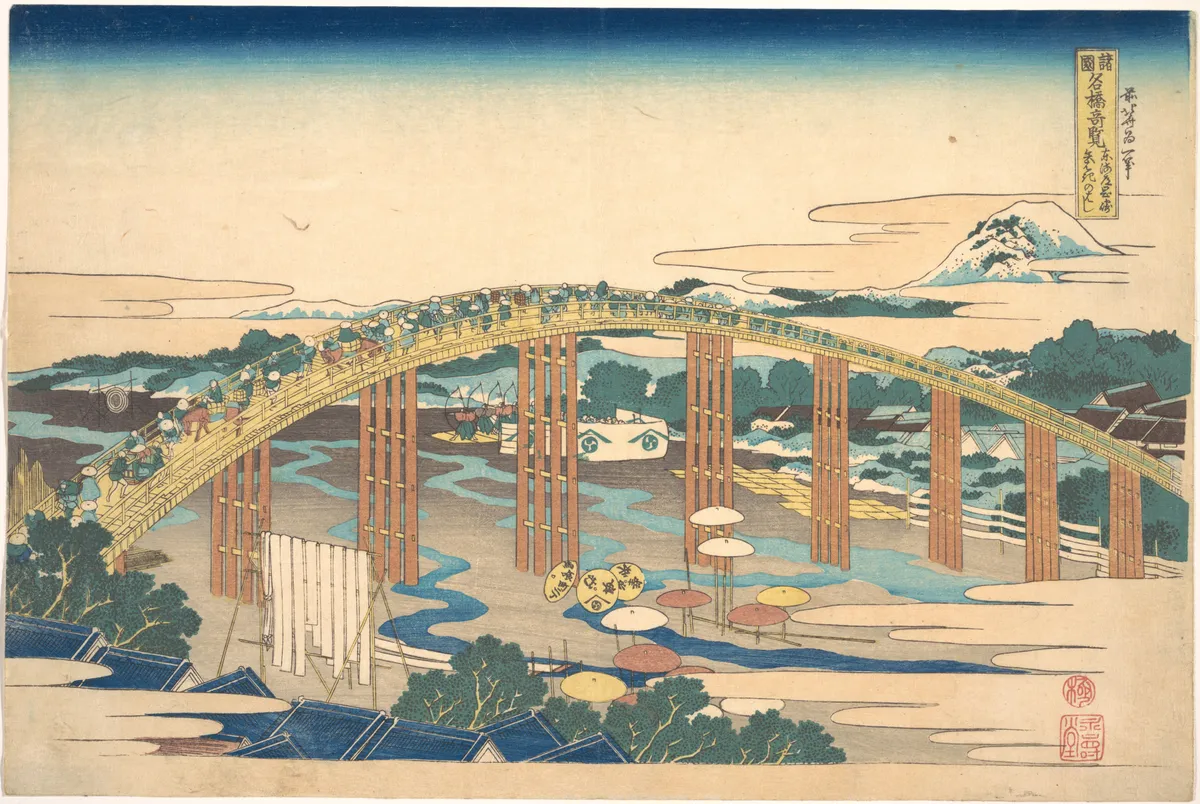
Beneath Yahagi Bridge
The wooden planks creak under the weight of travellers. Yahagi Bridge stretches across the river, a lifeline between towns. Underneath, the water whispers against the supports, timeless and relentless. The air is thick with the smell of wet wood and distant rain.
Travellers move slowly, burdened by their own stories. A merchant clutches his wares, eyes scanning the horizon. Beside him, a monk, robes billowing, pauses to listen to the river's quiet song. Their footsteps mark a rhythm, a soft percussion on the bridge.
Above, clouds gather. The sky darkens, casting long shadows across the water. In the distance, mountains loom, silent witnesses to countless crossings. The scene is suspended between the past and the present, each step a reminder of journeys taken and yet to come.
Historical Echo
The Yahagi Bridge, depicted in Hokusai's series, was a vital artery of the Tōkaidō. This route connected Edo and Kyoto, bustling with merchants, pilgrims, and samurai. Bridges, like Yahagi, were more than mere structures; they were thresholds, carrying the weight of countless lives and stories. Hokusai captures this fleeting moment, where nature and human endeavour meet, echoing the hushed whispers of history.