

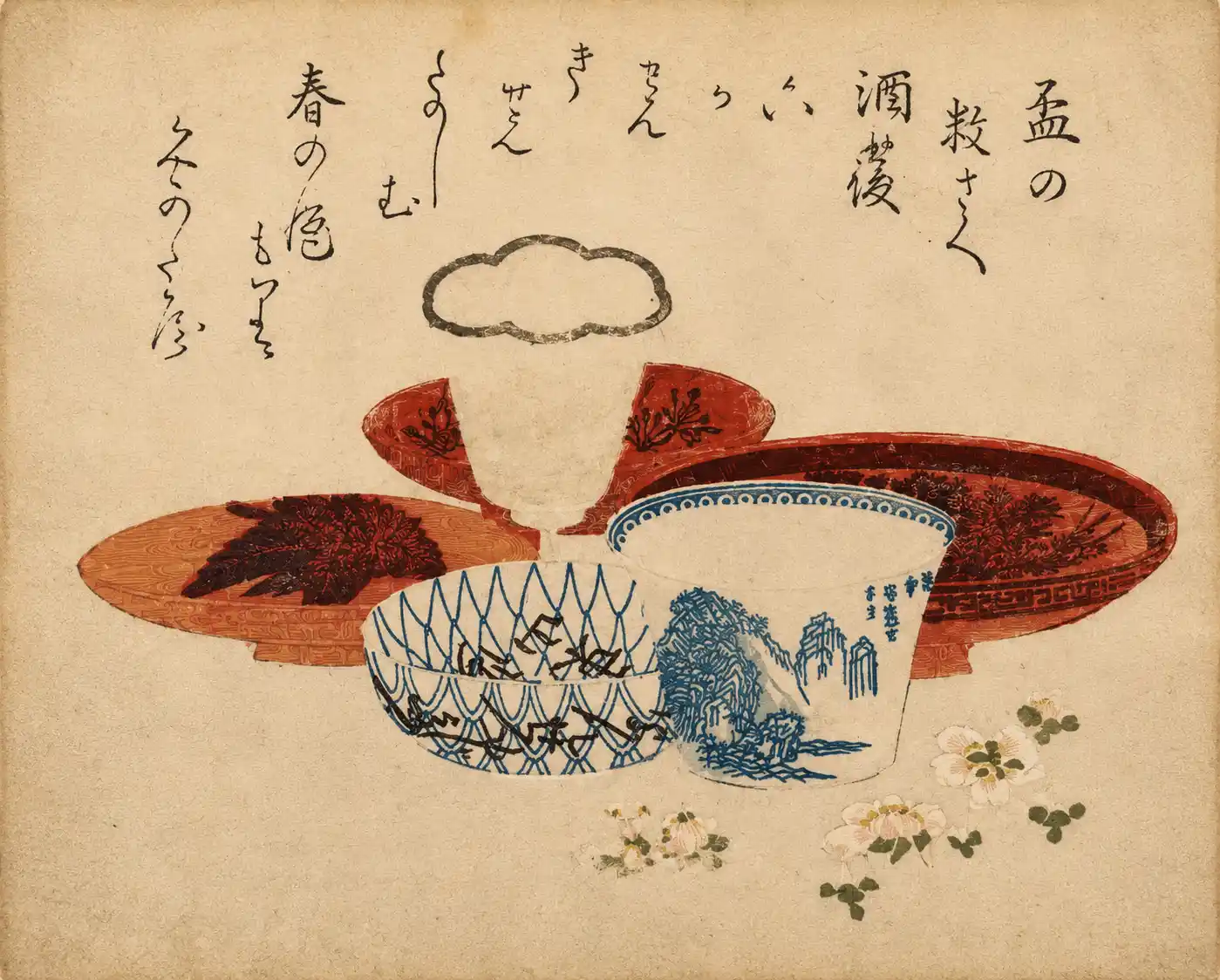
Six Sake Cups for a New Year’s Toast
The room still carried the warmth of sake. A paper door remained half open, letting the cold spring air drift quietly across the tatami. Someone had just left. The blue porcelain bowl still held the memory of lips. Red lacquer trays glowed softly beneath the lantern light, their dark floral patterns sinking into shadow like wet leaves after rain. Steam rose slowly at the centre of the table. Not dramatic. Not sacred. Only human. From somewhere deeper inside the house, a kettle lid trembled gently. Outside, wind moved through the narrow Edo alleyways, bringing the faint scent of plum blossoms before disappearing again into the night. The bowls were ordinary things. But ordinary things survive the longest in memory. Ink brushed across the paper in drunken poetry, bleeding softly into the fibres of old washi. No signatures. No ambition. Only a quiet wish to hold warmth a little longer before morning arrived. In Edo, people understood something simple: Even loneliness tastes softer when shared beside warm sake and fading steam.
Historical Echo
In the late Edo period, the art of "mitate-e" and surimono with kyoka (comic poems) became popular. People captured the essence of gatherings, seasons, and objects within these prints. They were not meant for collection; they were a fleeting warmth captured in a single night. The rising steam was perhaps the closest Edo people came to happiness. Ordinary moments, shared in silence, became the eternal echoes of a transient world.