

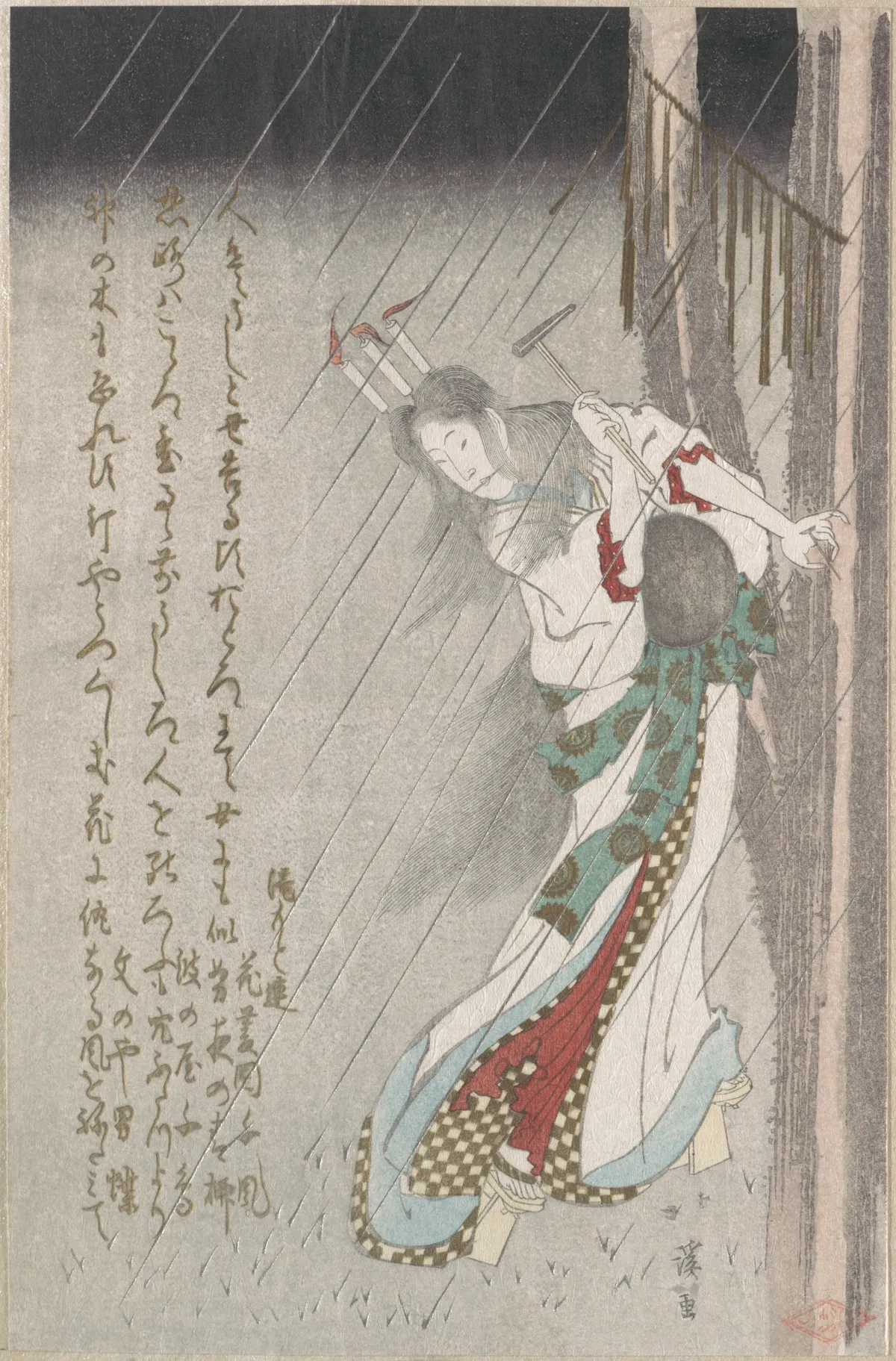
Midnight Curse
The rain falls like whispers on the darkened ground. Midnight shrouds the world in a heavy cloak. A woman stands alone, her kimono drenched, clinging to her like a second skin. In her hand, a long iron nail glints under the dim moonlight.
She moves through the shadows, each step deliberate, her breath visible in the cold night air. Her heart beats with a rhythm of resolve, echoing the rain's persistent patter. The wet earth yields beneath her wooden sandals, absorbing the weight of her silent fury.
Ahead, a solitary tree looms. Its bark is rough, ancient, bearing witness to countless nights and secrets. She approaches, eyes dark with unspoken vows. The nail, a talisman of her grief, catches the moon's gaze once more.
With steady hands, she places it against the tree's heart. A hammer appears, like a phantom born of her will. The first strike reverberates through the night, a sound both hollow and final. Each blow carries her betrayal's echo, a curse wrapped in iron and wood.
The rain mingles with tears she will not shed. The tree stands as her witness, the nail an iron testament to love's bitterness. In the distance, the world remains unaware, wrapped in its own slumber.
The ritual complete, she fades into the night. The rain continues its whispered descent, erasing her footprints, but not her resolve. The tree, now cursed, stands alone, bearing the weight of her silent wrath.
Historical Echo
In the Edo period, nails driven into trees were believed to invoke curses. Women, scorned lovers, or those wronged would perform these midnight rituals. The act was a secret, a whisper of vengeance against the unfaithful. Totoya Hokkei captures this haunting moment, blending nature's quiet fury with human despair. The print evokes the era's belief in curses, reflecting a world where the unseen held power over fate.