

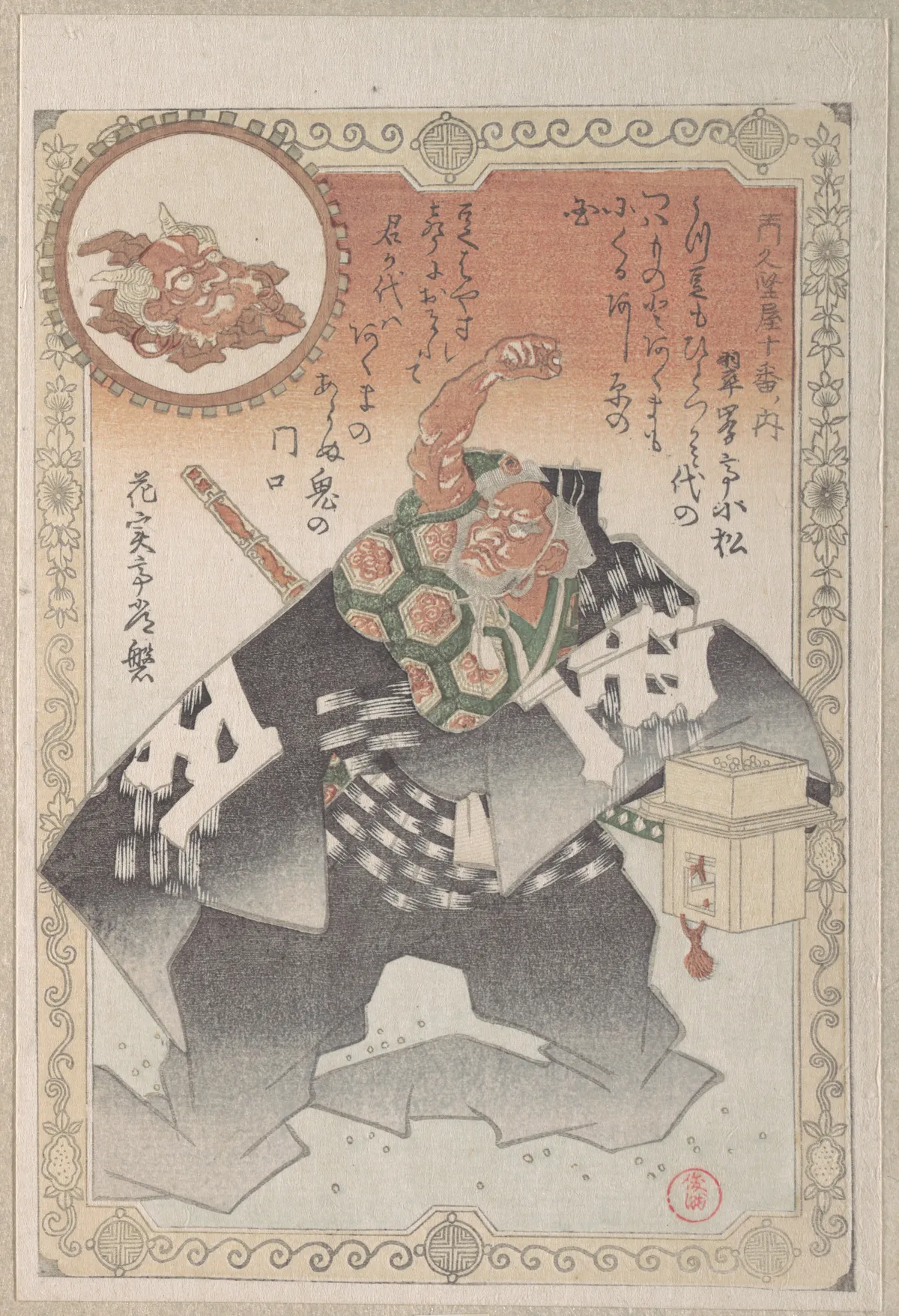
Actor Scattering Peas
The air hangs heavy with anticipation. An actor stands poised, his robes whispering with each deliberate movement. The wooden stage beneath his feet creaks softly, echoing the solemnity of the occasion. In his hand, a small handful of hard peas.
The lanterns around flicker, casting elongated shadows that dance across the tatami mats. Outside, the chill of the New Year bites the air, but within, warmth flows from the gathering of bodies. Silence swathes the room, broken only by the gentle rustle of silk and the quiet breath of those watching.
With a graceful sweep, the actor scatters the peas. They patter against the floor, a staccato rhythm punctuating the room. Each pea, an offering, a ward against the unseen spirits that linger in the corners, waiting for a moment of weakness.
The actor's face, serene yet intense, embodies the duality of the ceremony. His eyes, dark and knowing, scan the room, meeting the gazes of those who stand witness. This ritual, an ancient dance of protection and renewal, holds them captive.
The peas continue their descent, rolling to a stop, the sound fading into the silence once more. The actor bows, the weight of tradition resting upon his shoulders. Outside, the wind rises, whispering through the branches, a reminder of the world beyond this sacred space.
Historical Echo
In the Edo period, such ceremonies were woven into the fabric of life. Exorcisms, a blend of theatre and spirituality, marked the turning of the year. Actors, revered and mysterious, carried the power to protect and cleanse. The scattering of peas, simple yet profound, symbolised the casting away of misfortune, inviting fortune to fill the void left behind. Kubo Shunman's work captures this fleeting moment, a testament to the enduring dance between the seen and unseen, the tangible and the ethereal.