

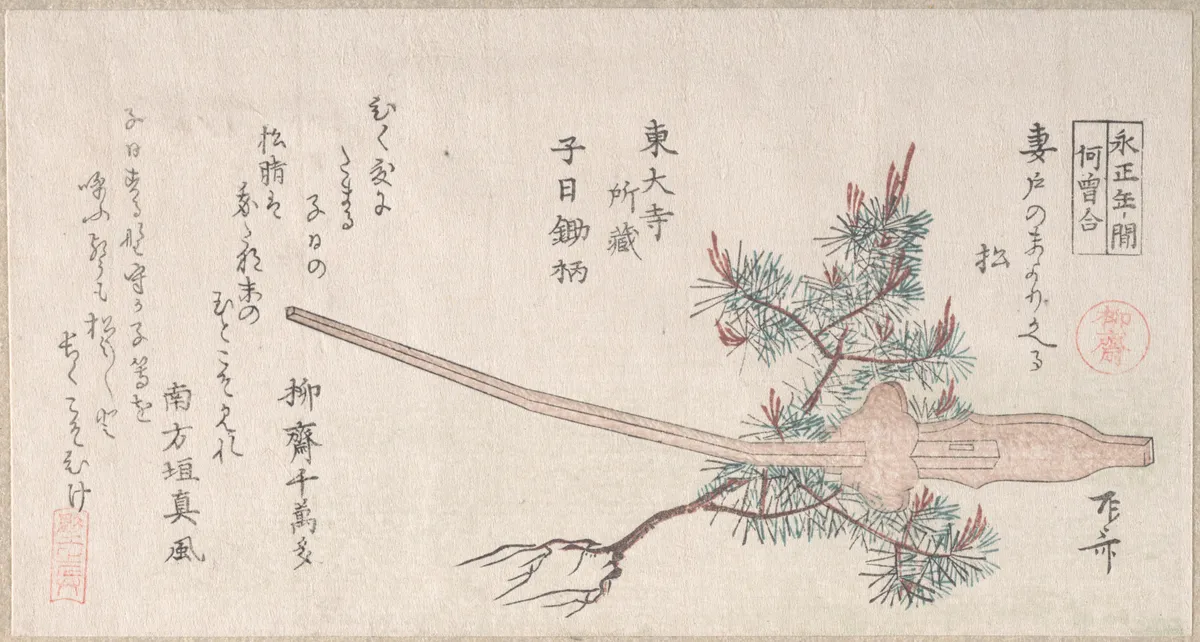
Young Pine Tree and the Handle of a Plow
The scent of fresh earth lingers. A young pine tree stands alone, its needles whispering in the breeze. It is green, vibrant, full of life's promise. Beside it, the handle of a plow rests, worn and smooth from years of toil. The wood is dark, polished by calloused hands.
Soft morning light filters through low clouds. The air is cool, heavy with the night's dew. Silence wraps the scene, broken only by distant bird calls. The plow, a relic of man's touch, lies forgotten in the field. It speaks of seasons past, of harvests and labours long ended.
The pine tree, new to the world, reaches skyward. Its roots dig deep, intertwining with stories untold. Time stretches, weaving nature and human endeavour into a quiet tableau. This moment, captured in ink and colour, holds a quiet reverence for life's cycles.
Historical Echo
In the 19th century, Japan's landscapes were both cultivated and wild. As fields transformed under human hands, echoes of nature's resilience persisted. Ryūryūkyo Shinsai, an artist of the shinhanga movement, captured this delicate balance. His work, 'Young Pine Tree and the Handle of a Plow', evokes a time when the new and the old coexisted in harmony. The image, though simple, speaks volumes of the era's shifting landscapes and enduring connections between man and nature.