

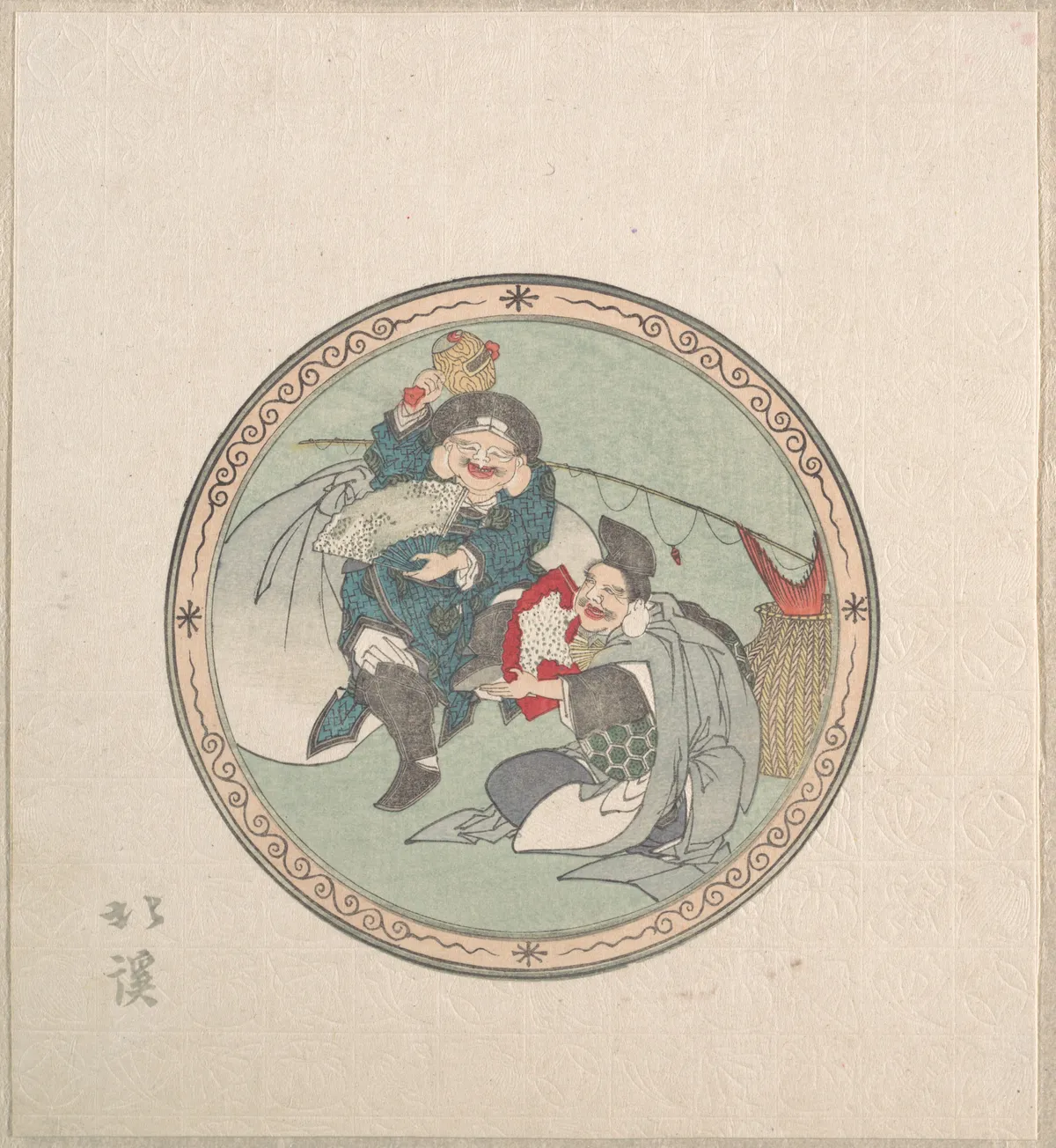
Fortune's Quiet Laughter
Ebisu's laughter echoed softly in the dim light. His face, warm and round, glowed with quiet joy. Beside him, Daikoku, with his plump hands, held a mallet of fortune. The wood beneath them creaked gently, alive with the weight of gods.
The room was still, shadows dancing along the paper walls. Incense wafted, a thin spiral of smoke. It mingled with the earthy scent of tatami mats. Outside, the wind rustled through bamboo leaves like whispered secrets.
Ebisu adjusted his hat, a slight tilt that sent a ripple of silk. His eyes, kind and serene, watched Daikoku's every move. The mallet, heavy with promise, was poised. An unseen rhythm connected them, a silent pact.
Their presence, though light, filled the space. It was as if the air itself bent to their will. A subtle hum of prosperity lingered, unspoken but felt. Together, they were a quiet assurance of fortune's favour.
Historical Echo
Ebisu and Daikoku, two among the Seven Gods of Good Fortune, embody prosperity and joy. Ebisu, patron of fishermen, brings laughter. Daikoku, with his magical mallet, promises abundance. These deities, captured by Totoya Hokkei in the 19th century, remind us of the gentle yet powerful presence of fortune. The ukiyo-e print, with its delicate lines and muted colours, echoes an era where divine blessings were woven into everyday life.