

Silent Preparations
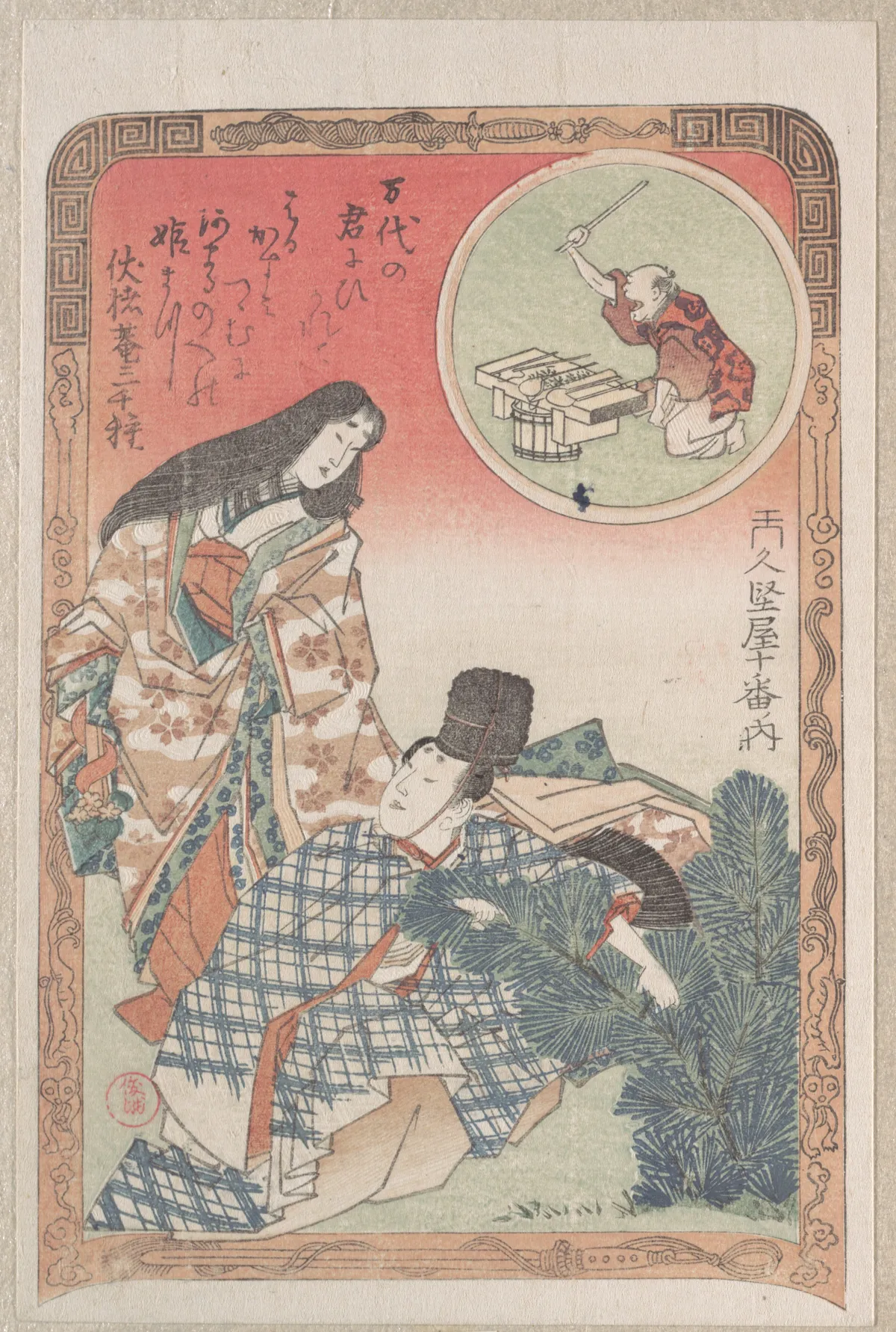
The room is hushed, save for the soft rustle of silk. A man and woman move with deliberate grace. They are clad in ceremonial robes, the fabric heavy yet fluid like water. Their sleeves whisper as they reach towards the pine tree.
In the corner, a paper lantern casts a gentle glow. Shadows flicker on the wall, dancing to the rhythm of their movements. The air is thick with the scent of pine needles, sharp and invigorating.
The man's hands are steady, his touch respectful as he arranges the branches. The woman watches, her eyes calm pools reflecting the flicker of flames. She steps forward, placing a small ornament with care. It catches the light, a glimmer of gold against green.
Outside, the wind is a distant murmur, a reminder of the world beyond these walls. But here, within this intimate space, time is suspended. The New Year waits, patient and unhurried.
Historical Echo
In the Edo period, New Year was a time of profound significance. Homes were cleansed and decorated with symbols of good fortune. Pine trees, resilient through winter, became emblems of endurance and vitality.
Kubo Shunman, a master of delicate detail, captured these rituals. His prints, rich in texture and atmosphere, offer a glimpse into these private, sacred moments.
In this image, the act of decoration becomes a silent prayer. Each ornament placed with intent, each gesture a tribute to continuity and hope.