

The Silent Arrangement
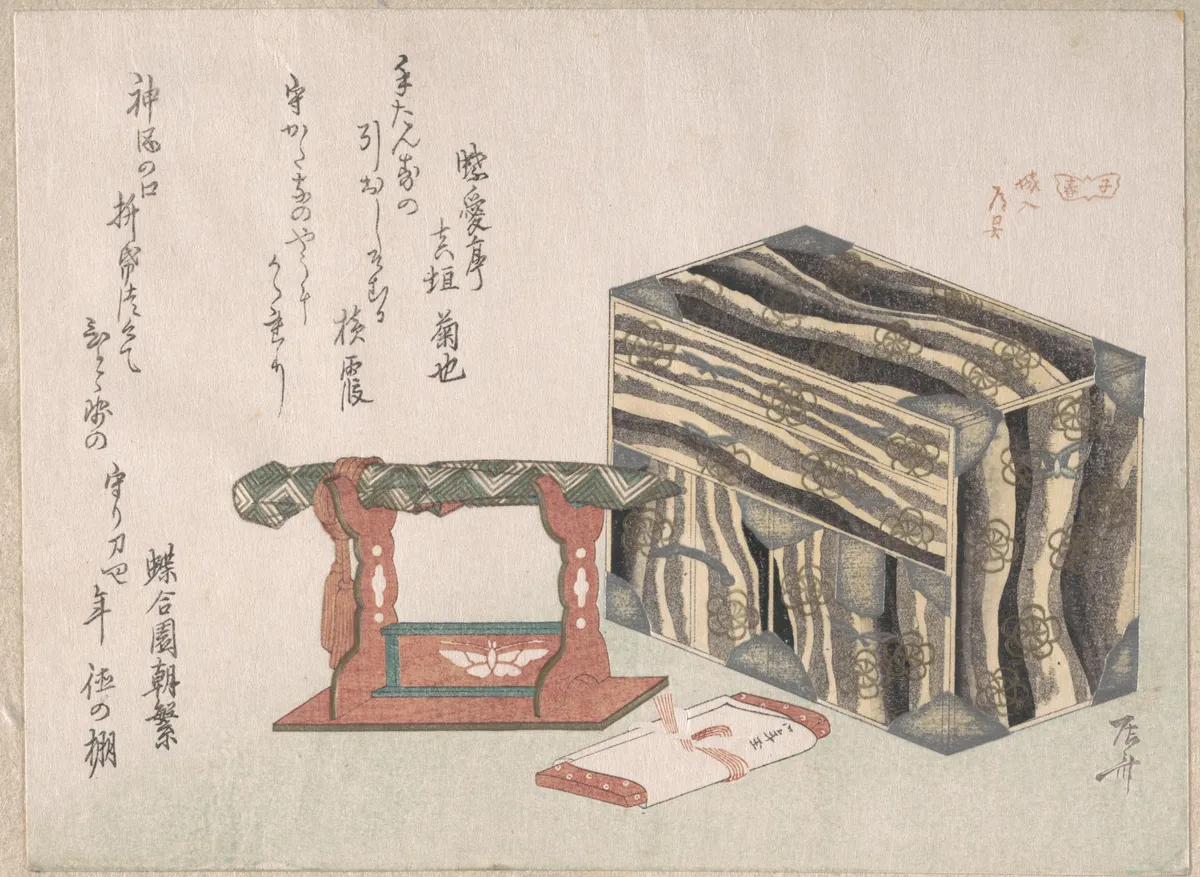
In the dim light of the room, shadows played across the surface of polished wood. A small cabinet stood quietly, its lacquered surface glistening like a still pond under moonlight. Next to it, a sword stand held two blades, their hilts darkened with age and use.
The air was heavy with the scent of incense, a lingering trace of past rituals. The only sound was the soft rustle of silk as a figure moved through the room. He paused before the cabinet, his fingers brushing lightly over its surface, feeling the smoothness, the coldness of the wood.
There was something solemn about the arrangement of objects, an unspoken history in their presence. The swords, once wielded with honour, now rested in silence. The cabinet, a keeper of secrets, guarded its contents with a quiet dignity.
Through the paper screens, the distant murmur of the city seeped in, a low hum of life continuing beyond these walls. Yet here, in this room, time seemed to hold its breath.
The man stood still, eyes lingering on the small cabinet and the sword stand, as if listening for the echoes of a forgotten conversation. The past whispered in the creak of floorboards, in the shifting of shadows.
Outside, the world moved on, but within this space, the past and present coexisted in a delicate balance, held together by the quiet presence of wood and steel.
Historical Echo
Ryūryūkyo Shinsai's work captures a moment of introspection within the Edo period. The small cabinet and sword stand are more than mere objects; they are vessels of memory, holding stories of the samurai class. Created around 1816, this print reflects the era's shifting sands, where the sword's role in society was changing. Shinsai, known for his detailed and serene compositions, invites the viewer into a world of contemplation, where the past lingers in everyday objects, speaking to those who choose to listen.