

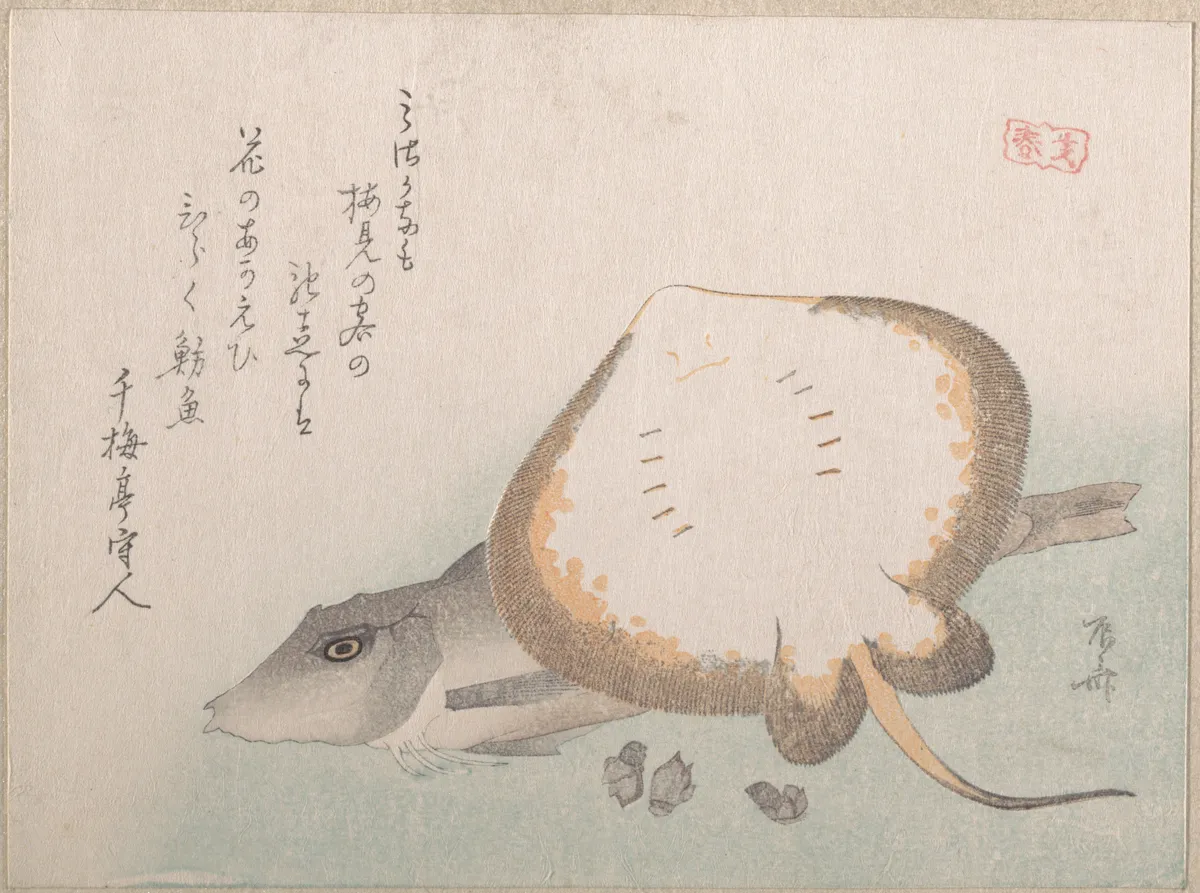
Stingray and Gurnard
In the quiet of the sea's embrace, a stingray glides. Its wide body moves like a shadow. The water is cool, dark. Light filters through, painting the sand with flecks of gold. Nearby, a gurnard hovers, its fins fanning like delicate wings. It is a world of silence, punctuated by the soft rustle of sand and the muted pulse of the ocean.
The stingray pauses, sensing the gurnard's presence. They share this realm, creatures of the deep, bound by the same waters. The gurnard's eyes shine, reflecting the dim light. Its body, a blend of reds and browns, seems to shimmer. The stingray, in contrast, is a silhouette, a ghost in this underwater domain.
Time moves slowly here. The world above fades, leaving only the dance of these two. The stingray resumes its journey, a languid sweep across the seabed. The gurnard follows, a silent companion in this aquatic ballet. Together, they navigate the currents, etching patterns in the sand that will soon vanish.
Historical Echo
In 1815, Japan remained closed off from the world. Yet, within its shores, artists like Ryūryūkyo Shinsai captured the essence of nature. His woodblock print of the stingray and gurnard reveals a fascination with the sea's mysteries. Shinsai's work invites us to witness the beauty beneath the waves, a timeless moment preserved in ink and paper. Here, the creatures of the ocean are not just subjects—they are storytellers, whispering tales of the deep to those who choose to listen. Shinsai's art bridges the seen and unseen, a quiet testament to the enduring allure of the natural world.