

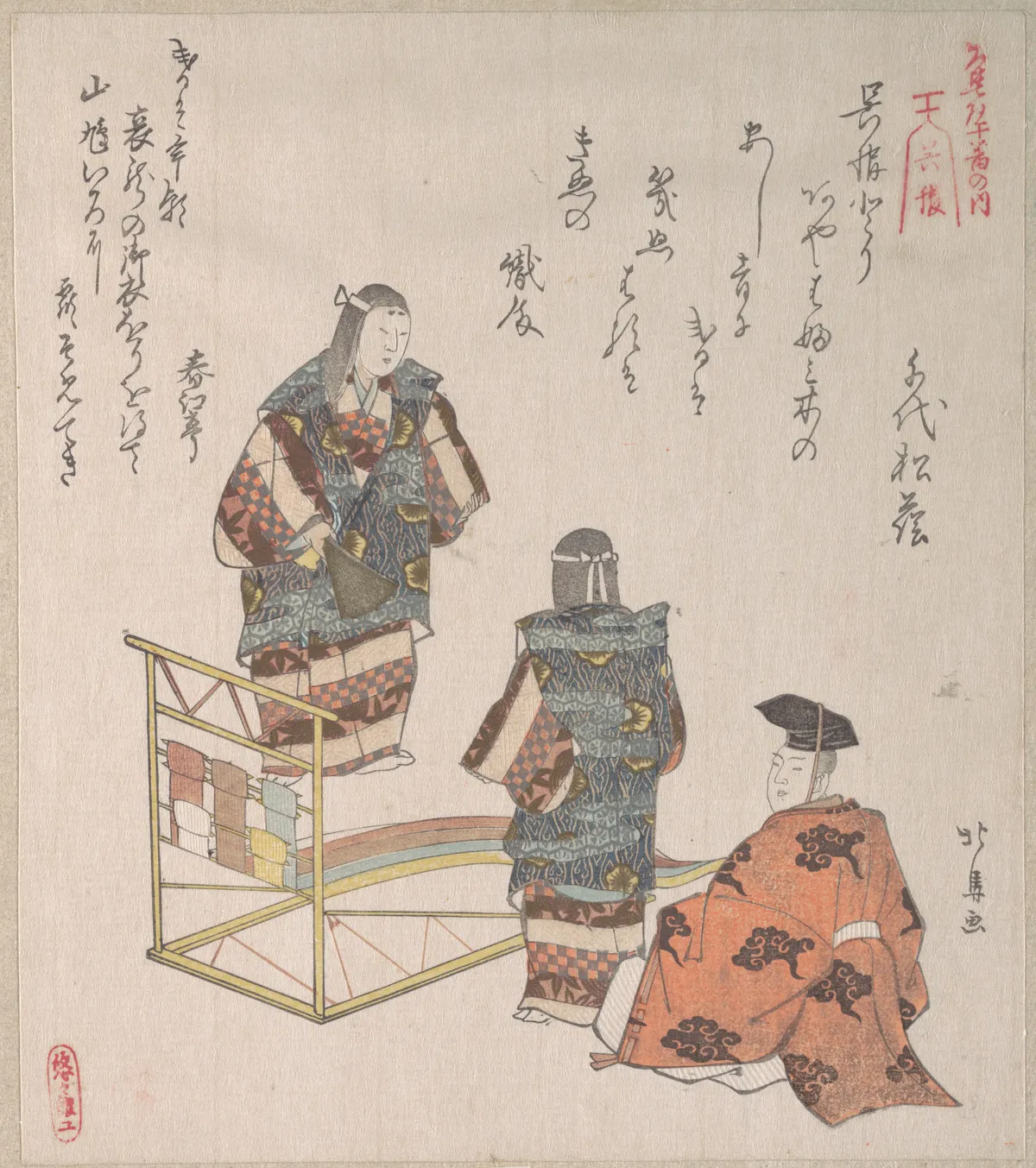
Kureha's Stage
The air is thick with incense. A lone figure moves across the stage, each step slow, deliberate. The robe, heavy with embroidered patterns, whispers against the wooden floor. Behind, shadows play tricks in the lamplight, flickering like spirits caught between worlds. The mask, serene yet haunting, conceals the dancer's emotions. Only the eyes, dark and distant, speak of ancient stories. There is no sound but the soft rustle of silk and the distant echo of a flute. The audience, unseen in the darkness, holds its breath, suspended in the moment. In this dance, time bends, and the past breathes once more.
Historical Echo
Teisai Hokuba, a master of the ukiyo-e form, captures the essence of Noh theatre. "Kureha," a tale told through movement, is a dance of subtlety and restraint. Noh, with its roots deep in Japanese tradition, speaks through silence as much as sound. Hokuba's work, created in the 19th century, preserves this delicate art, allowing the viewer a glimpse into a world where the line between the living and the spectral blurs.