

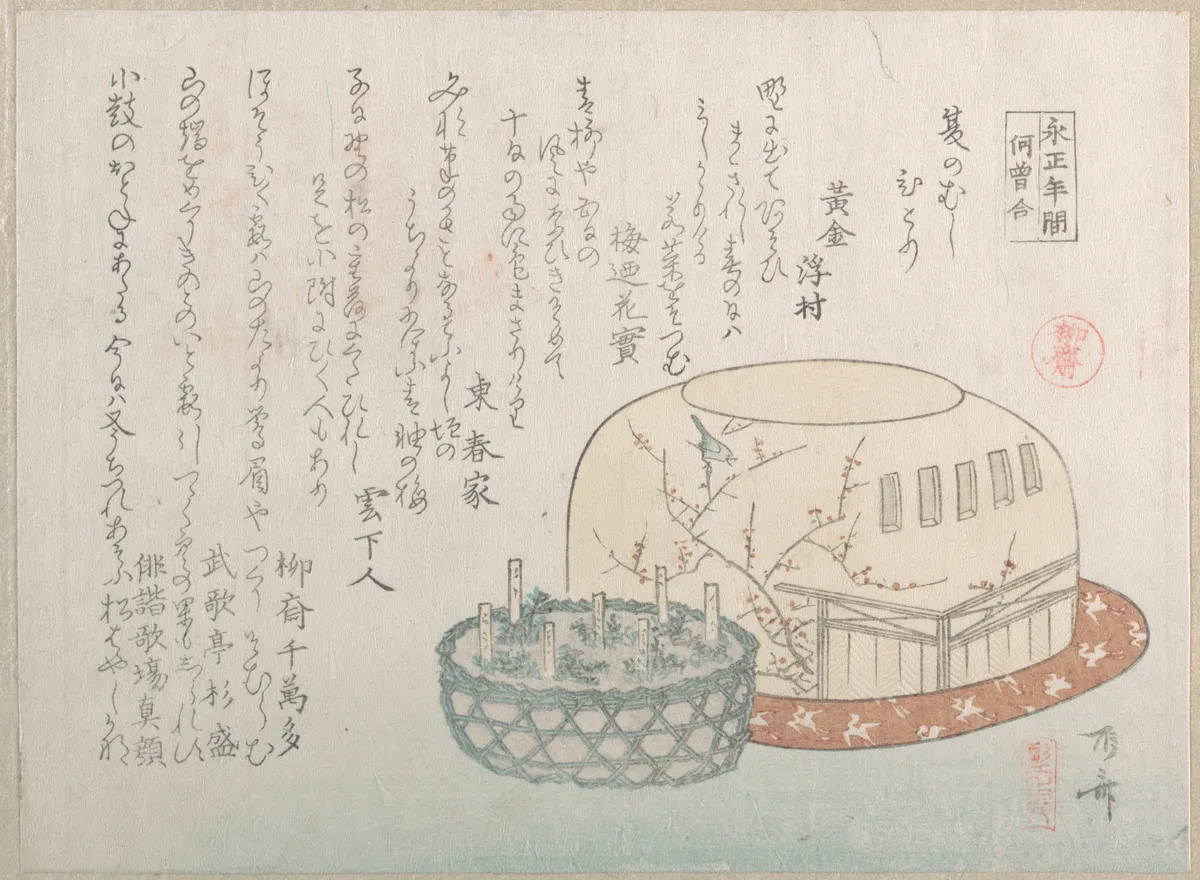
Insect Catcher and Potted Herbs
The room is quiet. A faint rustling of silk breaks the silence. The summer air hangs heavy and still. Through a slatted window, moonlight spills across the tatami floor. Shadows dance in the corners, caught between the pale glow and the darkness.
A man, dressed in a simple robe, kneels by a collection of potted herbs. His movements are deliberate, almost ritualistic. He places a small bamboo cage beside him. Inside, a single cricket sings its mournful song. The sound echoes softly against the wooden walls.
The air is thick with the scent of mint and basil, mingling with the earthy aroma of the plants. It feels as though the room breathes with him, sharing the secrets of the night. He reaches out, gently cradling a delicate leaf between his fingers. The texture is soft, almost imperceptible.
Outside, the world is silent. Only the distant croak of a frog disturbs the stillness. The man closes his eyes, listening to the symphony of unseen life. He is both a part of this world and apart from it, a solitary figure in a tapestry of shadows.
Historical Echo
Ryūryūkyo Shinsai, a master of capturing the ephemeral, created this piece in the 19th century. His work often depicted the quiet, overlooked moments of life. The 'Insect Catcher and Potted Herbs' is a testament to this vision. It reveals the hushed beauty of a single night, the whisper of a breeze through leaves, the timeless dance of light and shadow. In Shinsai's world, even the smallest details hold the weight of eternity.