

The Silent Melody
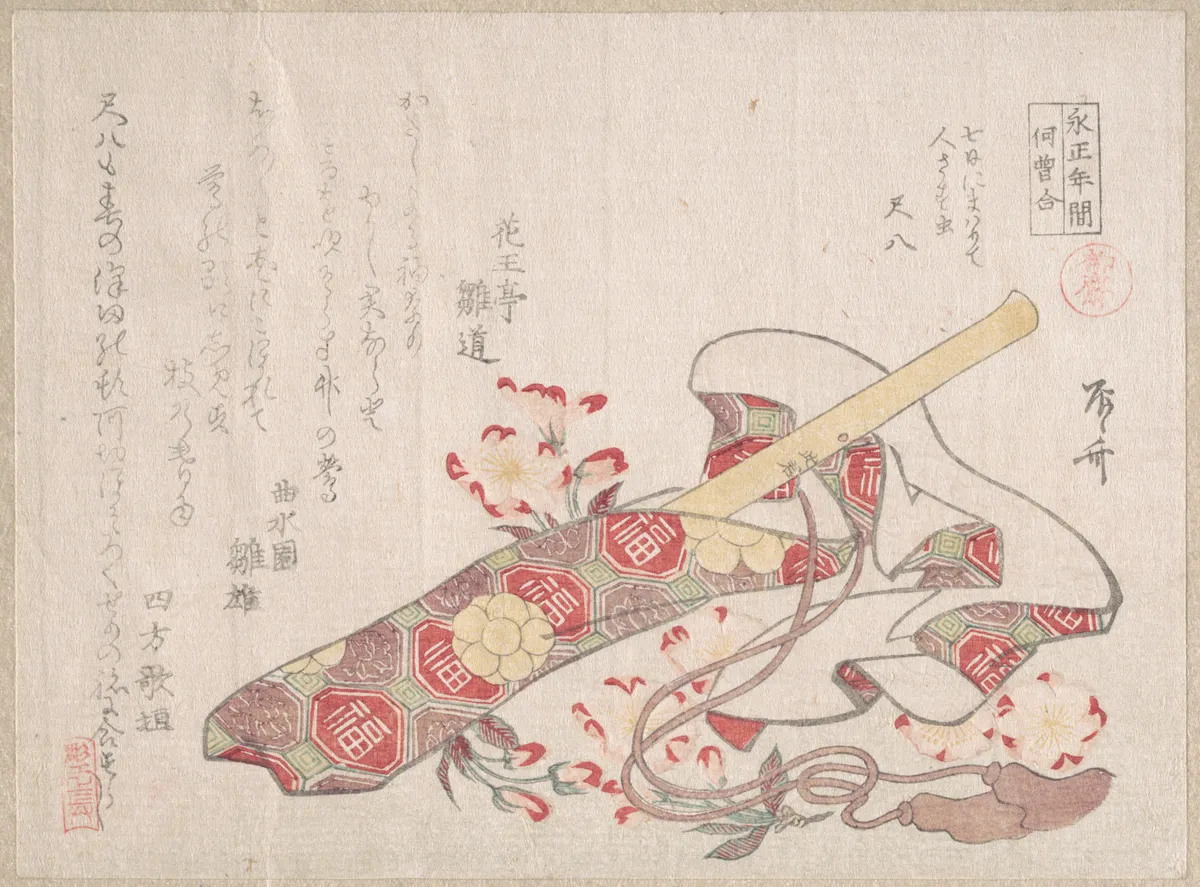
In the quiet corner of a dim room, a shakuhachi lay resting. Its bamboo body gleamed softly in the muted light. Beside it, a delicate cover, woven from fabric, waited patiently. Cherry flowers, scattered across the surface, added a whisper of colour to the scene. Their petals lay still, yet spoke of spring.
The air held a faint scent of blossoms. A gentle breeze stirred the paper screen. Shadows danced briefly on the tatami floor. The flute seemed to breathe, its presence a silent promise of music yet to come.
In the stillness, time slowed. The past lingered in the air. A player’s fingers, long gone, once coaxed haunting notes from this simple instrument. Echoes of those melodies clung to the bamboo, now silent but not forgotten.
The room, filled with the weight of memories, waited. For a hand to lift the flute. For breath to fill it. For the cherry flowers to witness the return of sound.
Historical Echo
During the Edo period, the shakuhachi was more than a musical instrument. It was a tool of meditation for Zen Buddhist monks. Played by wandering komusō, these flutes transmitted the whispers of nature and the soul. The cherry blossoms, ephemeral and transient, echoed the impermanence of life. Ryūryūkyo Shinsai captured this essence in woodblock, where sound and silence intertwine. Through his art, the stillness of the moment continues to resonate.