

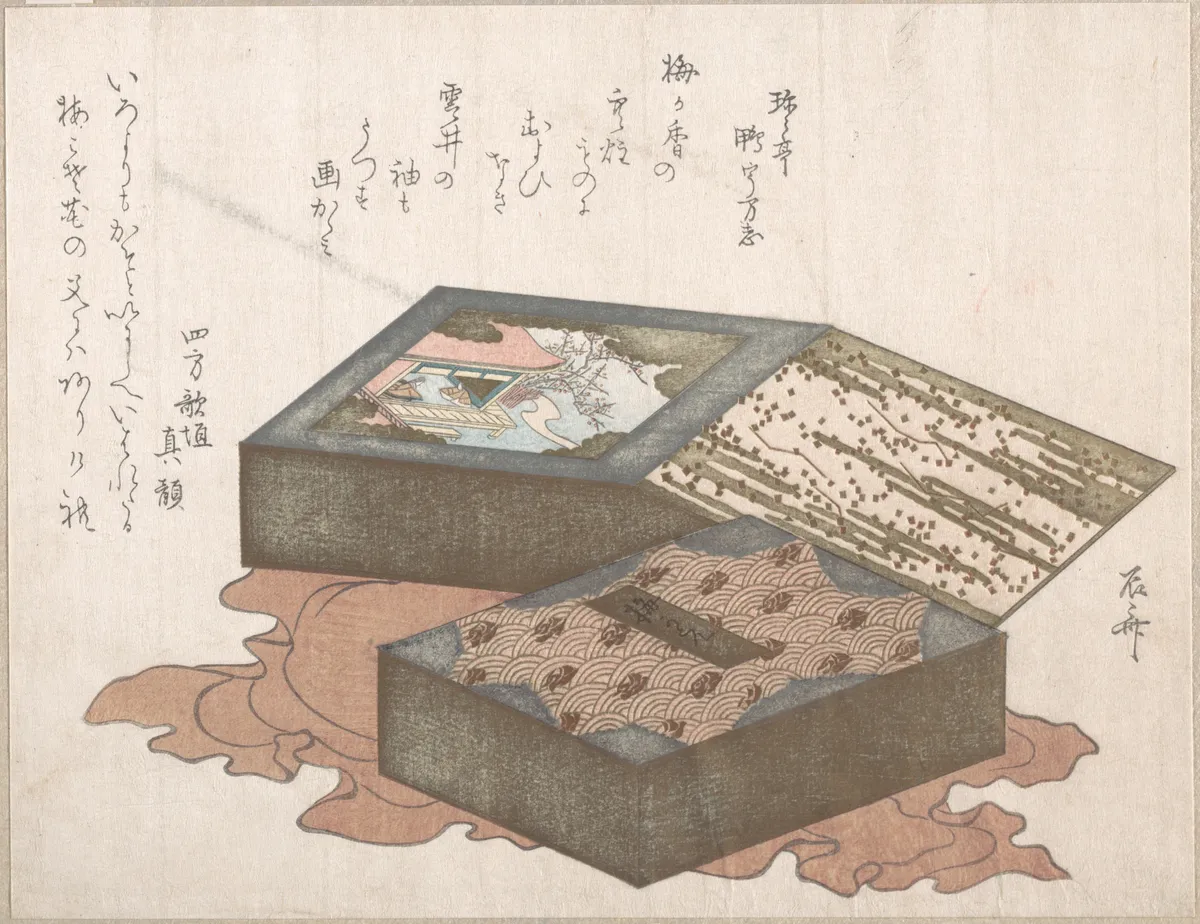
Silent Offerings
The room is still. A lone candle flickers. Shadows play across the tatami. The faint scent of sweet bean paste lingers in the air. On the low wooden table rests a box. It is wrapped in a delicate cloth. The fabric's pattern, soft blue against white, whispers of distant waves.
A creak of floorboards. A figure moves in the shadows. An elderly woman, her kimono rustling softly. She kneels before the box. Her hands move with quiet reverence, untying the cloth. The knot loosens, revealing the box beneath.
She lifts the lid. Inside, cakes lie nestled. Perfectly round, dusted with a fine layer of powdered sugar. The air is cool. The cakes seem to hum with their own sweetness.
The woman pauses. Her eyes close, as if listening to a distant memory. The room is filled with silence. Only the gentle crackle of the candle persists. Carefully, she takes a cake, placing it on a small porcelain dish. The gesture is deliberate, as if offering a silent prayer.
The cloth, now untied, rests beside the box. The candle flickers again, casting its glow over the scene. Shadows dance once more, as if in silent conversation. The night deepens, holding its breath.
Historical Echo
In the 19th century, sweets were more than mere confections. They were offerings, tokens of respect, symbols of fleeting moments. Wrapped with care, they spoke of tradition. Ryūryūkyo Shinsai captured this essence. His woodblock print, a study in simplicity, reveals the quiet beauty of everyday life. The wrapping cloth, a humble protector, becomes a canvas of memory. Through this image, we glimpse a world where silence is rich with meaning.