

A Winter's Pause
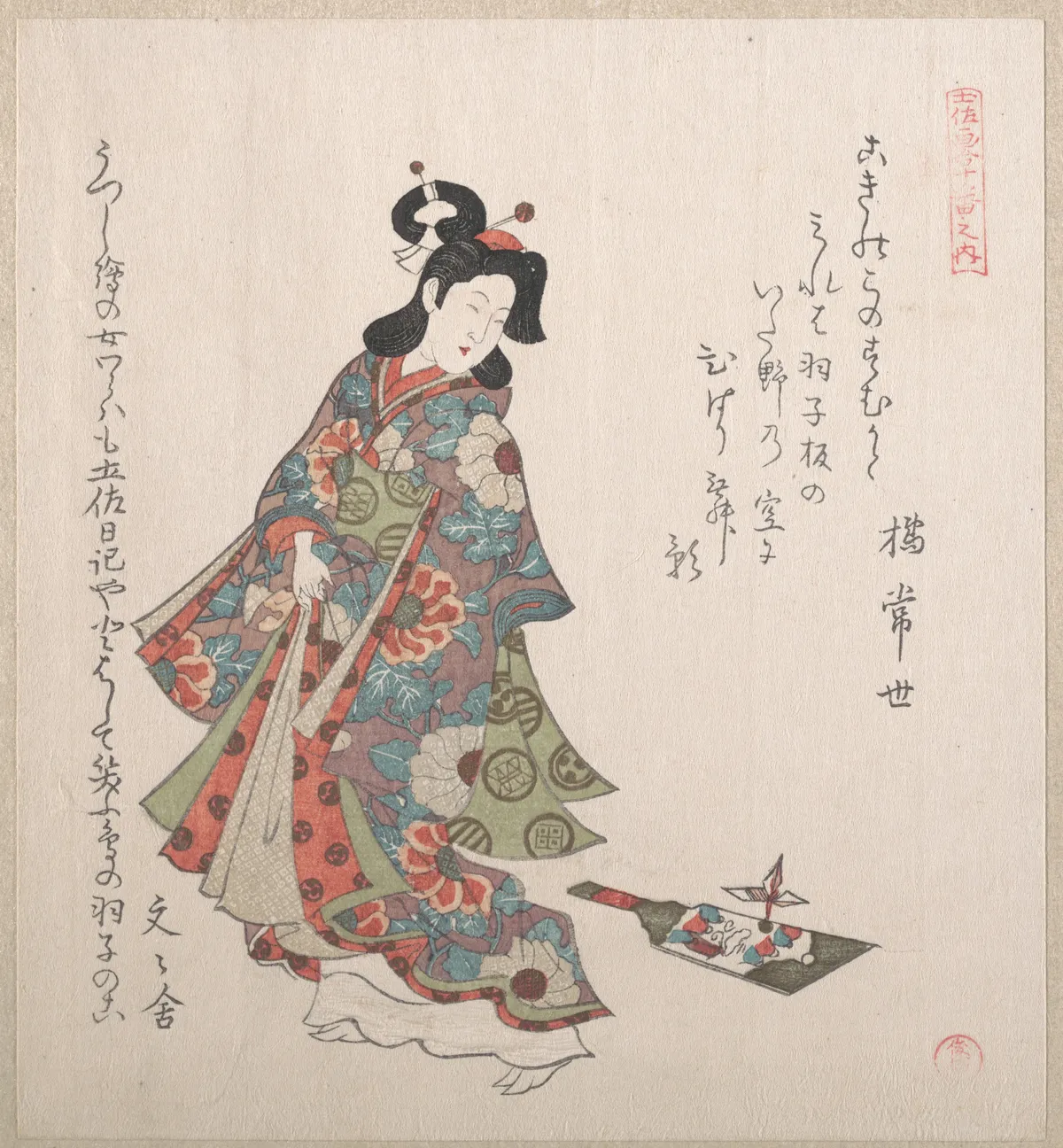
The air is crisp, carrying the faint scent of snow. A young girl stands alone, a hagoita in her hand. Her kimono whispers with each movement, a soft rustle against the quiet morning. The battledore is intricately painted, its colours vivid against the muted winter light.
She raises it with deliberate care. Her eyes trace the shuttlecock's path, a gentle arc through the still air. There is a pause, a breath held in the silence. Her focus is unwavering, the world narrowing to this singular moment.
Around her, the world is hushed. Frost clings to the edges of leaves, glistening like tiny stars. Her breath forms delicate clouds, dissolving into the cold. The sound of the shuttlecock meeting the wooden paddle echoes softly, a rhythm to her solitary play.
This is a ritual, a dance with the unseen. Each stroke, a whisper of time, each breath, a measure of grace. She is alone, yet not lonely. The hagoita, a companion in this winter's game, speaks of festivals and laughter, of crowds and noise. But here, in this moment, there is only her and the soft thud of the shuttlecock.
Her world, for now, is small and complete.
Historical Echo
In the Edo period, hagoita was more than a game. It was a symbol of good luck, exchanged during the New Year. This tradition of hanetsuki, a battledore and shuttlecock game, was a popular pastime among young girls. The hagoita, often beautifully decorated, was also a work of art. Crafted with care, it became a treasured possession, passed from generation to generation. In Kubo Shunman's depiction, this simple act of play becomes a quiet reflection of cultural heritage, captured in the delicate lines and soft colours of ukiyo-e.