

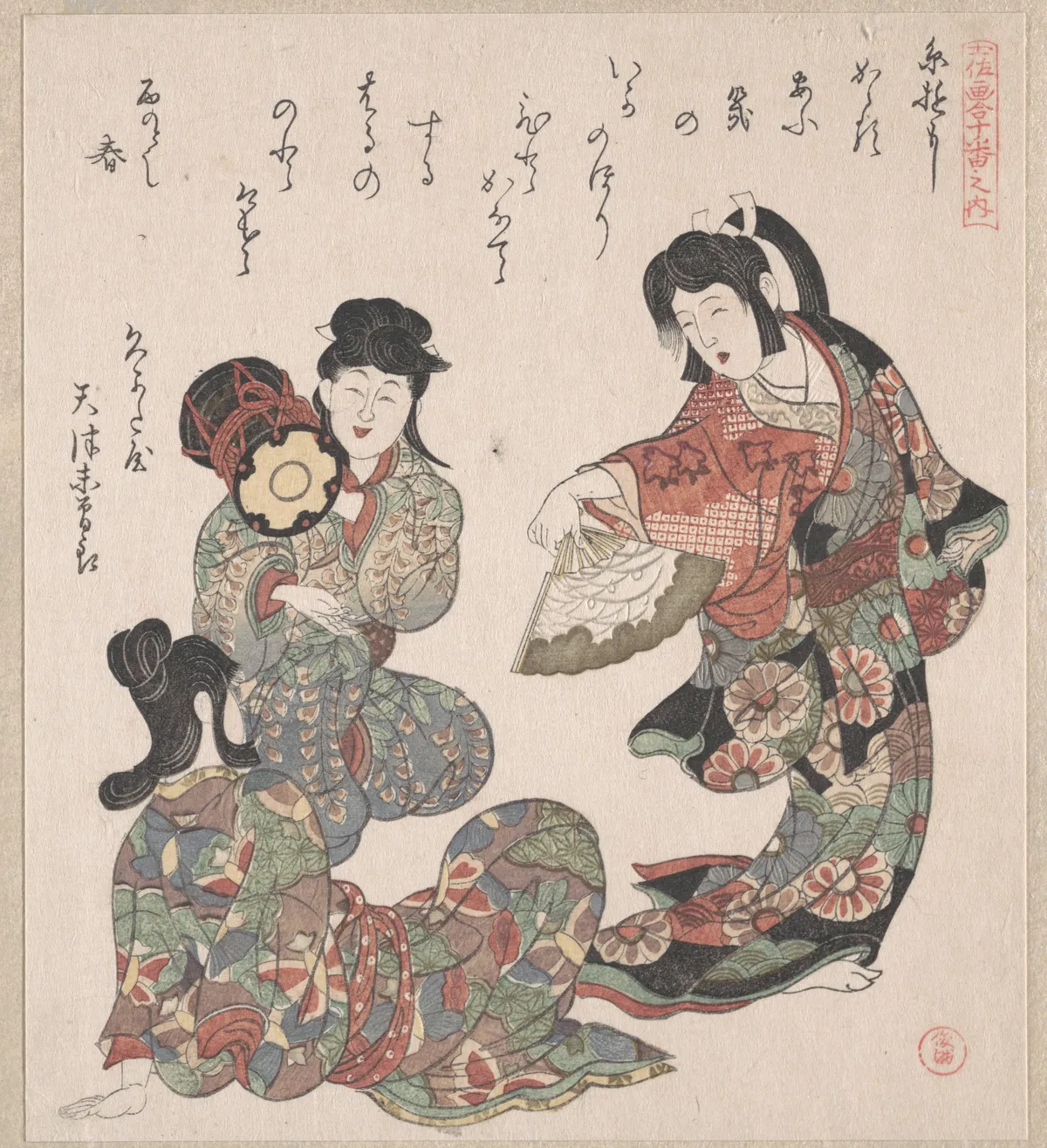
Three Girls Singing and Dancing
The room hums with a quiet anticipation. Layers of silk kimonos whisper against each other as three young women enter. Their footsteps are soft, barely disturbing the tatami mats. Each carries an instrument, held with delicate reverence.
The air, thick with the scent of incense, vibrates with their presence. Lantern light flickers, casting gentle shadows on painted screens. The first girl, her hair adorned with blossoms, begins a song. Her voice, a clear stream, fills the space. It carries tales of cherry blossoms and fleeting love.
The second girl, with a fan in slender fingers, joins her. She steps gracefully, each movement a petal falling. Her dance is a silent conversation, an echo of their shared stories. The rustle of silk becomes the music's heartbeat.
The third girl, with a drum tucked under her arm, punctuates the melody. Her rhythm is the pulse of the earth, grounding the ethereal notes. Together, they weave a tapestry of sound and motion, a moment suspended in time.
Outside, the world remains still. The moon hangs low, a silent witness to their ephemeral joy. This night, these songs, these dances belong to them alone.
Historical Echo
Kubo Shunman, a master of delicate lines, captures this fleeting moment. The Edo period thrived on such gatherings—intimate, ephemeral, full of life. In a city of transience, where pleasure and art mingled, these scenes were cherished. The woodblock print immortalises a night of joy and youthful exuberance, a whisper from a vanished world.