

Silent Contemplation
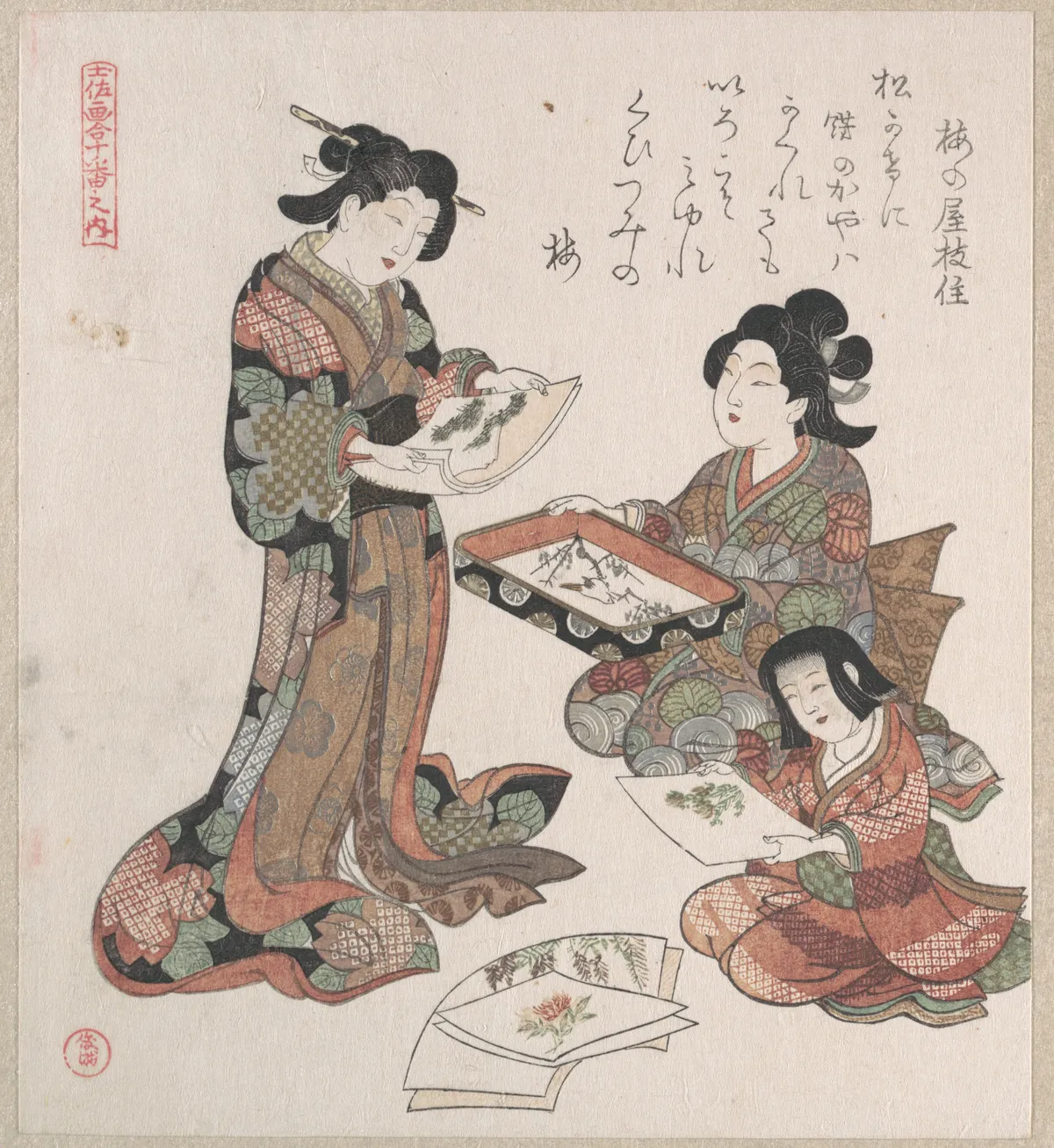
The air is thick with the scent of freshly pressed paper. Two women and a young girl stand in quiet contemplation before a series of paintings. The room is dimly lit, the only light coming from a small paper lantern casting flickering shadows on the walls. The rustle of silk kimonos is the only sound, a whispering echo in the stillness.
One woman, her hair pinned delicately, gestures towards a painting. Her fingers move gracefully, tracing the lines of a landscape. The other woman nods, her eyes following the path of her companion's hand. The girl, a step behind, clutches the hem of her mother's kimono. Her eyes are wide, absorbing the colours and forms with silent wonder.
The paintings, vibrant with the hues of nature, seem to breathe in the subdued light. Each brushstroke tells a story, a world contained within the frame. The women exchange a glance, an understanding passing between them without words. The girl tugs gently at her mother's sleeve, and the woman smiles, a soft, fleeting curve of her lips.
Outside, the night deepens. The distant call of a nightingale drifts through the open window, mingling with the scent of cherry blossoms. Time slows, each moment stretching into the next, unhurried and serene.
Historical Echo
In the Edo period, art was more than a pastime; it was a window into worlds both familiar and unknown. Kubo Shunman, known for his delicate brushwork, captured these moments with a reverence for detail. Paintings were revered not just for their beauty, but for the stories they held. In this quiet room, the essence of Shunman's work comes alive, echoing the contemplative spirit of an era long past.