

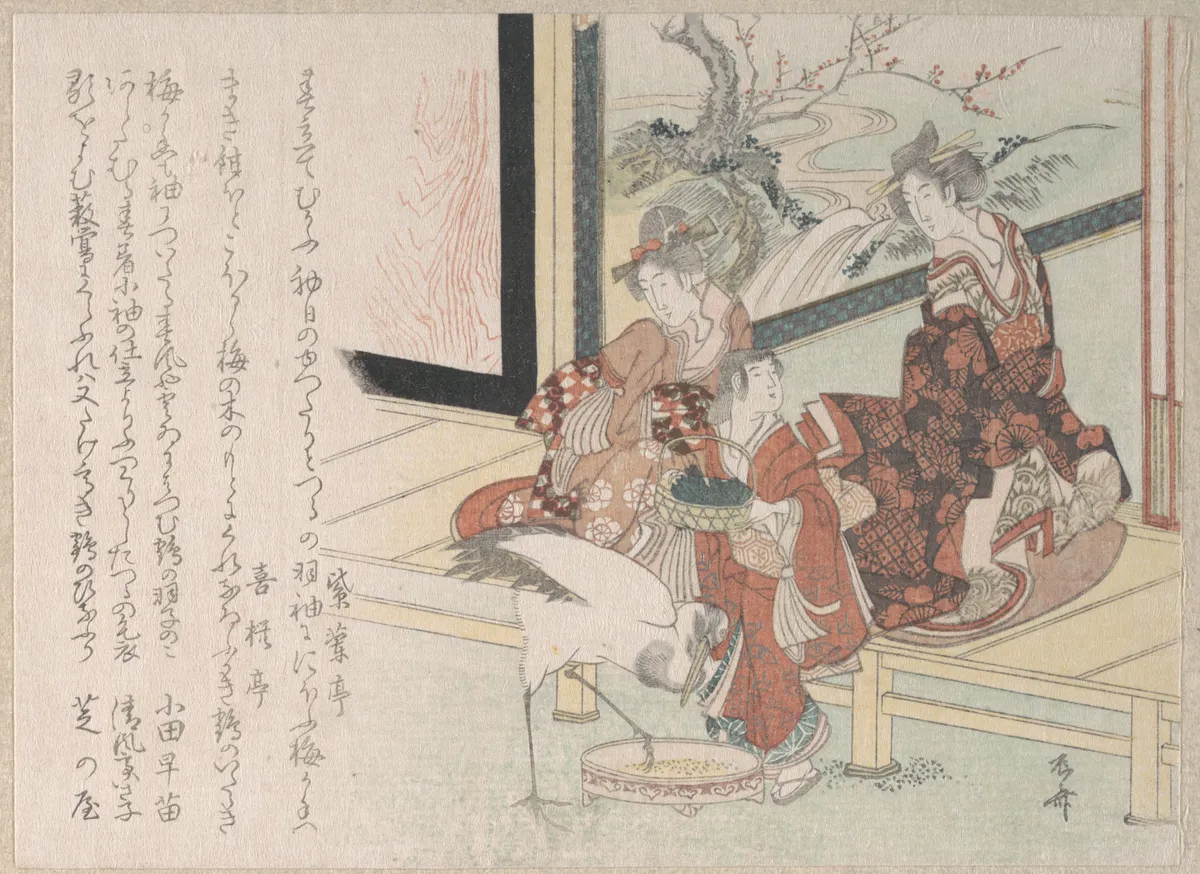
At the Verandah's Edge
The verandah creaked softly under their feet. Morning light filtered through the slatted shutters, casting thin stripes across the floor. A gentle breeze rustled the hem of their kimonos. The air was cool, carrying a faint scent of pine from the distant hills.
The crane stood still on the edge, its head tilted, eyes watchful. It seemed to listen, aware of each delicate movement. A girl, her hands small and careful, extended a bowl of grain. Her fingers trembled slightly as she approached the bird.
Two women watched, their gazes calm and patient. Their sleeves whispered as they moved, a soft, silken rustle in the quiet. Light glinted off the lacquered wood, the verandah a stage for this silent encounter.
The crane dipped its head, pecking gently at the offered meal. The girl’s eyes widened, a mixture of awe and fear. The women exchanged a glance, a shared understanding passing between them.
In the distance, the temple bell tolled, its deep resonance drifting through the morning mist. The world beyond the verandah remained hushed, as if holding its breath in reverence for this fragile moment.
Historical Echo
Ryūryūkyo Shinsai, a notable figure in the ukiyo-e tradition, crafted serene scenes of everyday life. This print, from the 19th century, captures a moment of harmony between humans and nature. The crane, a symbol of longevity, reflects the cultural appreciation for balance and beauty. Shinsai's work often depicted women engaged in quiet, intimate activities, offering a glimpse into the nuances of Edo period life. The details—the grain of the wood, the texture of fabric, the posture of the figures—speak softly of an era where simplicity and elegance walked hand in hand.