

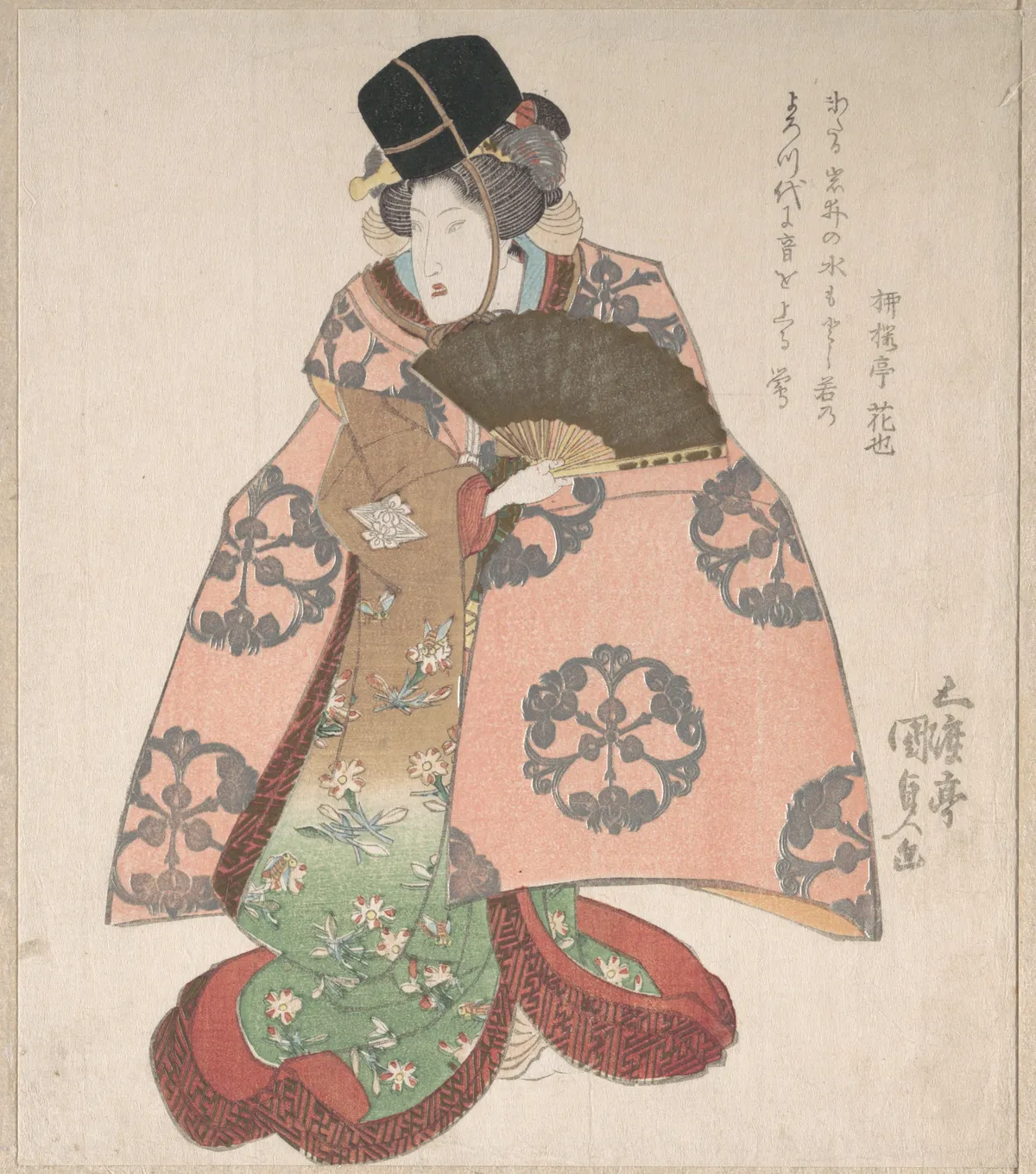
The Silent Gesture
The stage was silent, save for the faint rustle of silk. A Kabuki actor stood poised, draped in layers of exquisite fabric. His transformation was complete. He had become a woman of grace, holding a delicate fan with a practised hand. The air hung heavy with the scent of incense, mingling with the anticipation of the audience.
His eyes, lined with kohl, flickered like candle flames, capturing the essence of a story untold. The fan whispered secrets, a gentle sweep across his cheek. Each movement, a dance of shadows on paper-thin skin, spoke of a world beyond the footlights.
The kimono, a cascade of patterns, shimmered under the soft glow of lanterns. It whispered with every shift, a symphony of muted colours. The actor's face, a mask of serenity, betrayed no hint of the man beneath. His transformation was his art, his body a vessel for emotions that transcended the ordinary.
In the hushed reverence of the theatre, time seemed to pause. The actor, a living painting, held the fan aloft, a gesture frozen in elegance. The audience waited, breathless, for the magic to unfold.
Historical Echo
Utagawa Kunisada captured the essence of Kabuki theatre in the 19th century. His prints were windows into a world of transformation and illusion. This piece, depicting a male actor in a female role, reflects the ingenuity of Kabuki. The fan, a symbol of femininity and grace, was an essential prop. Kunisada's work immortalised the ephemeral beauty of performance, bridging the gap between the stage and the spectator. The actor's presence, both powerful and delicate, echoes through time, a silent testimony to his craft.