

The Silent Strings
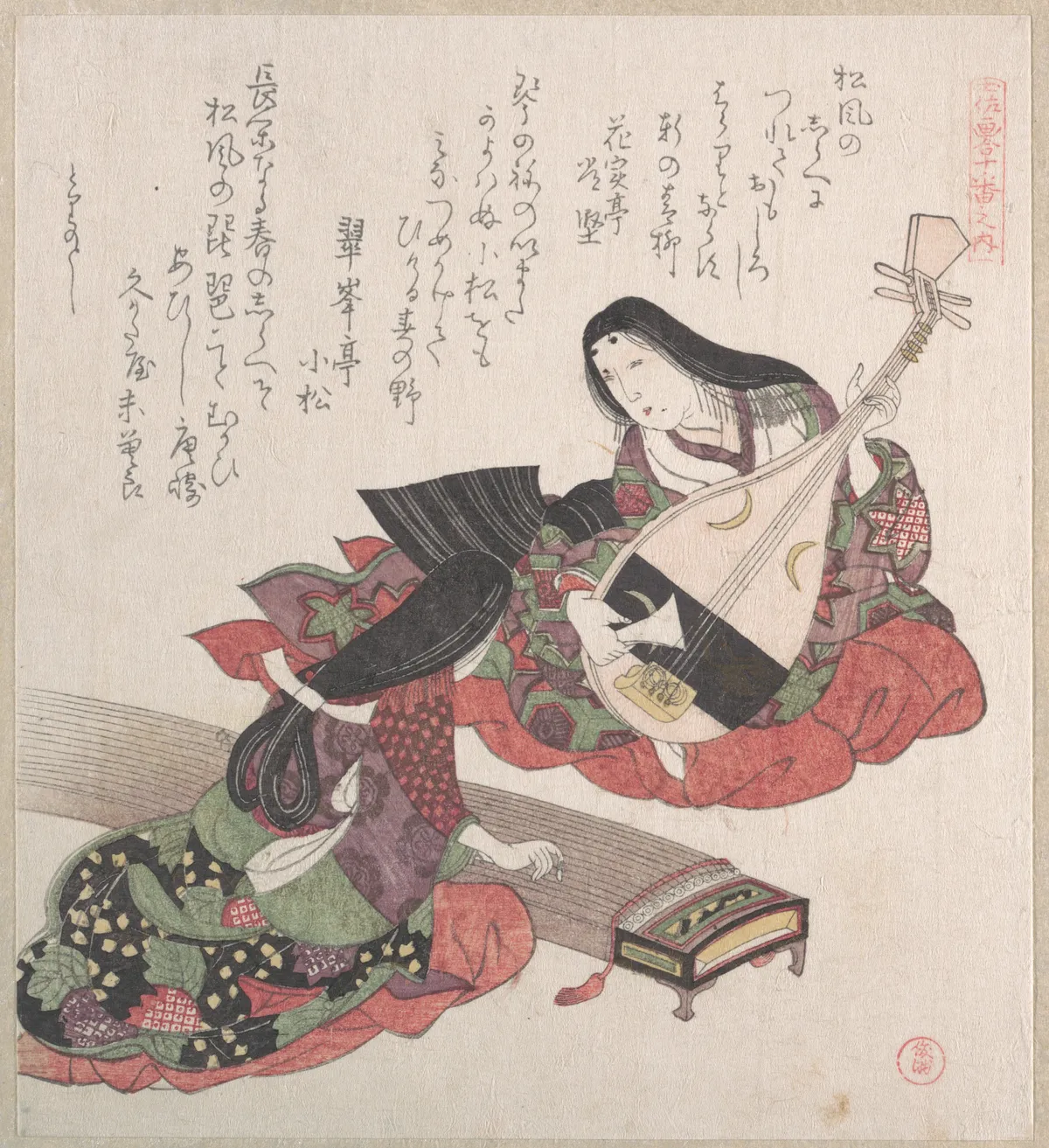
The air in the dimly lit room was thick with anticipation. Two women sat across from each other, their kimonos whispering secrets of silk. One held a biwa, the other a koto. The faint scent of incense lingered, curling like ghostly fingers in the shadows.
The woman with the biwa, her fingers poised, was a picture of concentration. She glanced at her companion, who nodded almost imperceptibly. The koto lay before her, its strings stretched taut, waiting to be touched.
A single note fell from the biwa, shattering the silence. It hung in the air, resonating against the paper walls. The koto responded, its voice a gentle, rippling stream. Together, they wove a tapestry of sound—quiet, restrained, intimate.
Outside, the wind whispered through the bamboo, a soft accompaniment to their music. The world seemed to pause, holding its breath. The two women, lost in their own world, played on, each note a step into a realm unseen.
Their music was a conversation, a dance of fingers and strings. The biwa's deep tones mingled with the koto's delicate whispers. It was a moment suspended in time, a fleeting echo of the Edo period's elegance.
As the final note faded, the silence returned, wrapping around them like a shroud. The women exchanged a glance, a silent understanding passing between them. Outside, the night deepened, the stars watching over the quiet room.
Historical Echo
In the Edo period, music was an art of subtlety and grace. The biwa and koto, traditional Japanese instruments, often accompanied poetry and storytelling. Kubo Shunman captured this intimate scene, his woodblock print a window into a world of refined beauty and quiet harmony.