

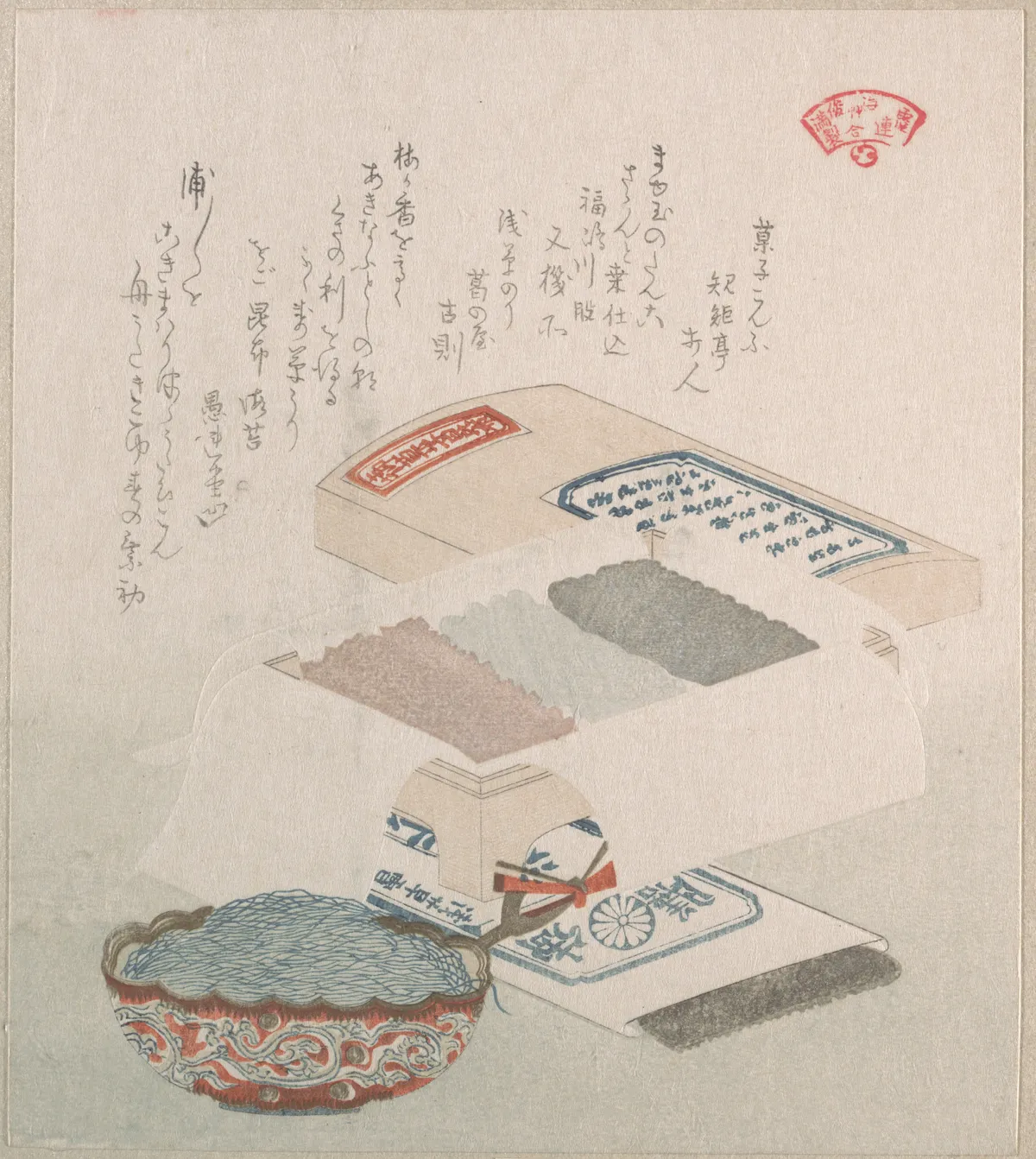
Cakes and Seaweed
The room was dim, filled with the delicate scent of fresh seaweed. Kubo Shunman sat quietly at his low desk, his brush poised. Lantern light flickered, casting shadows across the intricate patterns of his print. The air was heavy with the aroma of rice cakes, their surfaces glistening with a sheen of seaweed glaze. He moved his brush with precision, capturing the texture of each ingredient with strokes of ink and colour.
Nearby, the distant murmur of the city seeped through the paper walls. The quiet hustle of Edo life was like a distant melody. Shunman paused, listening to the soft rustle of fabric as his wife moved behind him, arranging a tray of freshly steamed delicacies. The subtle flavour of miso and the brine of the sea lingered in the air.
Shunman resumed his work, the print slowly coming to life under his steady hand. Each element—a cake's rounded form, the delicate strands of seaweed—was rendered with care. He captured not just their appearance but their essence, an ode to the humble ingredients that defined the season's wealth.
Historical Echo
In the 19th century, Edo was a city of contrasts. Its bustling streets offered a symphony of sights and scents. The art of the woodblock print flourished, capturing the vibrancy of everyday life. Kubo Shunman was among those who immortalised these moments. His work, delicate yet profound, reflected the culinary artistry of the time. Each print was a window into the world of Edo's tastes, where simple pleasures were celebrated with the same reverence as grand feasts.