

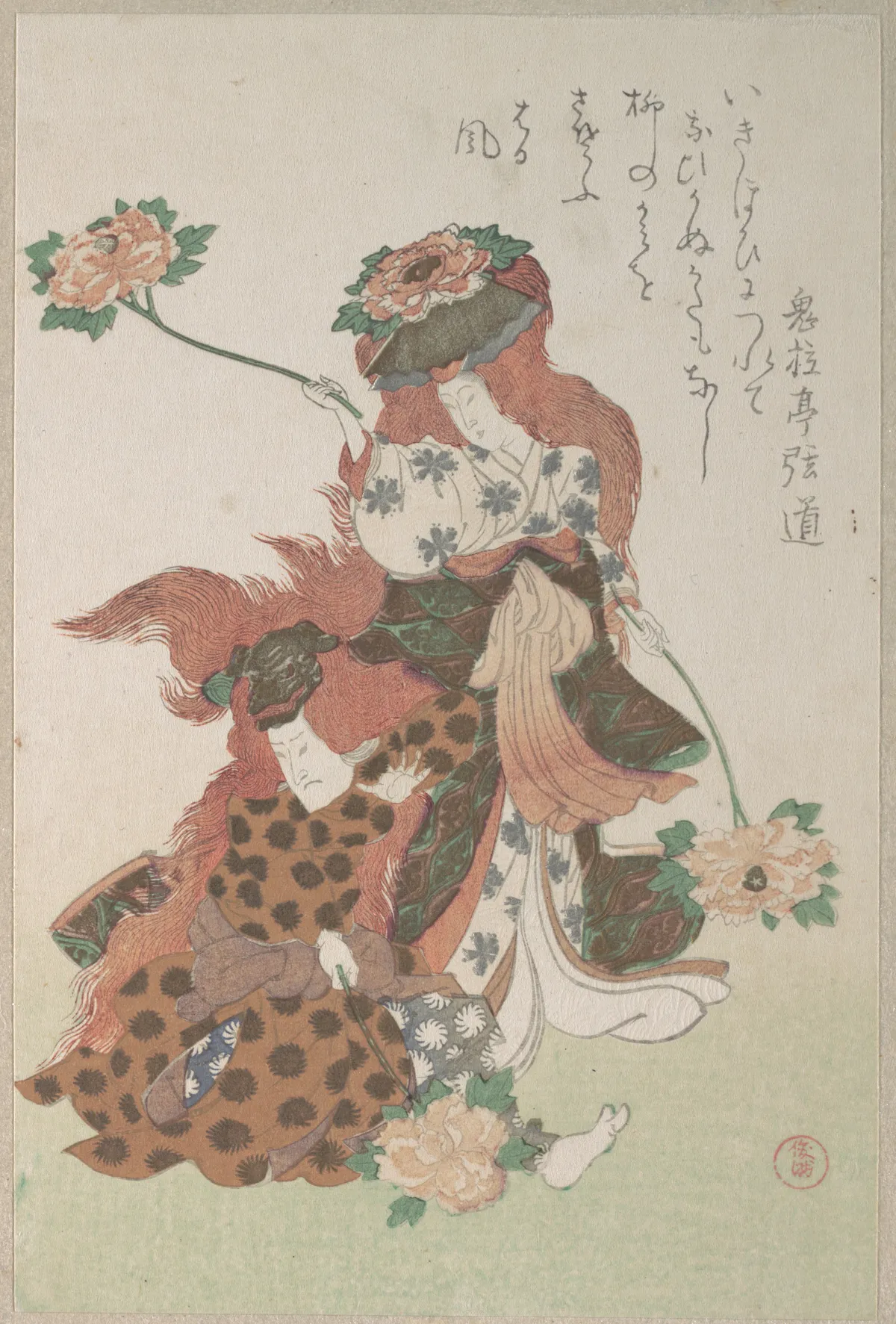
Two Dancers, One Stage
The air in the theatre is heavy, waiting. Two figures step onto the wooden stage, their movements a silent conversation. Under the soft glow of lanterns, their robes shimmer with intricate patterns. One dancer extends an arm, the silk rustling like whispers. The other follows, a mirror in motion, their feet sliding across the polished boards.
A faint scent of incense hangs in the air. The audience, shadows in the dim light, lean forward. The dancers' faces, painted with precision, reveal nothing yet speak volumes. Their eyes meet briefly, a shared secret.
Outside, the spring rain taps gently against the shutters. It is a world away from this moment, from the ritual unfolding within. The dance is a “Shakkyōmono”, a tale woven through steps and gestures. Lions dance on the stage, though none are present; it is the dancers who bring them to life.
The soft thud of feet, the rustle of fabric, these are the only sounds. Time stretches, a delicate thread. The audience breathes as one, caught in the spell of the dance.
Historical Echo
In the Edo period, Kabuki was not just theatre; it was an experience. Shakkyōmono dances, inspired by Noh theatre, were known for their lion-like movements, demanding both skill and grace. Kubo Shunman captured this ephemeral art in woodblock prints, preserving the silent dialogue between dancers, the harmony of motion and stillness.