

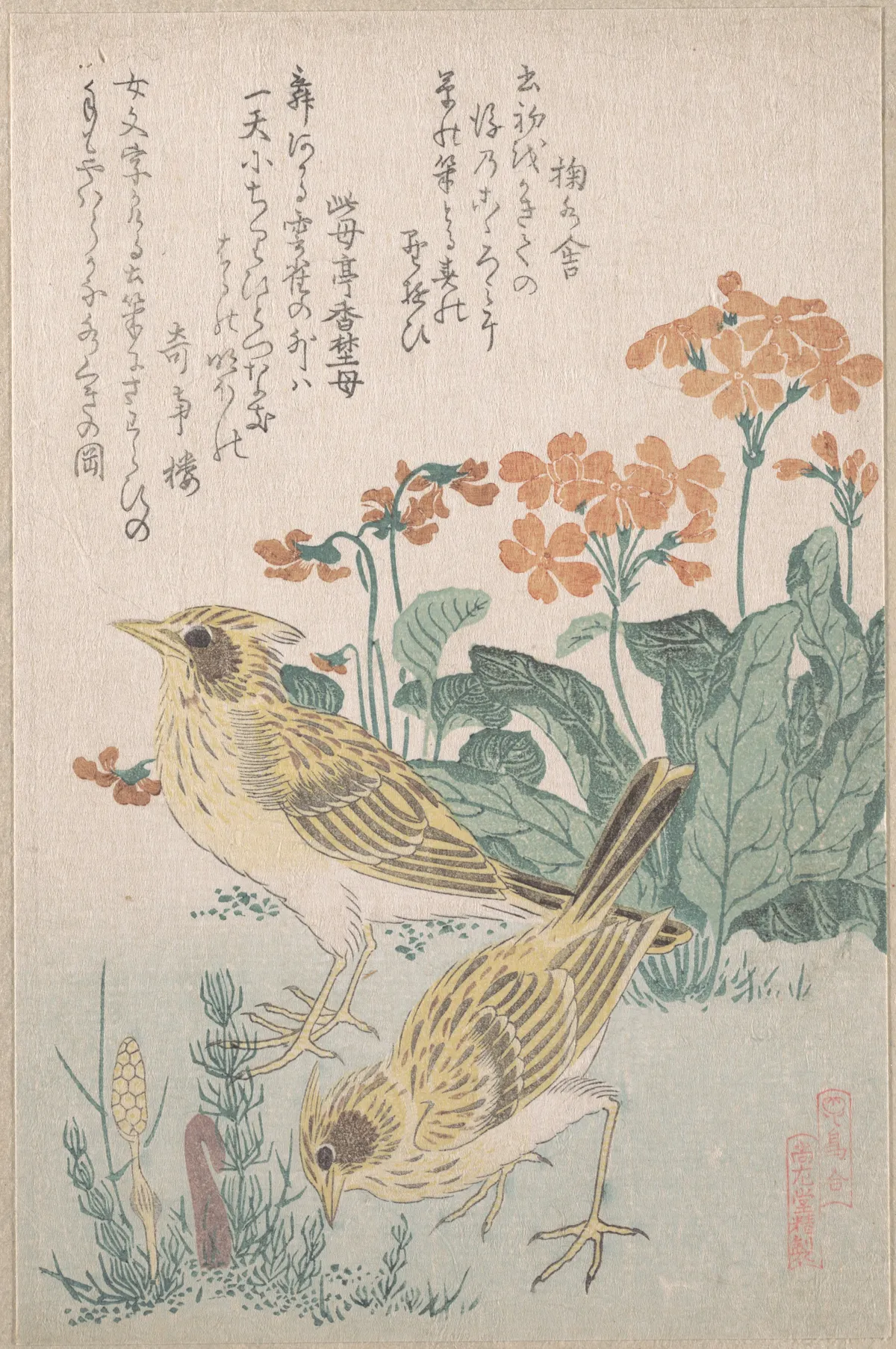
Skylarks and Primroses
The air is thick with spring. Skylarks flit between primroses, their songs weaving through the damp morning mist. The ground is soft, holding the night's rain. Each step leaves a whisper in the mud. Petals glisten, caught in the dawn's hesitant light. A gentle breeze teases the flowers, coaxing a faint rustle from their delicate forms. Above, the sky is a muted canvas, clouds drifting lazily, shaped by the wind's quiet hand. The world seems suspended, as if holding its breath. The distant hum of a village stirs, yet here, in this fleeting corner of nature, time pauses. Echoes of laughter ride the breeze, mingling with birdsong, a symphony of life and renewal.
Historical Echo
Kubo Shunman, an artist of the Edo period, captures this serene moment. His surimono, a privately commissioned print, speaks of nature’s ephemeral beauty. Skylarks and primroses, symbols of spring, embody the transient joy of the season. In the early 19th century, such prints were cherished for their delicate artistry and poetic resonance. Shunman’s work, part of the Spring Rain Surimono Album, reflects a world where art and nature intertwine, offering a glimpse into an era where each detail held significance.