

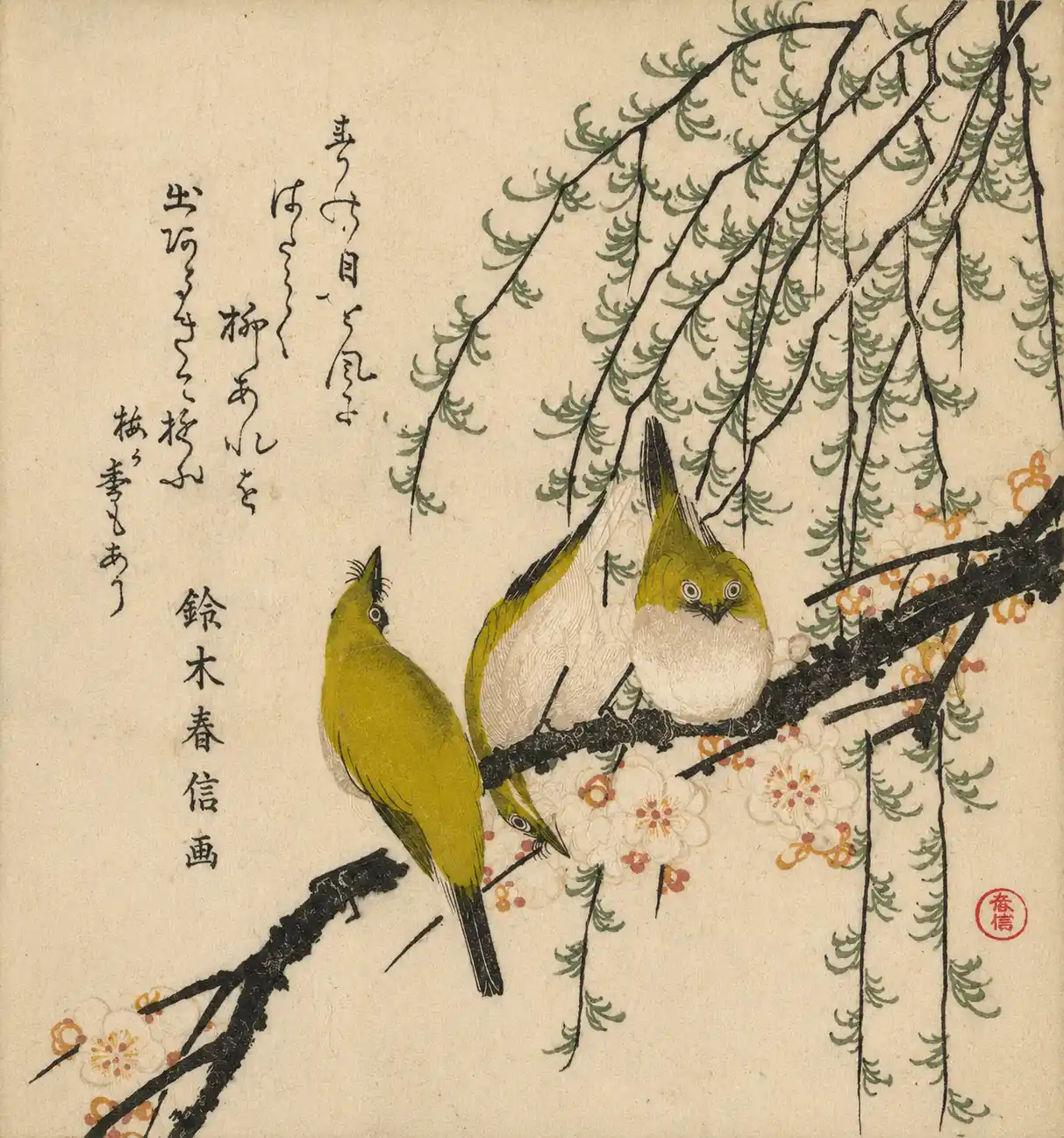
Japanese White-eyes with Plum Tree and Willow
In the gentle hush of early spring, two small green birds rested upon a slender branch. The air was crisp, almost holding its breath as if awaiting an unseen event. One bird tilted its head, its dark eye catching the pale morning sky. The other nestled deeper into its soft feathers, warding off the lingering chill of a night not yet fully surrendered to dawn.
A willow nearby swayed gently, its leaves brushing together with a whisper like old memories stirring. The branches seemed to reach out, remembering each breeze that had ever passed through them. Below, the earth was damp, holding the scent of plum blossoms just beginning to open, their petals poised to fall like silent words unspoken.
The teahouse across the quiet street had seen its last guests depart. Women slid shut the paper doors with care, turning the lantern glow inside into a soft amber haze. Upstairs, a soft cough echoed, barely audible. Downstairs, someone gathered sake cups left behind, while another stood by the window, watching the river glide by in silence.
Nobody spoke. The air was made of fragile things. A single word might have shattered the stillness that wrapped around them all. And so, they remained silent, letting the night breathe and the river run its course.
One of the birds trembled, just slightly. It was a movement so small, like a name whispered in a dream, barely reaching consciousness before fading away. And then, silence reclaimed its hold.
Above, the plum blossoms continued their slow descent. One petal. Then another. Each finding its place in a night that seemed endless, stretching back two hundred years into memory.
Historical Echo
Edo's people found a peculiar solace in paintings of spring birds and the willow's gentle sway. It wasn't the season's vibrancy they sought, but that delicate balance, as warmth began to seep through winter's retreat. The human heart mirrored this in its quiet longing.
During the late Edo period, such bird-and-flower prints adorned teahouses, private studies, and intimate rooms. In daylight, they exuded elegance. But, as the night deepened, they whispered of loneliness that could not be named.
Some said the true essence captured in these prints was not the bird nor the tree, but the night air of Edo itself. When lanterns dimmed and mist rose from the river, even the willow seemed to age silently, holding stories no longer told.