

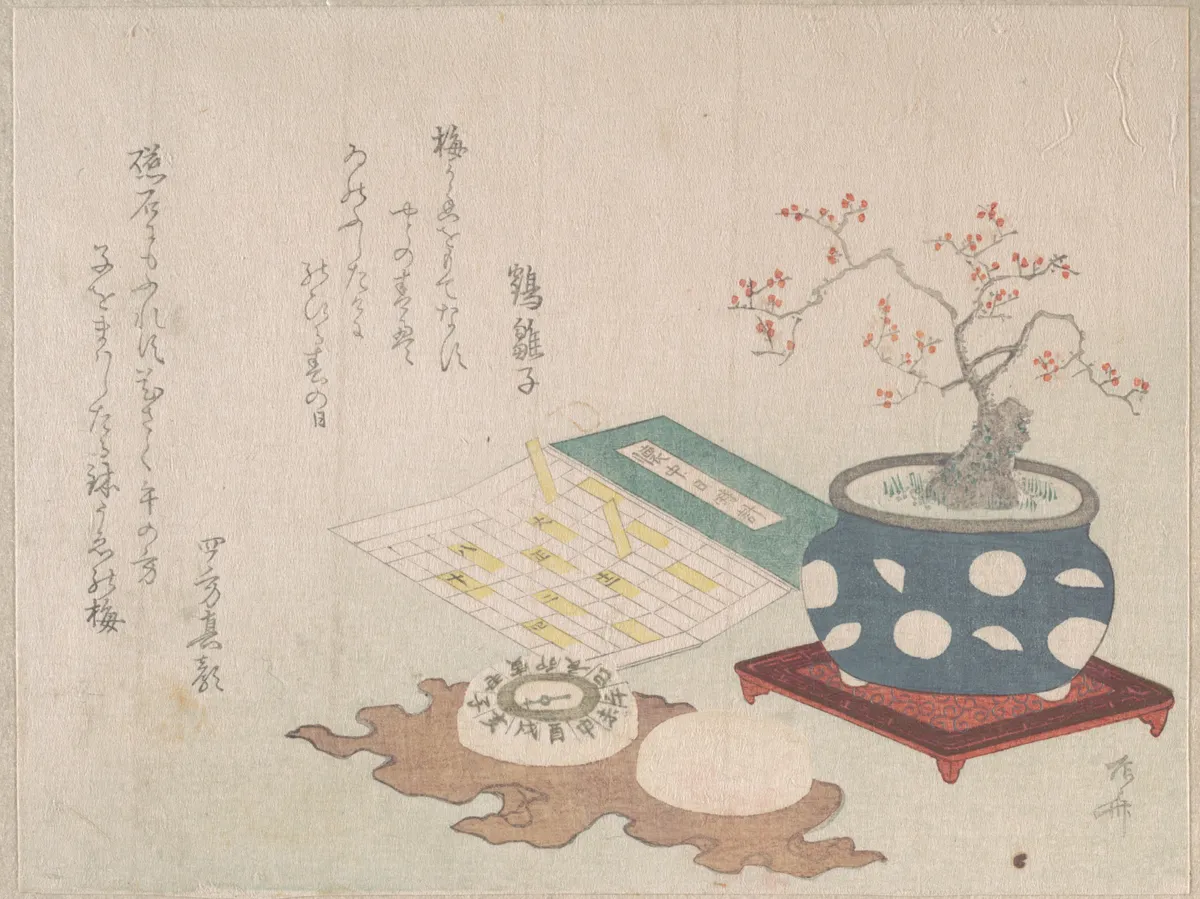
Spring's Silent Instruments
In the dim light of a spring evening, a small bonsai plum tree stood quietly on a wooden table. Its delicate branches cast gentle shadows over the lacquered surface. A soft breeze carried the scent of plum blossoms through the air, mingling with the earthy aroma of damp wood and old paper.
Next to the bonsai, a compass lay open. Its needle wavered slightly, as if unsure of its direction. The metal glinted in the muted light, reflecting the calm and precision of its craft. Nearby, a pocket sundial rested, its brass surface cool and worn. The sundial's shadow barely moved, marking time with subtlety and grace.
A calendar, intricately designed, accompanied these instruments. Each page turned with the passage of days, a silent testament to the rhythm of the seasons. The paper was thin, textured like aged skin, whispering faintly as a breeze stirred its edges.
The room was still, filled with the quiet presence of these objects. They told stories of journeys and time, of nature's cycles and human craftsmanship. As night settled, the air cooled, and the shadows grew longer, deepening the mystery of this tranquil scene.
Historical Echo
In 1806, Ryūryūkyo Shinsai captured the essence of time and nature in his surimono print. The bonsai plum, compass, and sundial are more than mere objects; they are symbols of the Edo period's fascination with nature and precision. This print, part of the Spring Rain Surimono Album, reflects a society attuned to the passage of time and the beauty of transient moments. Shinsai's work invites us to pause, to observe the delicate interplay between man-made instruments and the natural world.