

Presents for One’s Beloved
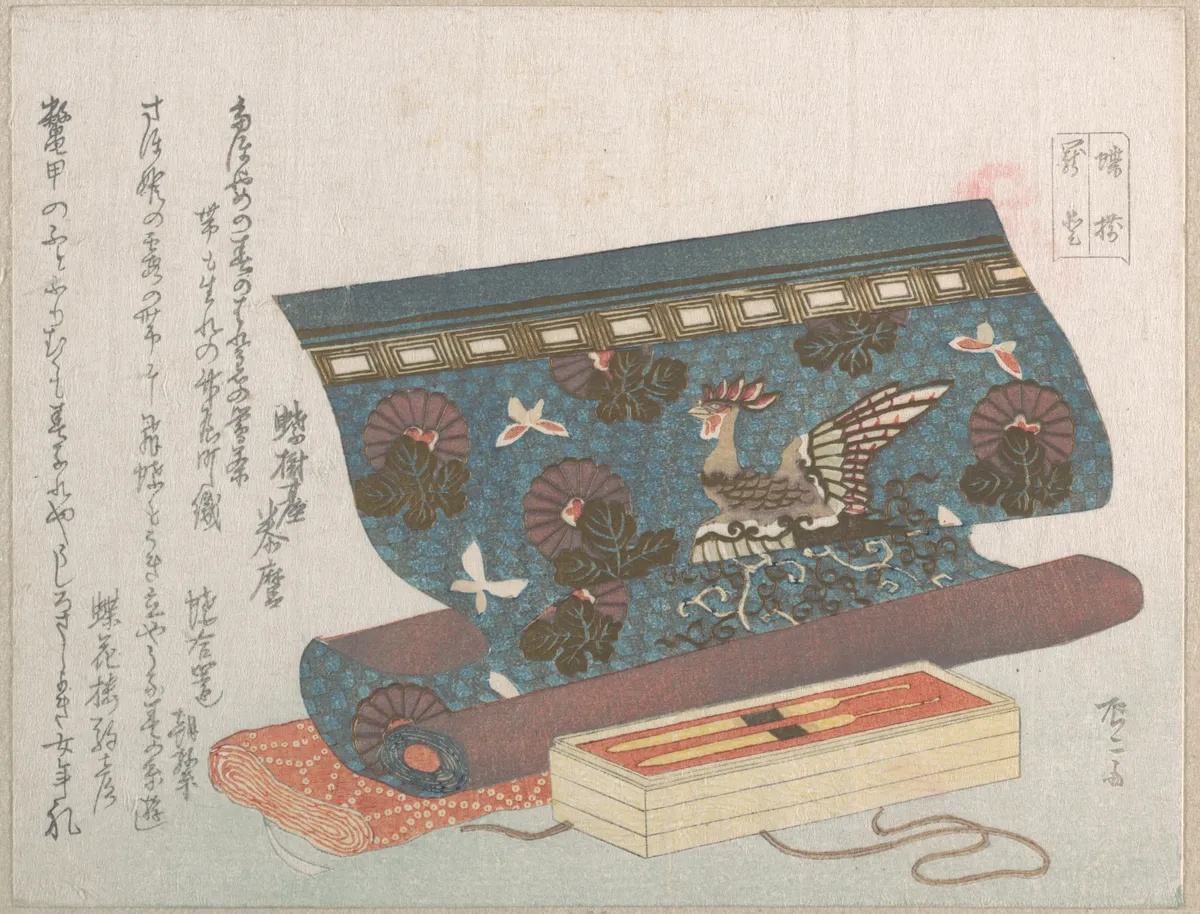
In a secluded corner of Edo, the paper rustles with secrets. A roll of cloth, soft yet weighty, lies unfurled. Its patterns whisper promises of elegance. Nearby, tortoise-shell hair ornaments catch the dim light. They shimmer like distant stars in a foggy night. The air is thick with anticipation. A gift awaits its moment. This is no ordinary exchange. It is a silent vow wrapped in silk and shell. Each thread, each curve, holds a story untold. The giver’s hand trembles with unspoken words. The receiver’s heart, a fluttering butterfly, beats in time with the rain against the paper walls. The room, shadowed and still, breathes with the weight of tradition. Outside, the world moves on, oblivious to this intimate exchange. Here, in this moment, the present is a bridge between hearts, a delicate connection crafted with care.
Historical Echo
In the late Edo period, gifts like these were tokens of affection. They held symbolic weight, transcending their material form. The artist, Ryūryūkyo Shinsai, captures this with a gentle touch. His work reflects the quiet elegance of an era where words were few, but gestures spoke volumes. The surimono, a type of privately commissioned print, often held personal significance. It was a whisper of culture, an echo of sentiments held close. In this artwork, the butterfly theme suggests transformation and fleeting beauty. The rain, ever present, adds a layer of melancholy, a reminder of time’s passage.