

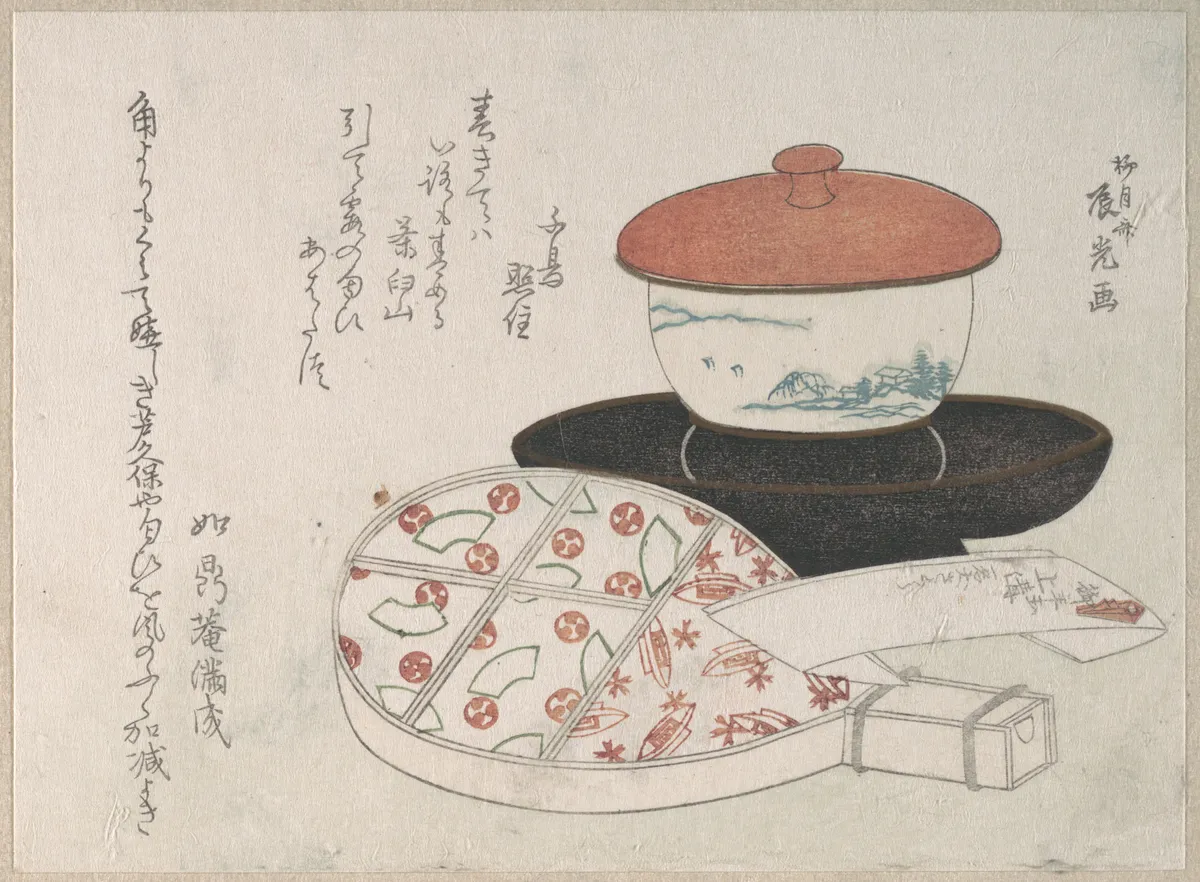
Teacup and Tea Heater
The room was hushed, save for the soft crackling of the tea heater. A solitary teacup rested nearby, its porcelain surface cool against the warmth emanating from the coals. The air was thick with the earthy scent of brewing tea, mingling with the faint aroma of aged tatami mats.
The light was dim, filtered through paper shoji screens, casting soft shadows that danced as the flames flickered. The quiet was profound, as if the room held its breath in anticipation of the first sip.
Outside, the world carried on in its usual bustle, but here, time was suspended. The teacup, simple and unadorned, was a vessel of contemplation. The heater, with its gentle glow, whispered of quiet moments shared over steaming cups.
Ryūgetsusai Shinkō captured this stillness, this pause in the everyday, with each deliberate stroke. The print was a testament to the unspoken elegance of simple rituals, the silent dialogue between cup and heat, between art and life.
Historical Echo
In the Edo period, the tea ceremony was more than a custom; it was an art form. It offered a retreat from the chaos of life, a moment to savour simplicity and presence. Ryūgetsusai Shinkō, though not widely known, preserved these intimate echoes in his work. His prints were not just images but gateways to the quietude that the tea ceremony provided—a timeless respite from the world’s relentless pace.