

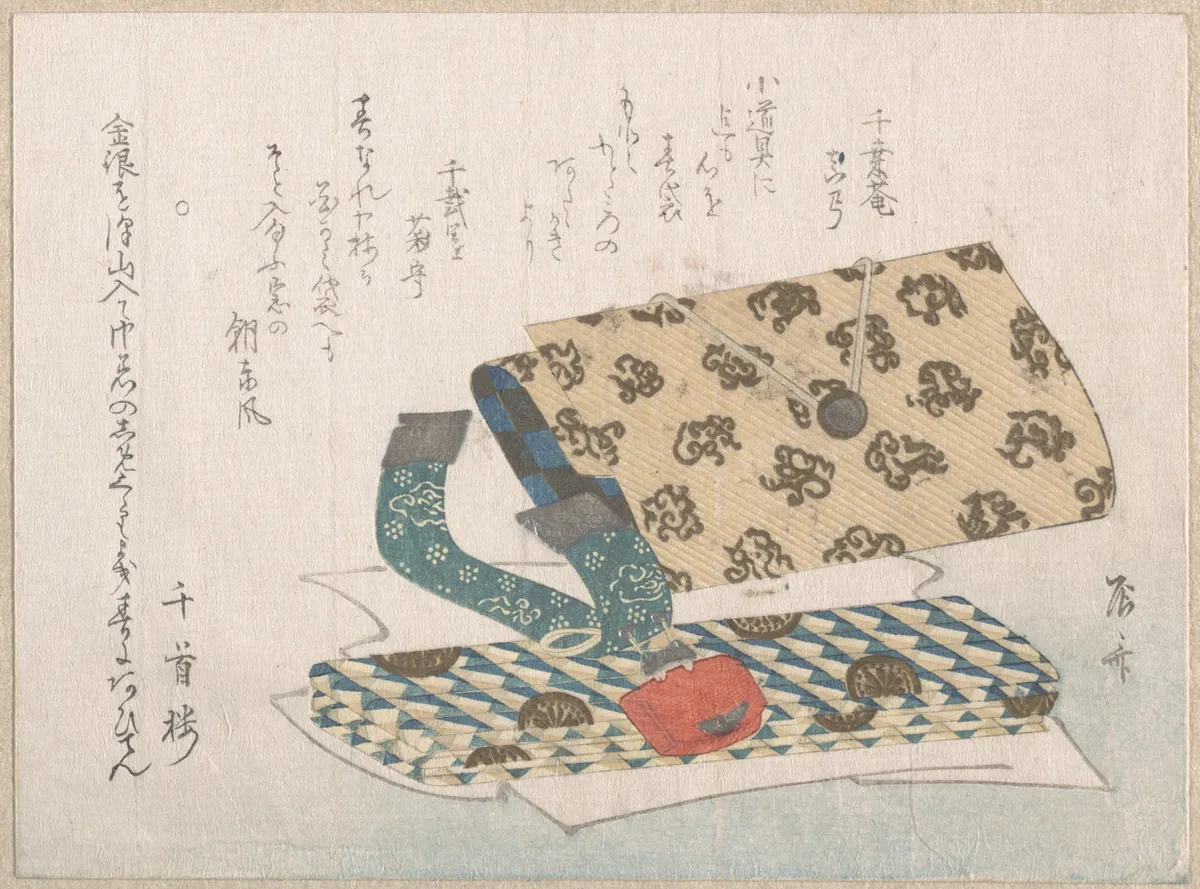
The Quiet Companion
A pocketbook lay open, its fittings gleaming softly in the dim light. The air was thick with the scent of ink and aged paper. Each item nestled within the folds spoke of journeys, perhaps never taken, whispers of destinations imagined. The clasp felt cool, like a steady hand in the chaos of the market. The threads of the pocketbook, delicate yet firm, told of hands long vanished, stitching lives and secrets into its fabric.
Outside, a lantern swayed gently in the evening breeze. Shadows danced across the walls, flickering like memories half-remembered. The paper-thin silence was occasionally pierced by distant laughter, the clatter of wooden sandals upon cobblestones. Inside this intimate world, the pocketbook held its quiet vigil, a guardian of stories untold.
Historical Echo
In the 19th century, pocketbooks were more than mere carriers of coins. They were companions, holding the minutiae of daily life. Ryūryūkyo Shinsai captured this essence in his delicate woodblock print. Each object, carefully rendered, reflects the era's intricate craftsmanship and the personal nature of such possessions. As the world around it transformed, the pocketbook remained a constant, silently observing the passage of time.