

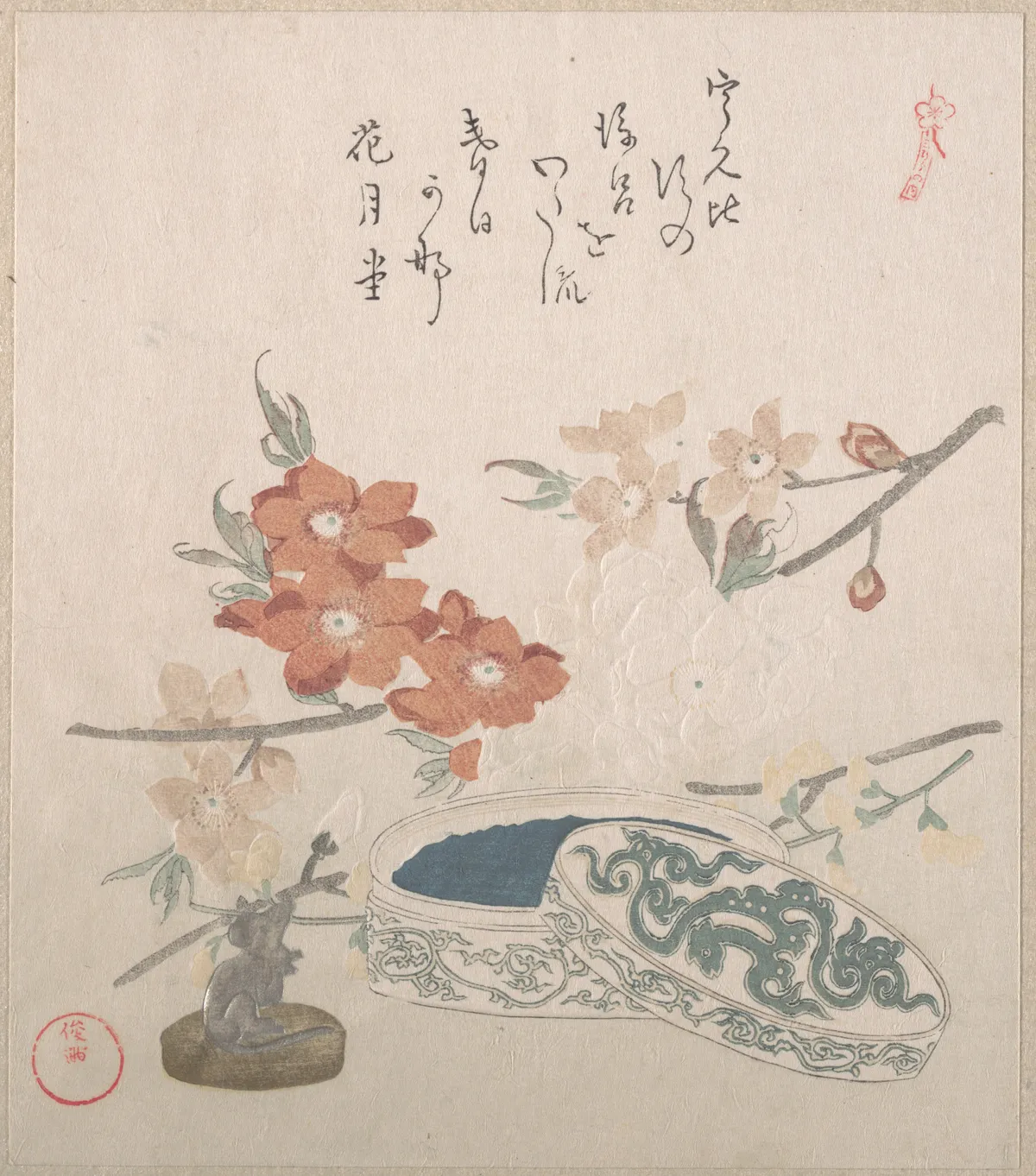
Silent Blossoms
The air was still. In the quiet room, the soft sunlight filtered through paper screens. Shadows danced gently on the tatami mats. A delicate perfume of peach blossoms lingered, mingling with the faint scent of ink. On the low wooden table lay a seal and a seal-box, their surfaces smooth and cool to the touch. Each object spoke of careful craftsmanship.
The peach blossoms, freshly cut, stood in a simple vase. Their petals, pale pink and tender, seemed to hold whispers of spring. The quiet was a canvas, painted with the subtle hues of solitude. Outside, a distant bird call broke the silence, then faded into the gentle rustle of leaves.
A solitary figure sat beside the table, lost in thought. The weight of unspoken words hung in the air, heavy like the clouds on a humid day. Fingers traced the edge of the seal-box, feeling the grooves and ridges carved with precision. It was a ritual, this moment of stillness, this communion with objects that held stories of their own.
The world outside moved on, but here, time seemed to pause. The blossoms, the seal, and the box spoke in a language of elegance and restraint. In their presence, the present moment stretched, echoing with the quiet breaths of a forgotten era.
Historical Echo
Kubo Shunman, a master of subtlety, captured the transient beauty of life. In the 19th century, such prints were windows into private worlds. The seal, a symbol of identity, held significance beyond its utility. It was a mark of presence, a silent witness to the passage of time. Shunman's work invites us to pause, to observe the grace in everyday moments. Through the softness of peach blossoms and the cool weight of a seal, we glimpse the quiet elegance of Edo life. Here, the ordinary transforms into the extraordinary, leaving an indelible mark on the soul.