

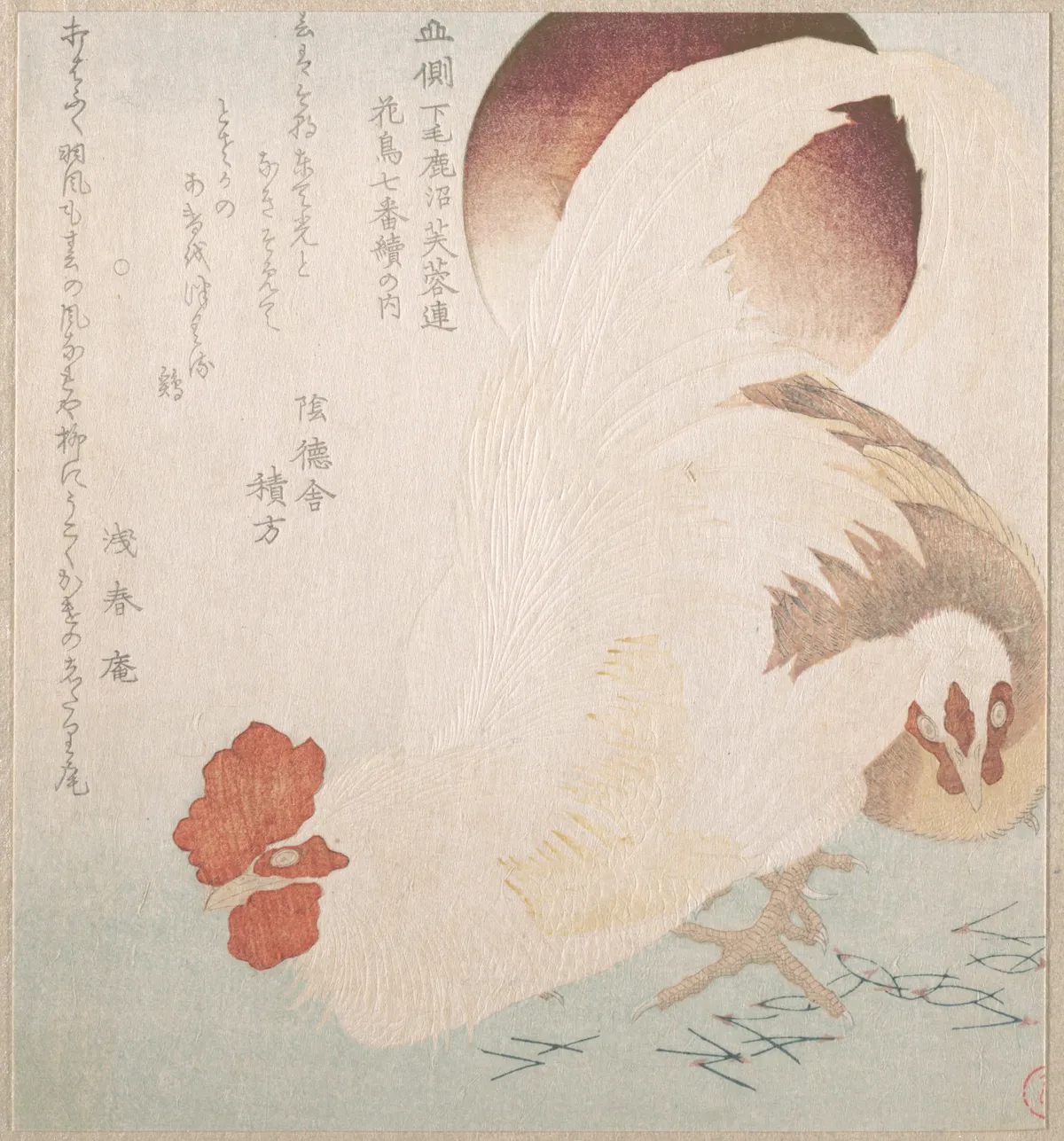
The Break of Dawn
The sky is a muted canvas, brushed with the first threads of dawn. A rooster stands, its feathers a rich tapestry of amber and gold, catching the soft light. Its eye glistens, sharp and alert. Beside it, a hen ruffles her plumage, nestled close as if warding off the chill of the lingering night.
The air is still, heavy with the promise of a new day. Slowly, the sun begins its ascent, painting the horizon in a palette of warm hues. Shadows retreat, surrendering to the growing light. The rooster crows, its call piercing the quiet, a herald of the morning.
Dew clings to the grass, shimmering like tiny mirrors reflecting the dawn. The earth smells fresh, alive, as if awoken by the rooster's song. Underneath the spreading light, the world feels poised, suspended in a fleeting moment of tranquility.
The hen clucks softly, her voice a gentle counterpoint to the rooster's clarion cry. Together, they stand as silent witnesses to the awakening day, their forms etched against the unfurling light of the rising sun.
Historical Echo
In the Edo period, the rooster was more than a farmyard bird. It was a symbol of vigilance and the passage of time. Totoya Hokkei, a disciple of the great Hokusai, captured this essence with delicate precision. His work reflects the quiet beauty and cyclical nature of life, embodied in the simple, powerful imagery of the rooster and hen greeting the dawn.