

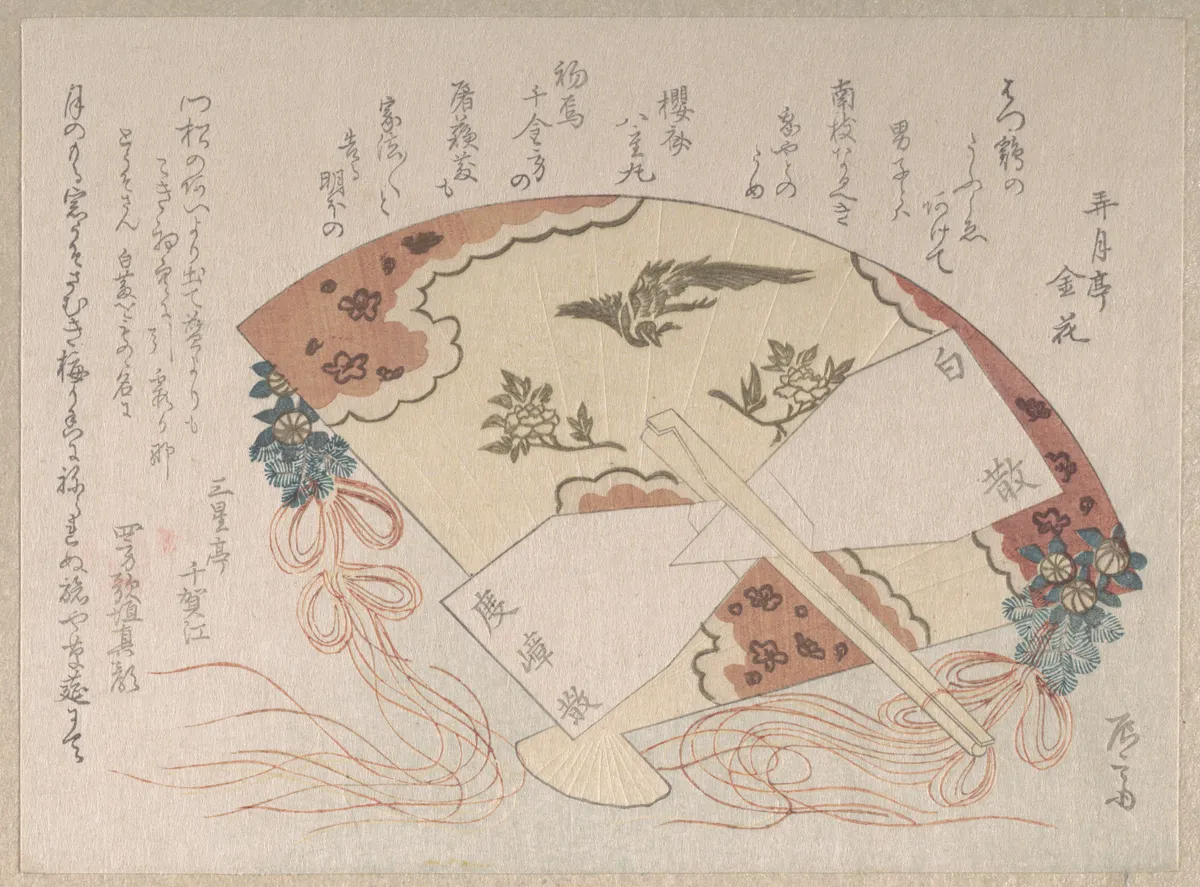
The New Year's Breath
The fan lay open, its vibrant colours vivid against the pale winter light. Gold and crimson hues swirled across the delicate paper, capturing the essence of a celebration. The air held a crisp chill, mingling with the faint scent of pine and distant laughter carried by the wind.
A woman, her fingers nimble and sure, traced the fan's edge. Each stroke of her brush was deliberate, imbued with wishes for the coming year. Her kimono rustled softly, echoing the rustle of leaves outside. She paused, listening to the quiet whispers of the past year fading away, leaving space for new beginnings.
In the dim room, shadows danced along the walls, flickering with the light of a single candle. It cast an amber glow, reflecting off the fan's surface, making the painted scenes seem alive. The woman smiled, a private moment shared with the silent artwork, a promise of hope and renewal.
The fan, now complete, waited patiently for its role in the upcoming celebration. It would be held high, a symbol of tradition and the passage of time. Each line and curve spoke of care and artistry, a testament to the hands that crafted it and the heart that envisioned it.
Historical Echo
The decorated fan, a staple of New Year's festivities, embodied the season's spirit. In Edo, such fans were more than mere objects; they were tokens of good fortune. Each brushstroke carried a wish for prosperity and happiness. Ryūryūkyo Shinsai, known for his delicate touch, captured this tradition beautifully. His work resonated with the quiet elegance of the New Year, a celebration of life and the promise of the future.