

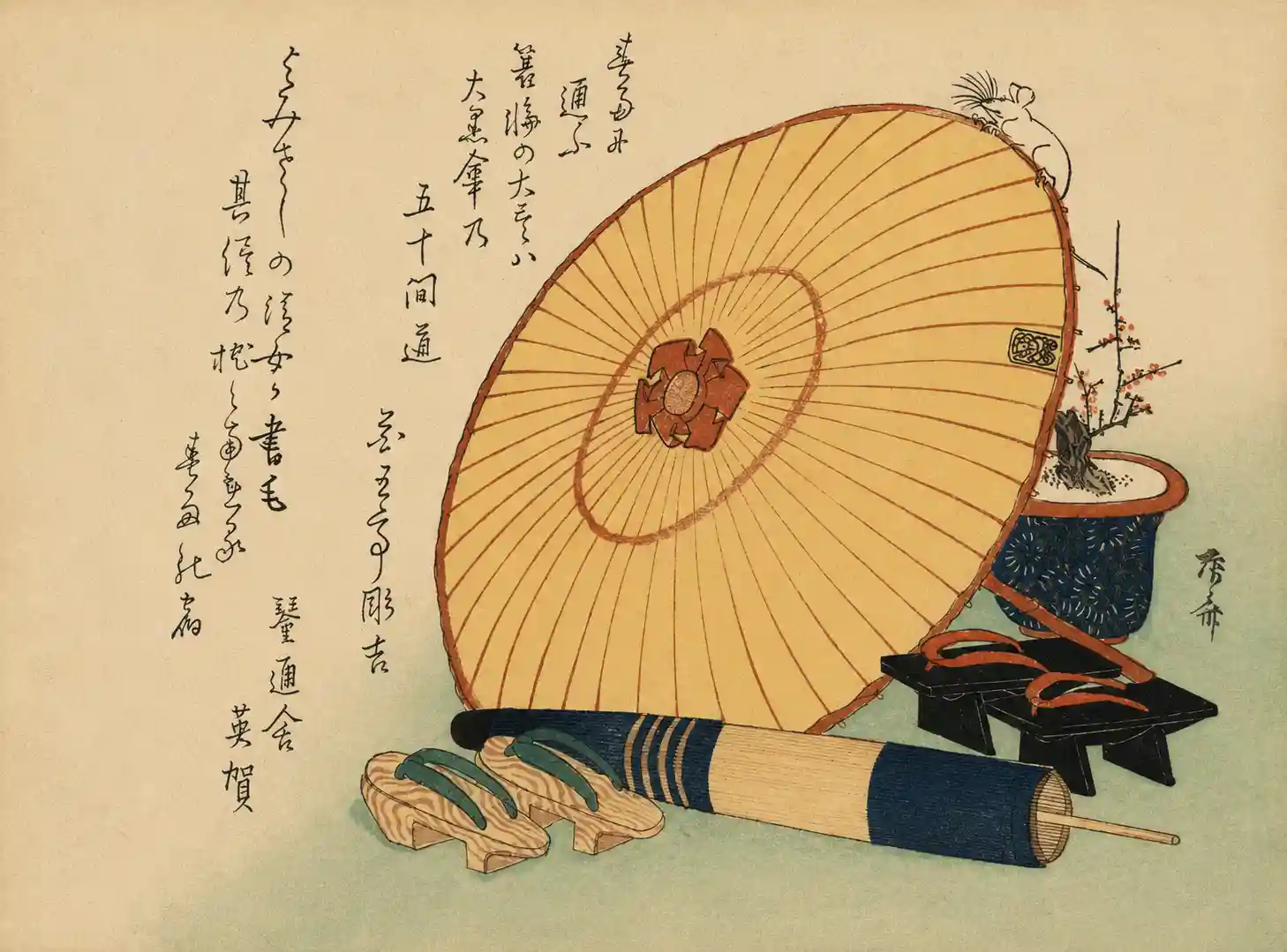
Umbrellas and Geta
Rain fell steadily in the narrow street. The air was heavy with the scent of wet earth. In the dim light, umbrellas dotted the scene like colourful mushrooms. Each one a small, private world beneath the rain. Silent figures moved, their feet clad in geta, the wooden sandals clacking against the slick stones. The sound echoed, mingling with the steady drum of rain on paper umbrellas. A woman paused, adjusting her grip on the umbrella's handle. Her kimono, damp at the edges, clung to her legs. Nearby, a child jumped over a puddle, laughter lost in the rain's whisper. The scene was a moment suspended. Rain, wood, and paper in quiet harmony. The world beyond blurred, softened by the veil of water.
Historical Echo
In early 19th century Edo, rain was both a blessing and a challenge. Umbrellas were essential, crafted from oil-paper and bamboo. Geta, with their elevated soles, kept feet dry above the puddles. Ryūryūkyo Shinsai captured this everyday harmony. His woodblock prints preserved the quiet resilience of life in the rain.