

The Hum of Threads
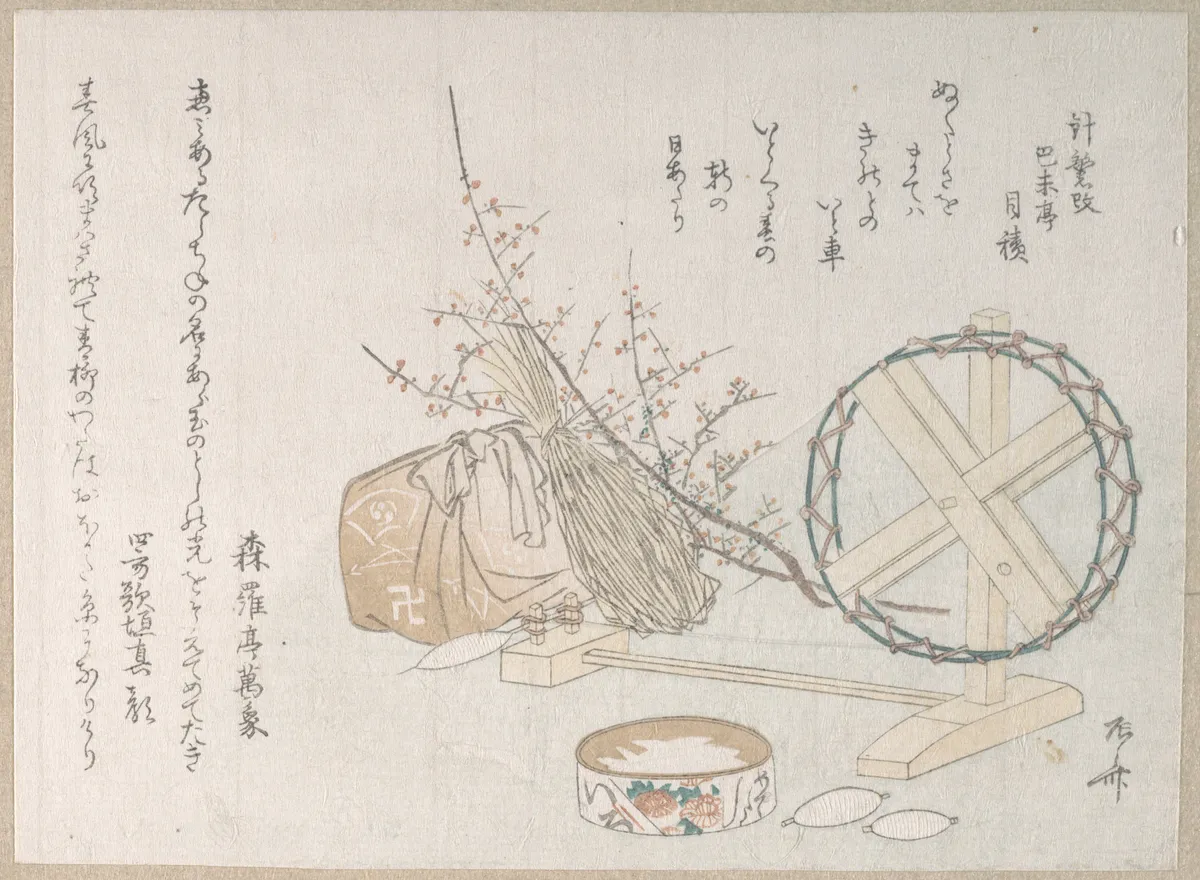
The room was hushed but for the low hum of the spinning wheel. Shadows flickered across the tatami as the lantern's glow danced with the wheel’s rhythm. Her hands moved deftly, guiding the silk thread through the spool. Each movement precise, a quiet dedication to the craft honed over countless evenings.
Outside, the evening air was cool, carrying the scent of pine and the distant murmur of a gentle stream. The world seemed distant, almost forgotten, as she lost herself in the sanctity of her work. Threads of silk catching the light, shimmering like whispers of moonlight.
She paused, listening. The house creaked, settling into the night. Her fingers brushed against the wooden frame of the wheel, worn smooth by years of use. A testament to time, patience, and the unspoken stories woven into every thread.
The spools, lined neatly beside her, bore witness to her labour. Their colours muted, yet rich, waiting to be transformed into the fabric of life. She resumed her work, the wheel turning once more, spinning tales of old Edo with each revolution.
Historical Echo
In the 19th century, Japan's Edo period was fading. Yet, the art of spinning and weaving remained a vital thread in the fabric of daily life. Ryūryūkyo Shinsai captured this quiet, enduring tradition in his print. The meticulous detail speaks to an era of transformation, where the old ways clung gently to the new, much like the unbroken thread upon the spinning wheel.