

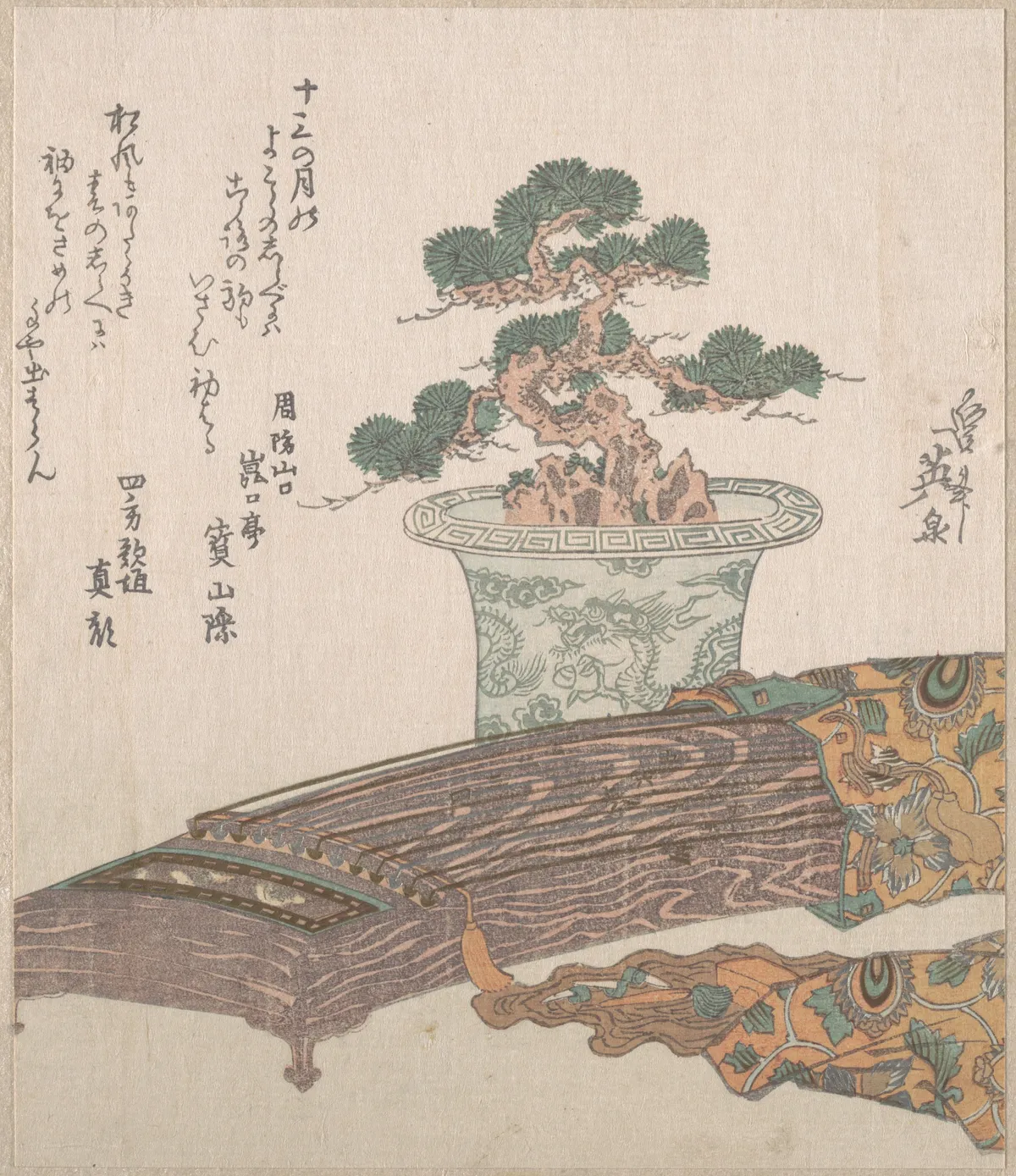
Potted Pine Tree and Koto
The room is dim, save for the flickering glow of a solitary lantern. Shadows dance eerily across the tatami mats. A potted pine tree sits quietly in the corner, its branches stretching gracefully. Beside it, a koto lies in silent repose. The air is thick with the scent of pine, mingling with the old wood of the instrument.
Outside, the night folds over the city, wrapping it in a blanket of quietude. Leaves rustle softly in the gentle breeze. Inside, the koto seems to hum with stories untold, its strings poised like a slumbering creature. The pine tree, ancient and wise, stands as a silent witness to time's passage.
The room breathes with history, a tapestry of lives imprinted upon its walls. Each object, a keeper of secrets, whispers of moments long past. The lantern flickers again, casting fleeting glimpses of another world. One where music once flowed like a river, and the scent of pine was a promise of serenity.
Historical Echo
In the Edo period, the koto was more than an instrument. It was a bridge to the soul, a vessel for emotions too deep for words. Keisai Eisen captures this essence with a simple scene—still life, yet brimming with life’s quiet echoes. The potted pine signifies longevity and resilience, a common motif in Japanese art. This ukiyo-e invites us into a moment of reflection, where nature and art coexist in harmonious silence.