

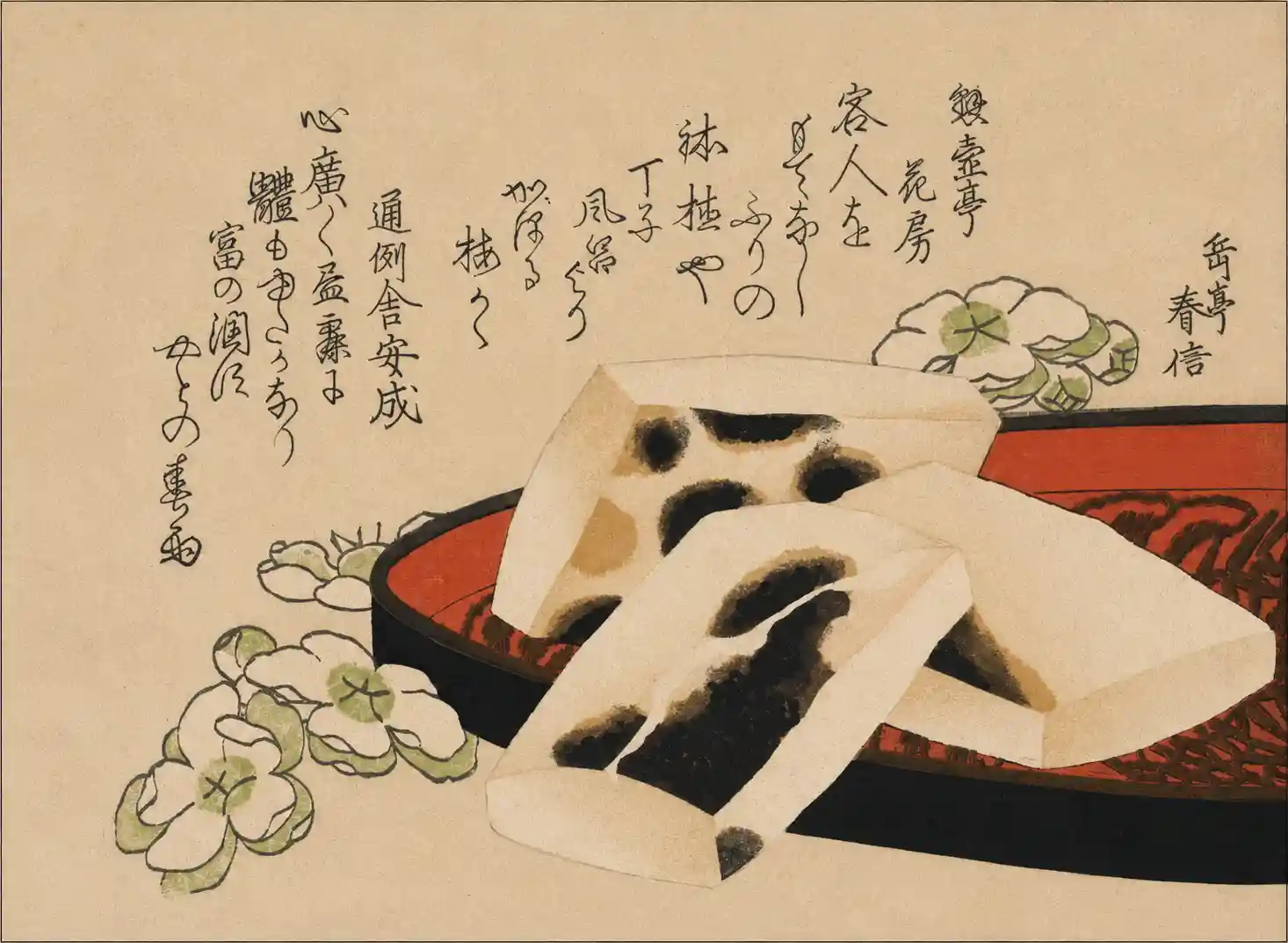
A Quiet New Year's Eve
The light behind the paper screen flickered gently. It cast a warm glow on the small lacquer tray. There lay the toasted mochi, its surface slightly charred, evoking the scent of early spring. A chill lingered in the air, though the room itself was warm. Outside, the night was silent, save for the occasional drip of melting snow.
Inside, a solitary figure sat, brush in hand. Ink pooled on the paper, the characters forming slowly, deliberately. Each stroke was a whisper in the room's vast quiet. This was not a poem for any lord or lady. It was a private communion with the night.
The mochi, a traditional New Year delicacy, had been prepared with care. Yet, it seemed almost reluctant to be eaten, each piece a reminder of the season's fleeting nature. The scent of toasted rice mingled with the faint aroma of plum blossoms in a vase nearby.
In Edo, such moments were cherished. They were the hushed conversations between man and season, between longing and contentment. The artist, Yashima Gakutei, captured this ephemeral beauty, knowing well that spring, like ink on paper, would soon fade.
Historical Echo
In the 19th century, Edo's bustling streets were filled with merchants and artisans. The city was alive with activity, yet its people sought solace in stillness. Artists like Yashima Gakutei turned their attention to the intimate, the overlooked — a tray of mochi, a quiet room, a single moment caught between the old year and the new.
These woodblock prints were not just images; they were echoes of a world where simplicity was profound, where the passing of time was marked not by grand events, but by the quiet rituals of everyday life.