

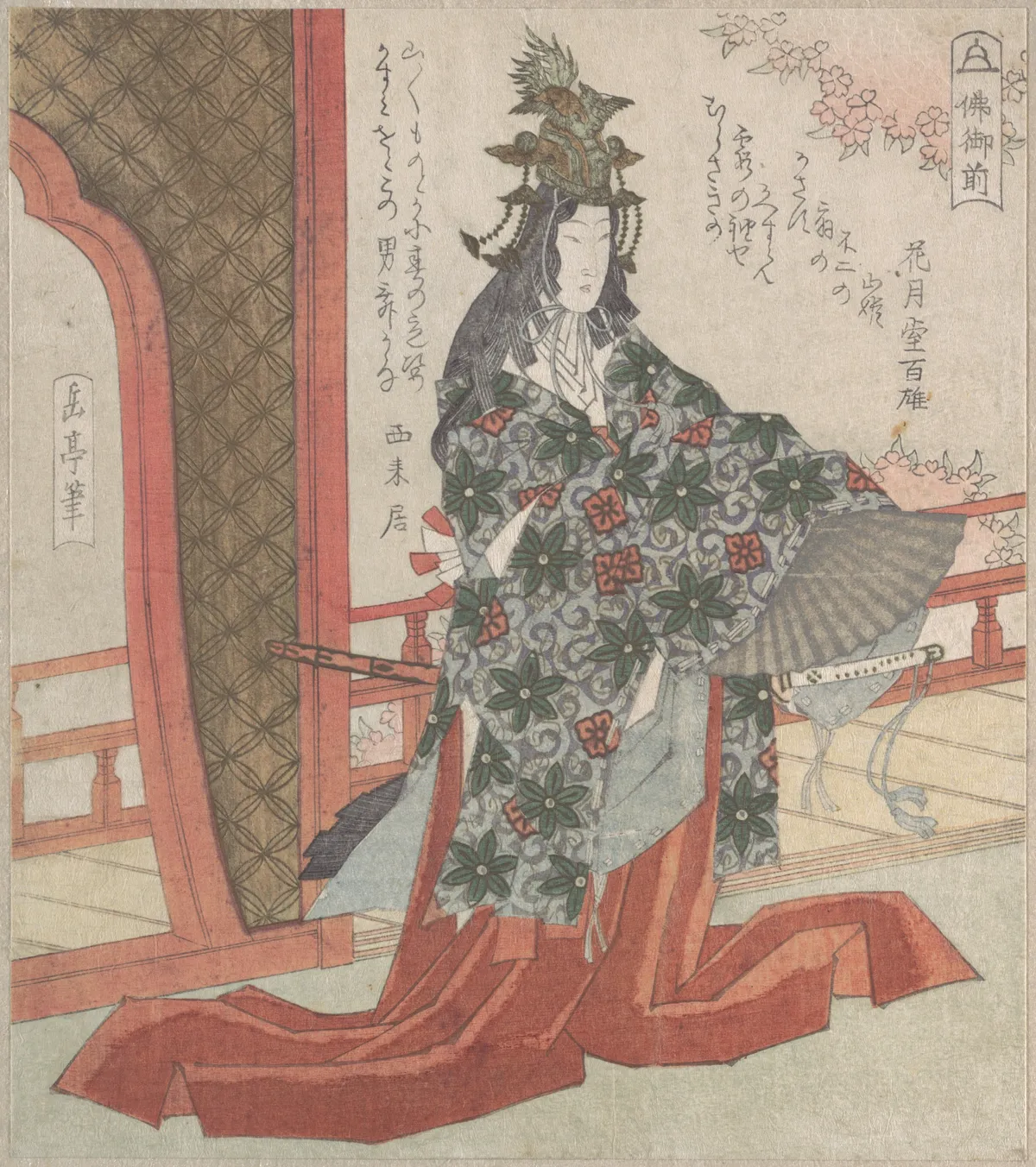
Lady Hotoke's Dance
The gentle rustle of silk filled the air. Lady Hotoke moved with deliberate grace. Her sleeves whispered with each turn. The room was dim, lit only by flickering lanterns that cast shadows upon the tatami. Her feet, almost silent, brushed the woven mat. Each step reverberated like a soft drum.
In the stillness, a faint scent of incense lingered. It clung to the air, mingling with the earthy aroma of aged wood. Her eyes, serene and focused, followed the rhythm of an unseen melody. The paper doors framed her figure, capturing her elegance within their wooden embrace.
Her kimono, a cascade of blues and whites, flowed like water. It caught the light, reflecting a subdued glow. Around her, the air seemed heavier, charged with the weight of tradition and the passage of time.
The dance was a prayer, a silent conversation with the past. Her movements spoke of stories untold, histories whispered across generations. In that moment, she was both present and a relic of a bygone era.
Historical Echo
Lady Hotoke's dance is more than a performance. It is a connection to a time when such ceremonies were sacred. Yashima Gakutei captured this essence in his portrayal. The 19th century was a period of transition, yet the echoes of tradition remained strong. Through her dance, Lady Hotoke embodies the grace and poise of a culture on the brink of change, holding onto its identity through the art of movement.