

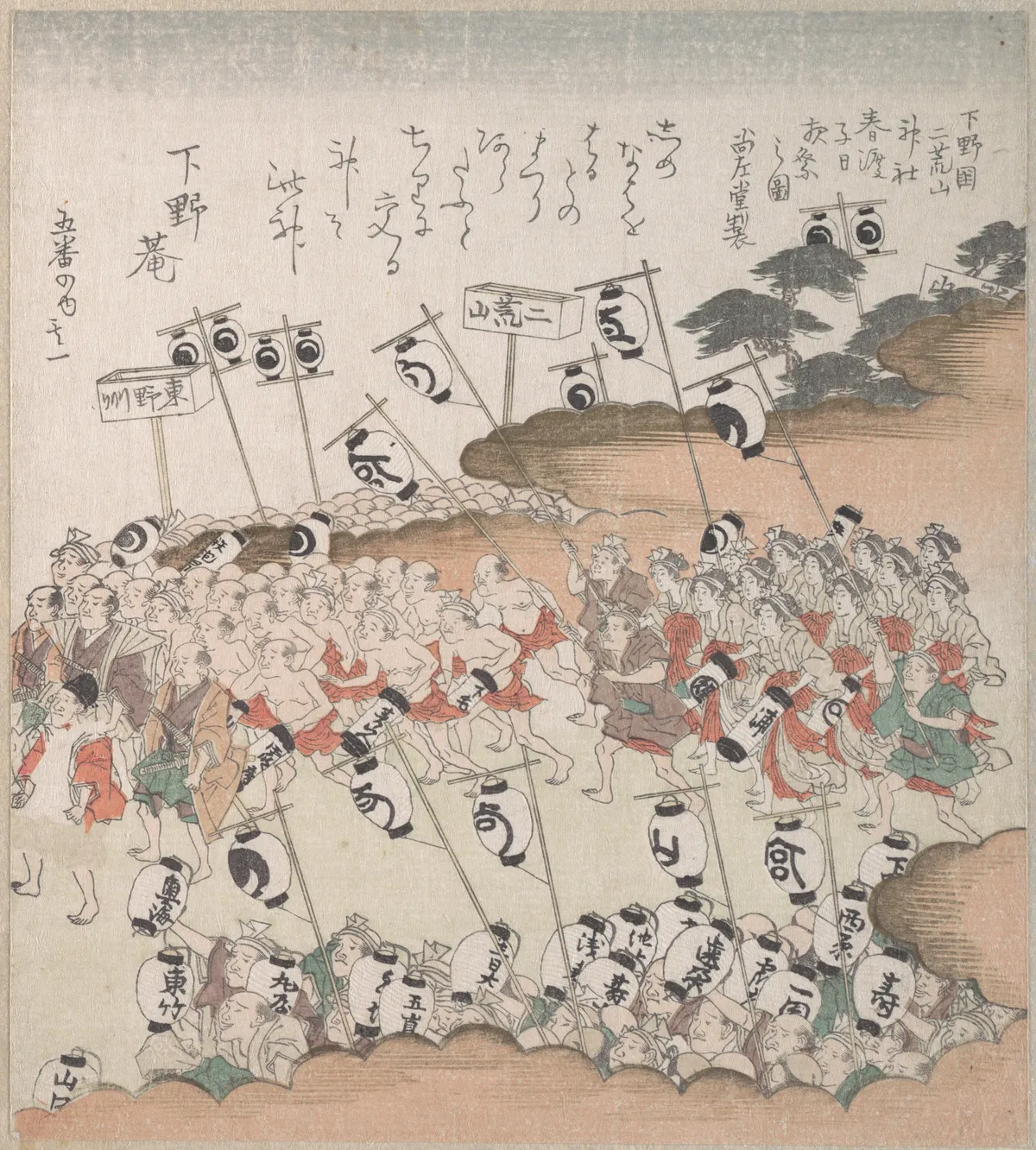
A Quiet Procession
The night air is cool and damp. Footsteps shuffle softly along the narrow street. Lanterns bob gently, their glow a warm flicker against the deep indigo sky. Each step is deliberate, measured, as if the earth itself holds its breath. The procession moves as one, a quiet river of light flowing through the darkness.
Paper lanterns sway at the end of slender bamboo poles. The shadows they cast dance along the wooden walls of silent houses. The faint scent of candle wax mingles with the earthy aroma of wet stone. Faces are serene, eyes cast downward, lost in the rhythm of the march.
A gentle breeze stirs, causing the lanterns to sway, their light wavering like fireflies in the night. The rustle of silk robes whispers through the air, a soft counterpoint to the muted shuffle of feet. In this moment, time seems to stretch, each second a delicate balance of light and shadow.
As they pass, a sense of reverence hangs in the air, an unspoken understanding shared among those who walk. The procession turns a corner, lanterns dipping and rising, and then they are gone. Silence settles once more, the street empty save for the lingering glow of memory.
Historical Echo
In the Edo period, lantern processions were a common sight during festivals and religious ceremonies. These events were imbued with a sense of community and spirituality. Participants often carried lanterns to light the way for spirits or to celebrate the changing seasons. Kubo Shunman captures this ephemeral beauty, the play of light and shadow, in his woodblock print. His work invites us to step into the nocturnal world of Edo, where silence speaks and light guides the way.