

The Silent Screen
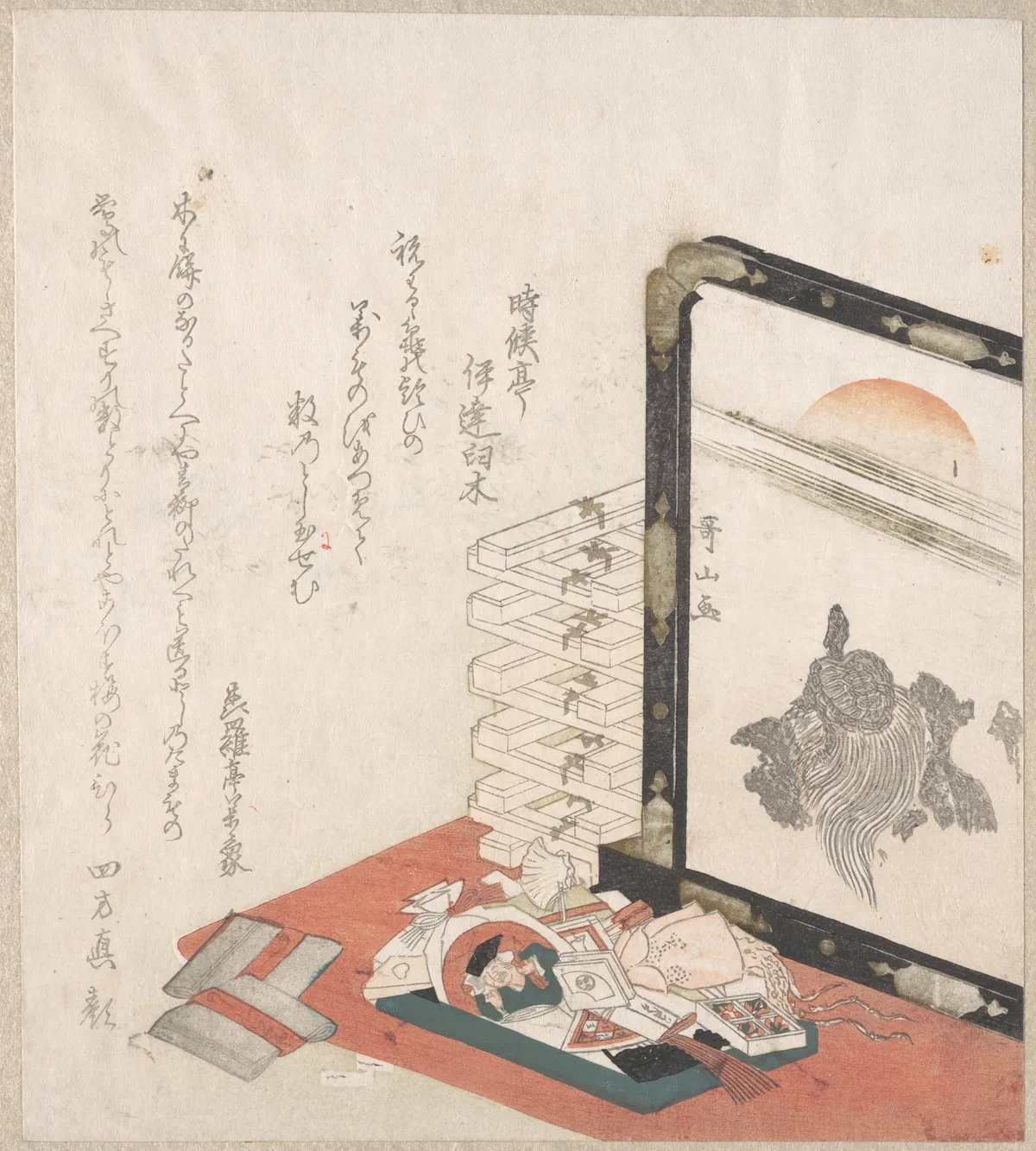
In the dim light of an Edo evening, the room is silent. A screen stands against the wall, its painted surface a quiet witness to the scene. Scattered on the tatami are New Year presents, wrapped in delicate paper, their colours muted in the soft glow.
A faint scent of pine needles lingers in the air, mingling with the subtle aroma of incense. The silence is heavy, punctuated only by the distant murmur of a temple bell. Each gift holds a promise, a whisper of the year to come.
The screen, adorned with scenes of distant landscapes, stands resolute. Its paper panels capture shadows, the ink's depth a silent echo of the artist's hand. Outside, the world waits, wrapped in the stillness of the moment.
The room breathes quietly, holding its secrets close.
Historical Echo
In the 19th century, the tradition of New Year gifts carried deep significance. Each present was carefully chosen, a gesture of goodwill and hope. Ishikawa Kazan, a master of capturing the ephemeral, rendered this moment with a keen sensitivity. His work reflects the quiet anticipation that marked the turning of the year, the screen's presence a silent guardian of tradition.