

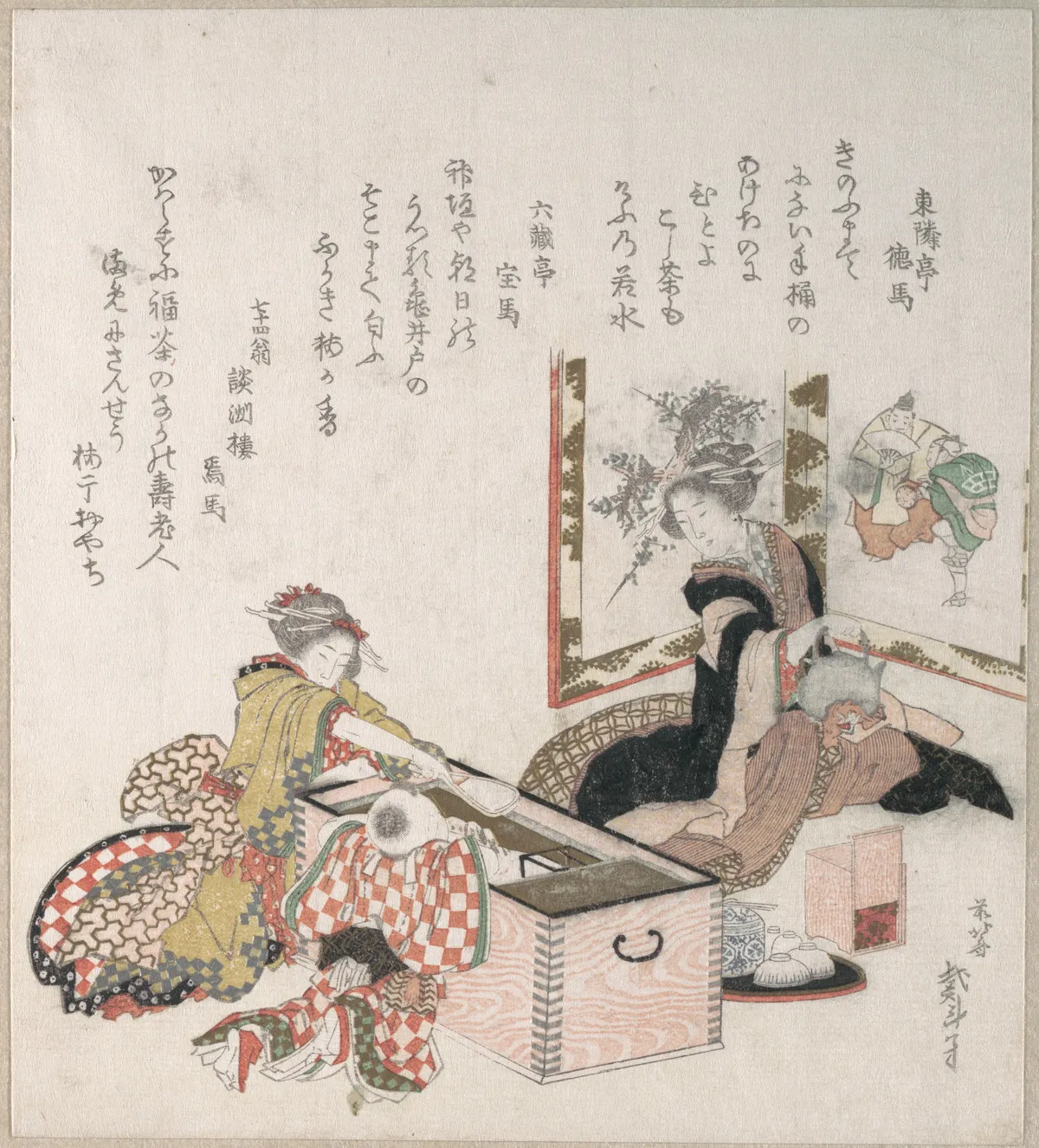
Women Preparing Tea Around the Fire-Holder
The room is quiet, save for the soft rustle of silk. A woman bends over the fire-holder. Her hands, steady and sure, cradle a delicate tea bowl. The air is thick with the earthy scent of roasted tea leaves. Nearby, another woman pours water with a graceful tilt of her wrist. The steam rises, curling and dissipating into the dim light.
The tatami mats cushion their knees, offering a muted creak as they shift weight. Shadows dance across the paper screens, whispering secrets of the past. Outside, a light rain taps gently on the roof, a rhythmic lullaby. The world is hushed, held in the warmth of the fire's glow.
Their movements are methodical, almost meditative. Each gesture speaks of tradition, of time-honoured rituals passed down through generations. The women exchange glances, their eyes reflecting the flickering flames. A shared silence, filled with the unspoken bond of familiarity and routine. In this quiet moment, the world beyond the screens fades away.
The tea, now ready, is poured with care. The aroma swirls, mingling with the scent of burning wood. They sip in unison, savouring the bitter warmth. It is a simple act, yet profound in its quiet grace. The fire crackles softly, a gentle reminder of the transient beauty of this fleeting moment.
Historical Echo
In the Edo period, tea preparation was both an art and a science. It was a moment of reflection, a pause amidst the bustle of daily life. Hokusai captures this intimacy with a tender touch, his lines breathing life into the ordinary. The women, bound by tradition, find solace in the ritual. Their world, framed by the simplicity of tea and fire, offers a glimpse into the enduring allure of the past.