

Silent Garments
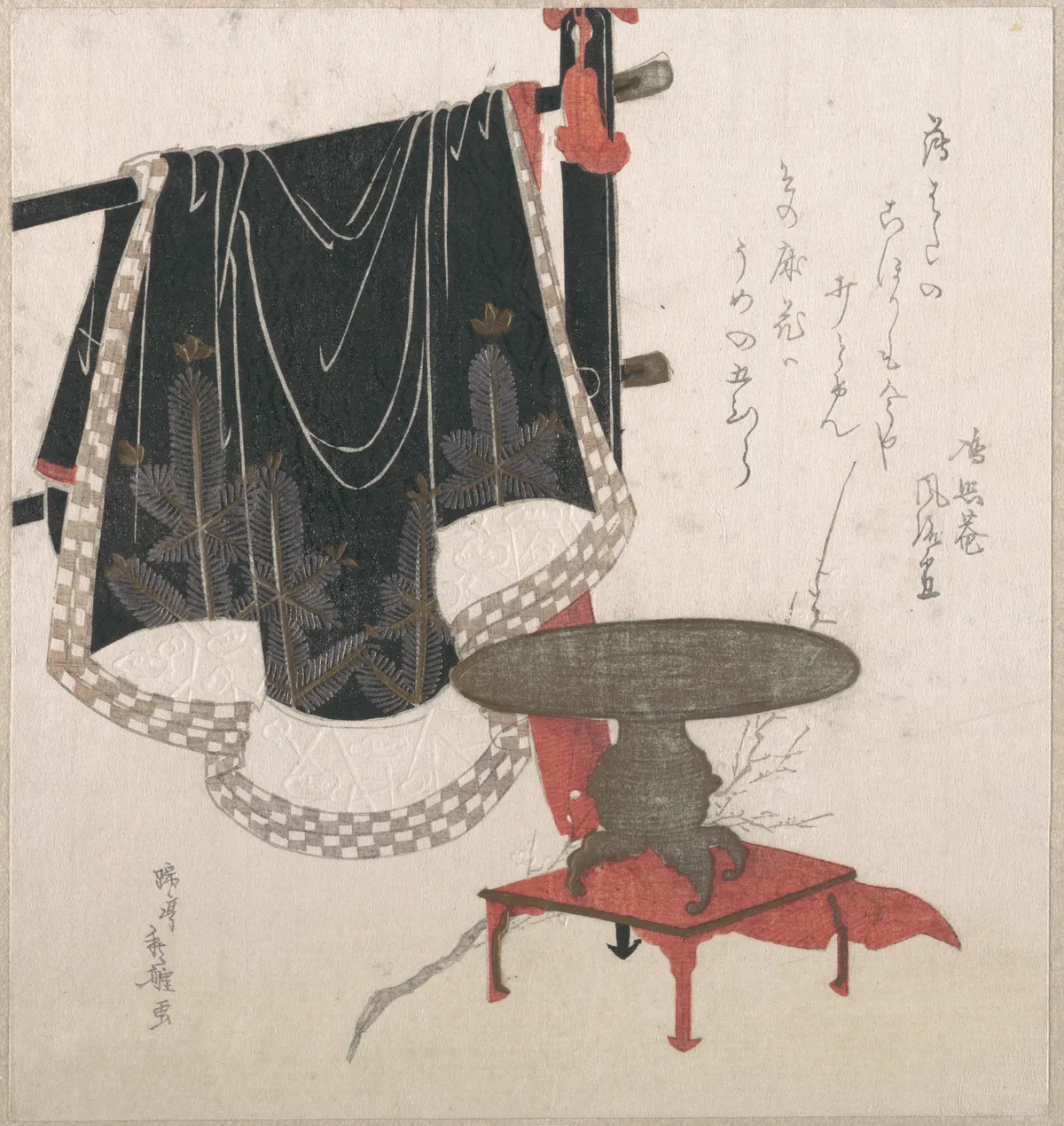
The room was still. The air, thick with the scent of pressed fabric and faint incense, clung to the walls. A dress, delicate and silent, hung on a clothesrack. Its patterns whispered secrets of the weaver's hands. Beside it, a vase stood on a wooden stand, filled with flowers that seemed to nod in agreement to some unspoken thought.
The light filtering through the shoji screens painted soft lines across the tatami. Shadows stretched and shrank in a slow dance. Each petal, each fold of the fabric, held its breath in this quiet moment. The silence was heavy, yet comforting, like an old story told by a familiar voice.
The kimono, suspended in mid-air, swayed slightly, as if recalling the warmth of the body it once embraced. The flowers, vibrant yet still, seemed to listen, their colours muted by the gentle light. A scene of everyday life, captured in its purest, most serene form.
Historical Echo
In the Edo period, simplicity spoke volumes. Objects, mere vessels of daily life, became the essence of art. Hachifusa Shūri captured this silence, this pause between breaths, in his work. The kimono, the flowers, were not mere decorations. They were the heartbeats of a quiet room, the echoes of lives intertwined.